12 Rules for Life by jordan Peterson | An Antidote to Chaos
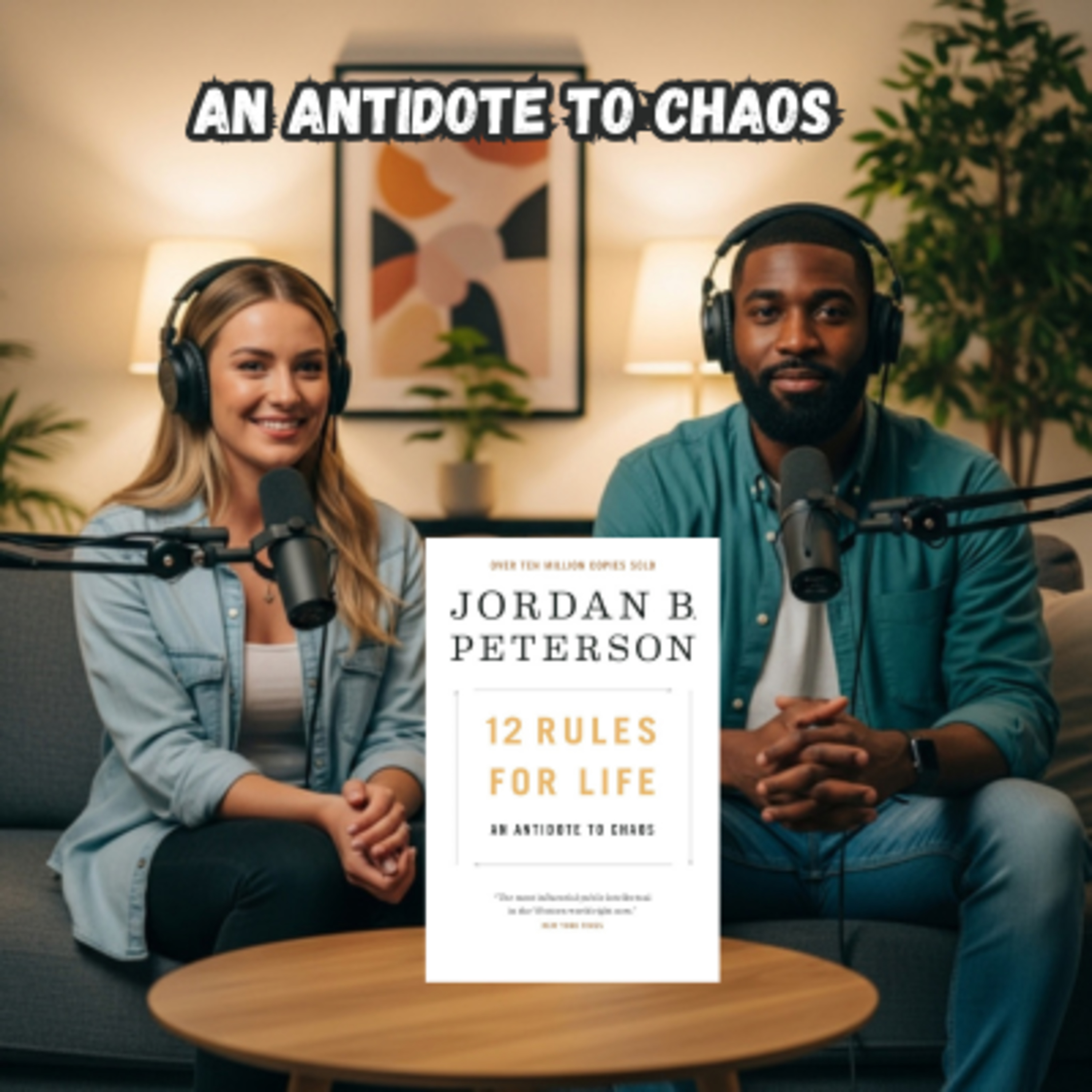
This is the summary of the core principles of Jordan Peterson’s book, 12 Rules for Life, which serves as a practical guide for finding meaning amidst the chaos of the modern world. The rules range from physical habits, like maintaining confident posture, to psychological shifts, such as prioritizing self-care and choosing supportive social circles. Peterson emphasizes the importance of personal accountability, suggesting that individuals should fix their own lives before attempting to change society. Additionally, the chapters encourage honest communication, the pursuit of long-term purpose over short-term pleasure, and the value of discipline in parenting. Ultimately, the source promotes a lifestyle of resilience and gratitude, urging readers to find beauty in small, everyday moments while striving for constant self-improvement.
Acclaimed clinical psychologist Jordan B Peterson has influenced the modern understanding of personality, and now he has become one of the world's most popular public thinkers, with his lectures on topics from the Bible to romantic relationships to mythology drawing tens of millions of viewers. In an era of unprecedented change and polarizing politics, his frank and refreshing message about the value of individual responsibility and ancient wisdom has resonated around the world.
In this book, he provides twelve profound and practical principles for how to live a meaningful life, from setting your house in order before criticising others to comparing yourself to who you were yesterday, not someone else today. Happiness is a pointless goal, he shows us. Instead we must search for meaning, not for its own sake, but as a defence against the suffering that is intrinsic to our existence.
Drawing on vivid examples from the author's clinical practice and personal life, cutting-edge psychology and philosophy, and lessons from humanity's oldest myths and stories, 12 Rules for Life offers a deeply rewarding antidote to the chaos in our lives: eternal truths applied to our modern problems.
#productivityhacks #personaldevelopment #successstrategies #businessinsights #leadershipskills #leadership #ambitiousprofessionals #businesstips #self help #scaling business #businesstactics #professionaldevelopment #startupgrowth #entrepreneurship #businessmindset #growthstrategie
Welcome to the Deep Dive. Today we're getting into a really widely read and pretty intensely debated work of recent years. We are. We're looking at Jordan B Peterson's road map for finding personal order, drawing from his book 12 Rules for Life and Antidote to Chaos. Yeah, and this deep dive feels, well, necessary because this source material isn't just a self help book. It's more like a manual for confronting some of the harsh realities of just being alive. OK, so our mission today is to really get past the titles of the rules themselves.
We wanted to distill the practical insights behind them, which are all designed to empower you, the listener, to find some meaning and prosper in a world that just feels uncertain. And to do that, we first have to grapple with this core conflict the book sets up. When Peterson talks about finding order amidst chaos. How does he actually define those two things? Right, so order is essentially the known world. Think of it as familiar structures, social hierarchies, the things that give a security and predictability.
And that's associated with the masculine principle in the book. It is, and chaos, on the other hand, is the unknown. It's nature, the future. It's the source of both fear and creation, and that's often linked to the feminine. So life happens on the border between them. Exactly. And the rules then are tools to build enough personal order so you can actually navigate that chaos successfully. OK, let's start building that order right now with a rule that's about the most immediate physical thing about us.
Let's start with rule 1. Stand up straight with your shoulders back. Why start with posture? It seems so simple for, you know, a philosophical guide. Well, it's rooted in a really deep evolutionary and biological argument. The book uses this famous example of lobsters. Right, the lobster. Yeah, they compete for status, and whether they win or lose a fight, it dramatically effects their neurochemistry. A winning lobster get a serotonin boost and its posture changes, becomes more dominant. So it's not just a cute analogy.
The book is really arguing there's a measurable biological feedback loop between your confidence, your physical stance, and how you actually feel. Exactly. When you adopt the posture of someone who's ready, who's willing to engage with challenges standing up straight, you are fundamentally telling your own nervous system that you're capable it. Communicates confidence to others, but also to yourself. It convinces your own system you can handle the pressure. It's the physical starting point for a resilient mindset.
OK, that sets a framework for how we face the world. But Rule 4 pivots inward to how we measure our own progress. Rule 4. Compare yourself to who you were yesterday, not to who someone else is today. And this is a direct confrontation with, you know, the way we all live now, constantly comparing ourselves to others. Especially online. Especially online. The book calls it corrosive, and you're comparing your entire messy reality to someone else's highlight reel. It's just a guaranteed path to resentment.
So what's the practical way to do this? How do you actually make that inward comparison work? It demands that you're, well, pretty meticulous with yourself, and you have to prioritize slow, steady growth. Instead of trying to make a huge leap, you focus on fixing one small thing you were failing at yesterday. Just one thing. Just one thing and you celebrate that small win. The focus is on your own journey, your own trajectory. That's how you avoid jealousy and actually find some real satisfaction.
It's about fixing your own flaws, not being better than the next person. That's it. OK, strong foundation. Let's move into the idea of radical personal responsibility, starting with Rule 2. Treat yourself like someone you are responsible for helping. I find this one fascinating because of the contradiction it points out. So many people are excellent at taking care of others, their friends, their family, even their pets. Oh, absolutely. They'll never miss a vet appointment for their dog, but they'll ignore their own health for months.
So why do we do that? Why treat ourselves worse? Is it just low self esteem? It's partly that, but it's also a failure to take accountability for your own future self by neglecting your needs. You're choosing what's easy right now over what's meaningful in the long run. And the book argues this leads to resentment. It's unsustainable. You can't just keep putting everyone else 1st and ignoring your own decay. It inevitably breeds bitterness and unhappiness. Kindness has to start with yourself if you want it to be genuine.
That accountability theme leads right into probably the most famous rule Rule 6 Set your house in perfect order before you criticize the world. And this is not just about tidying your room, is it? Not at all. It is the ultimate call for radical self responsibility. The philosophical argument here is just so powerful. If your own life is a mess, if you have unresolved trauma, financial chaos, how can you possibly have the clarity to diagnose and fix society's problems? So before you protest some global issue, you have to eliminate the chaos you're creating in your own way.
Precisely the moment you start actually confronting your own shortcomings, your finances, your bad habits, you get stronger, You build resilience. Then you gain the psychological stability to actually contribute something positive. You have to clean your own room first. Once that internal house is stable, then it's a question of direction. Which brings us to Rule 7. Pursue what is meaningful, not what is expedient, right? Let's define expedient here. What does that mean in this context? Expedient is what's convenient.
It's easy. It's what feels good right now. It's the path of least resistance. And meaningful is the opposite. It involves sacrifice. Often, yes. It involves delayed gratification, confronting difficult things for a higher purpose. It's presented as a fundamental moral choice. And why is that so important for, you know, society as a whole? The source argues that if everyone just chooses the easy path, the little lie, the short term pleasure, society starts to break down and individual lives just stagnate.
Meaning requires that long term thinking, which builds character, and delaying that pursuit of meaning is no. It's like delaying the start of your actual life. And living that meaningful life requires a pretty intense level of honesty, which is a great transition to our next section on ethics and communication. Let's start with Rule 8. Tell the truth, or at least don't lie. This is so much more than just a simple call for integrity. It's framed as an instruction for survival. How so? Because lying, even small lies, creates a false reality.
When you lie, you damage your own relationship with reality itself. You start operating in a compromised state that just erodes trust and, you know, inevitably leads to chaos and conflict. So even if the truth is really uncomfortable, the book is saying you have to choose that difficulty over the comfort of a lie. Absolutely. The truth, no matter how harsh it is, gives you a real map of the world. A lie always warps that map. Honesty gives you the courage and wisdom you need to actually face the chaos out there.
And that clarity from honesty flows right into Rule 10. Be precise in your speech. It's not just enough to not lie. You have to be articulate about the truth. Yeah, precision is like the structural integrity of your language. Vague speech can hide your true intentions, or worse, it can hide the reality of a situation from yourself. So being imprecise lets you sort of duck accountability for what you say. That's a huge part of it. Precision forces accountability. It improves understanding and reduces conflict.
When you can define a problem with precision, you've taken the 1st and hardest step toward actually solving. It OK, but all this focus on confidence and precision has to be balanced right? Which I think is the point of rule 9. Assume the person you are listening to might know something you don't. Yes, this is the crucial counterpoint to the confidence from rule one. It requires you to actually listen. To be humble, to not just wait for your turn to talk. Exactly, the book argues. You have to avoid that trap of thinking you know everything.
Every single person you meet has walked a complex path that you haven't. And so they hold some unique, valuable piece of knowledge. So it's a. Tool for learning, not just for being polite. Precisely. Yeah. When you're genuinely curious, you enrich your own understanding of the world. It turns conversations from a debate into a mutual exchange of ideas. OK, let's shift focus a bit to our social world, to our relationships, starting with rule 3. Make friends with people who want the best for you. This seems so obvious, but so many of us fail at it.
I think the reason it's necessary is because we often surround ourselves with people who well, who keep us down, either because they share our misery or because they resent any attempt we make to improve. And the company we keep has a huge influence. A drastic influence on your mindset and your actions. It can either inspire you or just inhibit you completely. The instruction here is to actively audit your relationships and have the courage to let go of the ones pulling you back into chaos. OK, Next up is a really powerful, powerful, and I'll say it, highly controversial rule about family.
Rule 5. Do not let your children do anything that makes you dislike them. The wording there is so intentionally sharp. It is, and it's meant to under score a fundamental parental duty. It's not about being personally annoyed. It's about preparing a child for the world outside your home. OK, explain that. A child who was allowed to behave in a way that's intolerable at home will be rejected and disciplined much more harshly by society later on. So that feeling of dislike from a parent is actually an important signal that a child's behavior is socially out of line and needs correcting.
Exactly. It's a mandate to guide their moral growth, to set firm boundaries, to teach respect. The ultimate kindness, the book argues, is preparing them to be successful. Well, like social beings. OK, so we've got this need for firm discipline, but then almost as a direct counterpoint, we get Rule 11. Do not bother children when they are skateboarding. How do these two ideas, strictness and freedom, work together? This is such an essential rule because order without a little bit of chaos leads to fragility.
Skateboarding, or any activity like it, is a metaphor for voluntarily engaging with productive disorder. It's hard, it's a little bit dangerous, and it requires failing over and over again. It forces them to develop self-reliance. Precisely. It's controlled, voluntary risk taking and that builds real life skills like perseverance, resilience, courage. You're constantly interrupting that process. You're teaching fear and dependency. So the boundaries from Rule 5 give them the social tools. And the freedom from Rule 11 gives them the psychological armor.
You have to let them explore, make mistakes, get a few scrapes and figure out who they are. That tension is really insightful, and that brings us finally to the last rule. It serves as a kind of psychological relief from the intensity of the others. Rule 12. Pet a cat when you encounter one on the street. Yeah, this rule is an acknowledgement that life is tragic. You can have your house in perfect order, you can tell the absolute truth, and suffering will still find you. It's inevitable. It is so.
Rule 12 is an instruction to recognize and to deliberately focus on the small, fleeting moments of beauty that exists right alongside all that suffering. So it's more than just taking a break, it's an active choice to find value in a simple random moment. It's an act of defiance against nihilism, really. When you see that cat, you stop, You slow down. You just exist in that simple present moment. It's about cultivating gratitude despite the hardship, and that's what Bill's resilience. It reminds you that the world is still worth engaging with, even when it's painful.
This has been a really incredible deep dive. We've moved from the simple physical act of standing up straight in Rule 1, all the way through this rigorous process of personal responsibility and honesty, to finally landing on the need to find simple joy in Rule 12. It's quite a journey. It really is. The source material offers this powerful framework, promising that by voluntarily accepting responsibility, you can find deep meaning in the middle of all the chaos. And to tie this back for you, the learner, the point isn't to get rid of chaos.
You can't. The argument is to build a structured ethical self that is strong enough to navigate it. The rules give you the order you need to actually have a positive impact. So we spent a lot of time on that tension between Rule 5, which demands strict discipline for kids, and Rule 11, which demands radical freedom and risk. This leaves us with a question for you to think about. If strict discipline or order is meant to prevent the suffering of social rejection, but radical freedom or chaos builds competence through necessary suffering, how do you find the balance point in your own life or in raising a child?
Where do you stop setting limits and start stepping back to allow for that necessary struggle?
 Apple Podcasts
 Castbox
 Castro
 Goodpods
 Moon FM
 Overcast
 Pocket Casts
 Podbean
 Podcast Addict
 Podcast Republic
 Spotify