The Soul of Desire by Curt Thompson MD & Makoto Fujimura | Discovering the Neuroscience of Longing, Beauty, and Community
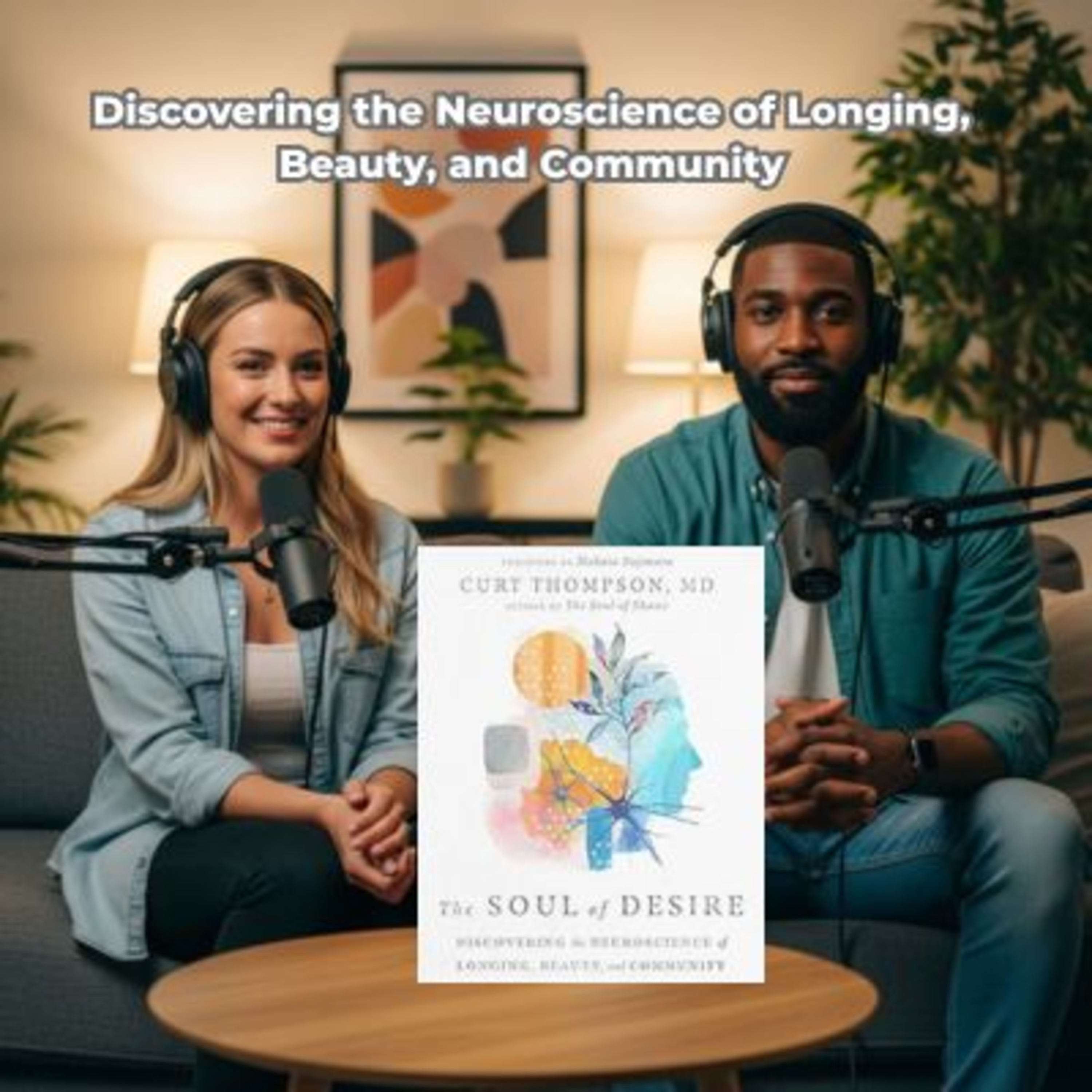
We are people of desire.
In The Soul of Desire, psychiatrist Curt Thompson suggests that underneath all our longings is the desire to be known - and what's more, that this fundamental yearning manifests itself in our deep need to make things of beauty, revealing who we are to others. Desire and beauty go hand in hand.
But both our craving to be known and our ability to create beauty have been marred by trauma and shame, collapsing our imagination for what God has for us and blinding us to the possibility that beauty could ever emerge from our ashes. Drawing on his work in interpersonal neurobiology and clinical practice, Thompson presents a powerful picture of the capacity of the believing community to reshape our imaginations, hold our desires and griefs together, and invite us into the beauty of God's presence.
The Soul of Desire is a mature, creative work, weaving together neuroscience and spiritual formation to open up new horizons for thinking not only about the nature of the mind but about what it means to be human.
Curt Thompson’s The Soul of Desire examines the profound link between human longings, mental health, and spiritual fulfillment. The text suggests that people are fundamentally driven by deep-seated desires for connection and purpose rather than just surface-level wants. By engaging with beauty and creative expression, individuals can navigate the pain of trauma and shame to achieve personal transformation. The author advocates for the development of confessional communities and the use of imagination to rewrite personal narratives and foster healing. Through intentional practices like mindfulness, focused attention, and meaningful inquiry, people can align their daily lives with their truest aspirations. Ultimately, the work encourages a life of intentionality where creating and appreciating beauty serves as a pathway to wholeness and deeper relationships.
#PersonalGrowth #Neuroscience #Psychology #MentalHealth #SelfAwareness #EmotionalHealing #MindsetShift #PurposeDrivenLife #SpiritualGrowth #HumanConnection #BookSummary #SelfDiscovery #InnerHealing #PersonalDevelopment #MeaningfulLife
You know the feeling you you open up your calendar and there just isn't a single block of white space? Right, totally booked. Exactly, you've got the demanding job, the bustling social life, the weekend plans booked like 3 weeks out and by all outward metrics you are winning. Oh, absolutely. On paper it looks great. Yeah, your life is completely full. But then it's, I don't know, 10:30 PM. The house finally gets quiet, and there it is. This vague, undeniable hum of dissatisfaction is quiet. Craving for something deeper that just.
It does not make sense given how much you have going on. Yeah, it's it's really the modern epidemic of the full schedule and the empty soul. We usually try to solve that quite dissatisfaction with sheer volume. But just adding more stuff. Right. We cram in another hobby, another networking event, or, you know, we just scroll until we fall asleep. We treat the emptiness like a productivity problem. Like we just need to optimize our free time. Exactly, assuming we just haven't found the right the right combination of tasks to actually feel fulfilled.
But what if that feeling isn't a problem to be fixed with better time management? What if it's actually a symptom that you're underlying, like your operating system is glitching? That's a great way to put it. Today we're doing a deep dive into the mechanics of that exact craving We are pulling from the insights of psychiatrist Kurt Compson, specifically his book The Soul of Desire. Really fantastic material. It is The mission of this deep dive is to look at the profound, often really messy relationship between our mental health and the hidden desires that actually run our lives.
Because, I mean, we live in an era of absolute information overload, right? Marketers and algorithms are constantly telling you what to buy, what to strive for, who to be. Non-stop. But true autonomy comes from understanding why you want what you want. We're going to look at the machinery of human motivation, and not just as like abstract psychology, but as a practical blueprint for rewiring how you experience your daily life. OK, let's unpack this, because to figure out how to fix the glitch, we really have to look at the base code.
The core premise here is that human beings are fundamentally yearning creatures. Everything we do is driven by desire. But I don't mean desire like wanting a nicer kitchen or a promotion. Desire is the operating system running quietly in the background. It's dictating every single click and keystroke of our behavior built around these really deep bodily, emotional, and spiritual needs for connection, beauty, and purpose. And, you know, ignoring those desires leads directly to that sense of emptiness.
Right. And what's fascinating here is how often we artificially separate our mental health from our desires. I totally like are two different things. Exactly. We treat mental health as this clinical thing, you know, therapy, medication, coping skills, and then we treat desires as these wild, unruly impulses that we either have to indulge or just aggressively suppress. Right, keep them under control. But Thompson argues that this separation is a complete illusion. Your mental health is intrinsically tied to how you hand her your deepest yearnings.
Wow. When you ignore those core foundational needs for authentic connection, the system doesn't just stall, it crashes. Right, because we're trying to run heavy, incompatible software. Yes, we boot up the Climb the Corporate Ladder program or the Acquire More Status app, and we're running it on an operating system that was biologically and spiritually designed to process deep human connection and beauty. Of course the fan is whirring and the battery is dying. That is a perfect way to visualize it.
When we misunderstand what our system actually requires, we just end up chasing cheap substitutes. Yeah, the quick fixes. Right. We crave intimacy, so we settle for social media likes. We crave purpose, so we settle for busyness. And none of it actually satisfies the core requirement, so we're just left exhausted. So if Desire is the operating system running in the background, how does it actually interface with the real world? But the mechanism here is kind of surprising to me, yeah. Catches a lot of people off guard.
It manifests physically through our interaction with beauty and the act of creation. Beauty isn't just an aesthetic luxury, it's actually a communication tool. It is engaging in creation is how we externalize our desires. It takes what is invisible in the background and brings it into the physical. World making it real. Exactly. The act of creating beauty is profoundly transformative. It provides A structured way to process complex emotions, grief, and trauma. You aren't just making a thing. The thing is making you.
Oh, I like. You become what you create. OK, wait. I need to pause here because whenever we throw around terms like creating beauty or, you know, making art, my mind immediately pictures a painter at an easel or a composer writing a Symphony. Sure, the traditional artists, right? Does this mean the non artistic people like the accountants and the logistics managers? Are they just out of luck when it comes to fulfilling their deepest desires? Not at all, and that is such a crucial distinction. We really have to strip away the pretentious gallery art definition of beauty.
OK, good. Producing beauty at a psychological level is fundamentally about taking chaos and bringing order, meaning and harmony to it. So, like cleaning out a totally disastrous garage, or taking a convoluted, confusing spreadsheet and formatting it so your team can actually understand the data, that's creating beauty. It absolutely is, yeah. You are looking at disorder and imposing harmony. You are aligning your external environment with your internal desire for goodness and structure. That completely changes how I view my To Do List, right?
Whether you are mediating A bitter conflict between two friends, planting a garden, or organizing A chaotic schedule, you are participating in the creation of beauty, and doing so aligns you with your most authentic self. And the crucial next step is that you don't just, you know, put that beautifully formatted spreadsheet in a drawer. You have to share it. Yes, because beauty demands an audience. When you create something, a cooked meal, a functional space, a piece of advice and you offered to someone else, you are making yourself vulnerable.
You're putting yourself out there. Exactly. You are sharing a piece of your inner yearning. That vulnerability acts as a bridge, connecting you to others and building genuine community. It's the tangible realization of that core desire for connection we talked about earlier. Which begs a pretty massive question. Go for it. If creating harmony and connecting with others is our optimal operating state, why is everyone walking around feeling so disconnected and anxious? What is breaking the bridge?
And that brings us to the two biggest roadblocks in the human experience, which are trauma and shame. Yeah, if desires, the engine, trauma and shame are sugar in the gas tank. On a mechanical level, they actively paralyze our capacity to connect with our wants or produce anything beautiful. Trauma teaches your nervous system that the world is inherently dangerous. So you just shut down? Right. You shut down the yearning part of yourself to protect against future harm. I mean, why desire anything if it's just going to be ripped away?
And then shame steps in to finish the job. But I think a lot of people might assume this doesn't apply to them. Like you might be listening right now thinking, well, I haven't lived through a war or horrific accident. I don't have, you know, big T trauma, right? But how does everyday subtle shame still managed to hijack our operating system? If we connect this to the bigger picture, shame functions almost exactly like an autoimmune disease of the soul. Wow, yeah. Think about it, an autoimmune disease happens when your body's defense system gets confused and starts attacking healthy tissue.
Subtle everyday shame works the same way. It's the feeling of sending a poorly worded e-mail to your boss and spending the next 4 hours with this low level hum of anxiety just convinced you are fundamentally incompetent. Oh, that specific anxiety is entirely too relatable. It's not just I made a mistake, it's I am a mistake. Precisely. It attacks your core identity. Over time, that subtle shame accumulates. Your brain decides that desiring things you know, just desiring respect, connection, success.
It's just too risky because falling short hurts too much. So it turns on itself. Exactly. So as a misguided defense mechanism, it attacks your own desires. It severs your connection to what you actually want. We numb ourselves to avoid the sting of shame. But the catch is you cannot selectively numb emotion. No, you really can't. If you apply a local anesthetic to your soul to stop feeling the shame, you are simultaneously numbing your ability to feel joy, your ability to perceive beauty, and your ability to even recognize what you actually want out of life.
And then you're just left with that exact quiet dissatisfaction we talked about at the very beginning. The Hum at 10:30 PM, right? To get the system back online, you have to acknowledge the trauma and the shame. You have to actively grieve the parts of your story that were broken. But, and this is key, you absolutely cannot do this alone. Which feels totally counterintuitive, because when we feel ashamed, the literal first instinct is to hide. Always we isolate. But the blueprint here insists that healing requires confessional communities.
So if isolation is the disease, community has to be the cure. Yes, shame thrives in darkness and isolation. When you are isolated, your mind becomes an acoustic echo chamber. Oh, I know that feeling. Right. The only voice you hear is your own, and it's bouncing off the walls, distorting your story, telling you that you are uniquely broken or unlovable. A confessional community, which really just means a safe, intentional space for honest storytelling with trusted people. It breaks open that echo chamber.
So instead of the sound gouncing back at you, it's absorbed by someone else's empathy. Beautifully said. It's like a confessional community. Sounds like an emotional mirror. You can't see the spinach in your own teeth without a mirror. And maybe you can't see the truth of your own story until you say it out loud and actually see it reflected in someone else's empathy. That is exactly how it works. You finally hear your own story accurately. It's like you can wander around your house feeling vaguely sick, but it isn't until you describe your symptoms out loud to a doctor that you actually understand what's wrong.
Vulnerability is the specific mechanism that dismantles the autoimmune response of shame. That vulnerability is paramount. When you speak your shame out loud and the person across from you doesn't recoil when they lean in and say me too, the neurobiology of your brain actually changes. You experience safety, the walls of shame crumble, and suddenly those deep desires for connection and purpose are accessible again. OK, so the walls are down, the glitch is identified, but we still have a brain that has spent years, maybe decades, wired for anxiety, distraction, and shame.
Deeply wired. The default pathways are still deep ruts. How do we actively rewire the hardware? Thompson offers three specific psychological tools for this daily maintenance, imagination, dwelling, and gazing. Let's start with imagination, because this is often misunderstood as just childish daydreaming or escapism. Right, like staring out the window. Yeah, but neurologically it is a vital survival tool. When you experience trauma or deep shame, your amygdala, the fear center of your brain, locks you into a state of past tense threat detection.
You are constantly anticipating the past repeating itself. So you're just looping the worst case scenarios over and over. Correct active imagination forces your prefrontal cortex to turn on. It forces your brain to map out future tense possibilities that are good. Oh, interesting. It is the psychological heavy lifting required to construct a hopeful narrative. You are literally building new neural pathways that say a positive outcome is actually possible. It's writing the next chapter instead of just rereading the painful ones.
We really love that. Tool #2 is dwelling. This is about living fully in the present moment utilizing mindfulness, meditation, breathing. But why is this so critical for desire specifically? Because if you are constantly rushing from 1 task to the next, you are entirely in a state of reaction. You are reacting to emails, reacting to traffic, reacting to crises. Constant firefighting. Exactly dwelling is the deliberate act of settling the dust. It regulates your nervous system, pulling you out of fight or flight so you can actually perceive what it is you are yearning for beneath all that noise.
Which leads right into the third tool, which might be the most challenging one in the modern world. Gazing. Oh. Definitely the most challenging The deliberate process of directing our attention toward uplifting objects. The premise here is that what we look at shapes our feelings, our thoughts, and ultimately our reality. But here's where it gets really interesting. If what we gaze at shapes our reality, how does the listener reconcile this with the doom scrolling we all do on our phones every night?
We're gazing at disaster, controversy and comparison for hours. Doom scrolling is the ultimate modern challenge to the soul. In cognitive psychology, attention is currency. Where you spend it determines what you are purchasing for your mind. Wow, purchasing for your mind. Yeah. If you spend your gaze, your sustained, deliberate attention on outrage in comparison, you are actively wiring your brain for anxiety and despair. You are feeding the chaos. Your brain adapts to whatever it focuses on. It's building the muscle memory for anxiety.
Precisely. But if you intentionally direct your gaze toward beauty, whether that's walking in nature, looking deeply at a piece of art, or just, you know, truly looking into the eyes of someone you love, you align yourself with your true values. You're rewiring it in the other direction. Exactly, you are utilizing neuroplasticity to train your brain to expect, recognize, and seek out wholeness. It is incredibly intimidating to realize how much power we have over our own emotional baseline just based on where we point our eyeballs.
It really is. We're literally programming our own operating system every time we unlock our phones. It is a profound responsibility and it requires immense intentionality, which is why we have to talk about how to sustain this. This isn't a weekend retreat where you feel great on Sunday and forget everything by Tuesday. Right, it's not a quick fix. No, this is a lifelong rewiring process. Right. And to sustain it, Thompson introduces 2 final mechanisms, Inquiry and practice. Inquiry is fascinating because it's framed as the opposite of assumption.
It's the habit of asking insightful, open-ended questions of ourselves and the people around us. Assumption is the death of intimacy. When you assume you know exactly what your partner is thinking, or you assume you know exactly why you were feeling sad, you shut down the possibility of discovery. You just closed the book. Exactly. Inquiry is a posture of curiosity, it keeps relationships dynamic, and it prevents your own internal narrative from stagnating. So instead of telling yourself, you know, I'm just lazy today you ask what is my body trying to tell me right now by shutting down?
Yes, it's a completely different framework. And that culminates in the final concept, which is called practicing for heaven. And I want to be careful here because that sounds like a phrase you'd find cross stitched on a pillow. It really does. Just, you know, focus on activities that bring joy. It sounds a bit like generic live laugh, love advice. What is the actual deeper psychological meaning behind this practice? It is much heavier and much more profound than a cross stitch pillow. Practicing for heaven is about aggressively conditioning your mind and body to tolerate goodness.
Tolerate goodness. Yes, people who have dealt with shame and trauma often have a visceral rejection of joy. When things are going well, they get anxious just waiting for the other shoe to drop. Oh, the sabotage instinct like this is too good. I don't deserve this. I need to blow it up. Exactly. So practicing means intentionally engaging in daily habits, prioritizing a relationship, creating a moment of beauty, expressing gratitude, and forcing your nervous system to sit in that goodness without panicking.
Whoa, just sitting in it. Yes, it is a daily intentional conditioning to align your habits with your ultimate aspirations. So what does this all mean to me? It's like we are constantly in dress rehearsals. I. Love that analogy. Right every single day. The intentional choices we make, the open questions we ask our friends. The chaotic messes we choose to organize into beauty, the things we deliberately choose to gaze at. These aren't just random tasks, they are rehearsals for the reality we want to inhabit.
This raises an important question for everyone listening right now to reflect on. Look at your daily habits. Look at your screen time, your conversations, your routines. Are those practices actively reflecting your deepest desires for connection and purpose, or are they just frantic, unconscious reactions to the noise around you? Are you rehearsing for a life of beauty or are you rehearsing for a life of anxiety? Because whatever you practice, you will inevitably become. Whatever you practice, you become.
That is heavy, but it is deeply empowering. We've mapped out a huge amount of the human operating system today in this deep dive. We really have. From understanding that we are yearning creatures driven by desire, to seeing how trauma and shame act like an autoimmune disease against those desires, to the hard daily work of rewiring our brains through community, imagination and deliberate attention. And it is so crucial to remember that understanding your own desires is not a selfish pursuit. It's not about, you know, my personal growth at the expense of everyone else.
Right, it's not a 0 sum game. It is the exact opposite. When you do the work to heal your shame and understand your yearnings, you stop bleeding your unhealed trauma onto the people around you. You bring a whole empathetic version of yourself to your community. You become a bridge instead of a roadblock. Precisely. And as we wrap up, I want to leave you with a practical challenge, a way to test this out in the wild. The next time you feel a sudden, unexplainable pang of sadness, or maybe an unexpected surge of joy on a random Tuesday, don't just brush it off as a mood swing.
You won't ignore it. Right. And don't immediately pull out your phone to distract yourself from the discomfort. Just sit with it. Sit with it. Dwell in that moment. Treat that emotion as a compass needle. It is pointing to something deep inside your operating system. Where exactly is that hidden unmet desire trying to lead you? The compass needle of our emotions. I really love that. So the next time you look at that completely full calendar and you feel that quiet, vague sense of an empty tank, remember that it's not a malfunction.
It's your system trying to tell you what you truly want. Thank you for joining us on this deep dive. Keep exploring, keep asking the hard questions, and most importantly, keep creating beauty in your own corners of the world. We'll catch you next time.
 Apple Podcasts
 Castbox
 Castro
 Goodpods
 Moon FM
 Overcast
 Pocket Casts
 Podbean
 Podcast Addict
 Podcast Republic
 Spotify