The Rookie CEO, You Can't Make This Stuff Up by Bill Miller | Learn how 9 rookie CEOs got there, executed, created their stories and led!
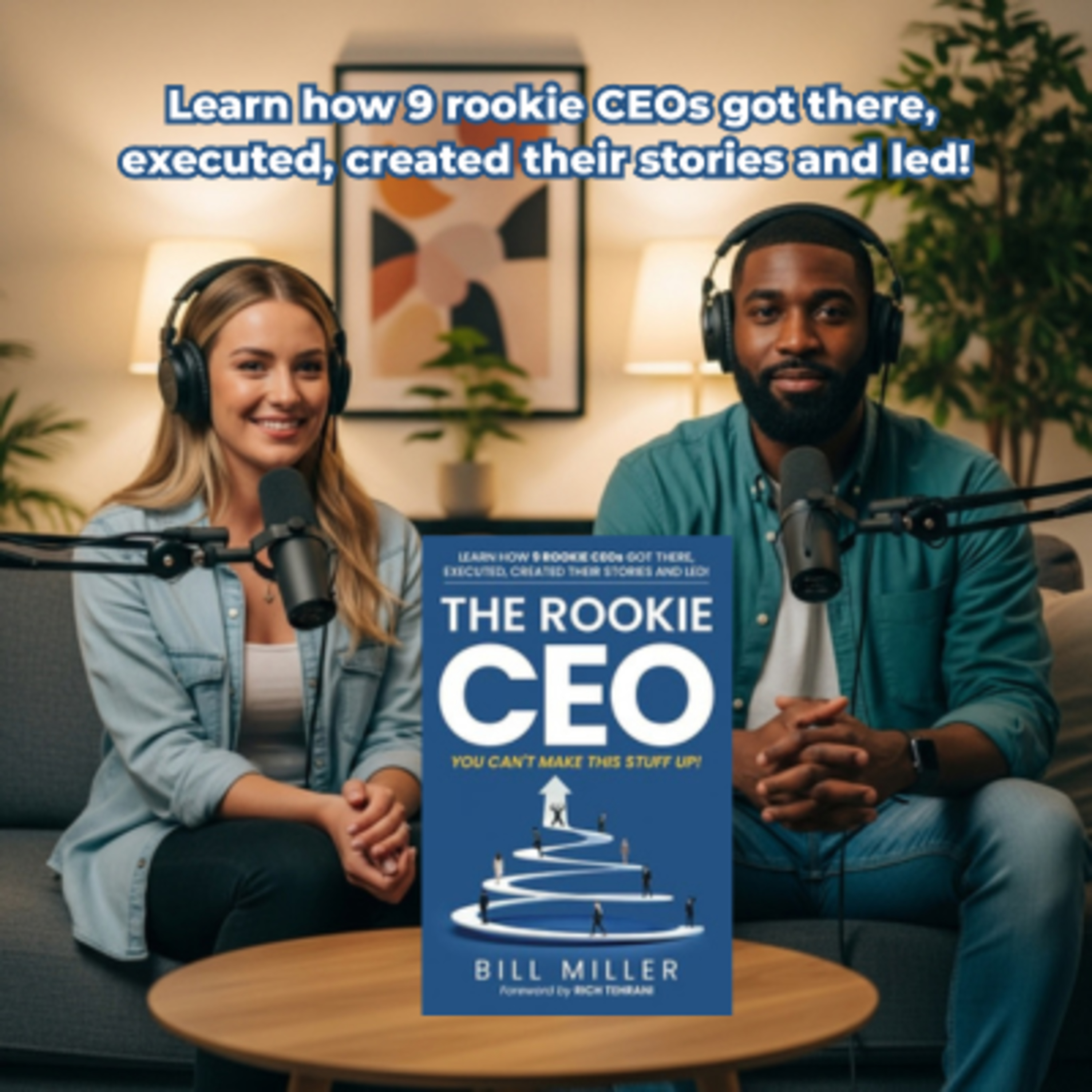
Think being a CEO is all glamour and power lunches? Think again! The Rookie CEO goes behind the scenes with 9 Rookie CEOs who have been there, done that (and sometimes made a hilarious mess of things) to gain insight into what behaviors drive excellent results and what behaviors cross the line driving poor execution and results.
Readers will benefit from:
- Unfiltered and proven strategies from multiple rookie CEOs from diverse backgrounds
- Learn how unique philosophies and leadership styles directly drive corporate culture
- The value of hiring the right leadership team into the corporate culture
- Takeaways at the end of each chapter
The revolutionary framework introduced as “PPLC” represents the Path to CEO, Philosophy, Leadership Style, and how they shape corporate Culture. These make the CEO who they are, how they behave as a leader, and impact results! There are actionable insights from real-world triumphs and blunders to help you shape your journey.
This book is the ideal short read for:
- Fueling the future for new CEOs, founders, and entrepreneurs
- Investors may want every founder and CEO to read this
- Anyone with the ambition to lead or start a company
The Rookie CEO is your guide to navigating the exhilarating and sometimes bizarre world of leadership!
Bill Miller’s book, The Rookie CEO, provides a comprehensive roadmap for aspiring leaders by analyzing the real-world experiences of nine first-time executives. The text emphasizes that diverse professional backgrounds and functional expertise serve as the foundational building blocks for effective high-level decision-making. Key themes include the necessity of balancing operational management with a long-term strategic vision while fostering a healthy corporate culture. Leadership is portrayed as an evolving process where accountability and the ability to inspire others are just as critical as technical knowledge. Ultimately, the source serves as an educational guide, encouraging future leaders to adopt a mindset of continuous learning and adaptability. By examining the successes and influences of these individuals, the book highlights that there is no single path to the top, but rather a collection of essential leadership elements.#productivityhacks #personaldevelopment #successstrategies #businessinsights #leadershipskills #leadership #ambitiousprofessionals #businesstips #self help #scaling business #businesstactics #professionaldevelopment #startupgrowth #entrepreneurship #businessmindset #growthstrategies
There is this prevailing myth in the business world and I mean it's one that we've all bought into at some point. Right. Oh, absolutely. Yeah, like when we look at the CE OS of these massive, successful companies, it's just incredibly easy to think they were, I don't know, born in a tailored suit. Right, just holding A5 year strategic plan in their hands from day one. Exactly like they just possess this innate, almost supernatural ability to know exactly what to do. We really project this aura of absolute certainty onto the C-Suite.
We do. We totally do. We expect them to have all the answers the literal second they walk into the boardroom. It's like we treat leadership as if it's this genetic trait rather than, you know, a highly volatile acquired skill. It's so true. But then if you actually peel back the layers and look at the reality of that very first time a person sits in the big chair, I mean that illusion just shatters completely. Oh, it shatters into a million pieces. Right. It's less of a smooth, triumphant coronation and much more like being dropped into the middle of the ocean during a hurricane and someone is just yelling at you to build a seaworthy ship while you are actively drowning.
That is a very accurate, albeit terrifying, analogy. Well, today we are taking a deep dive into the brutal, exhilarating reality of that exact moment. We're unpacking a really comprehensive synthesis of Bill Miller's book, The Rookie CEO. You can't make This Stuff up and. You know what makes this source material so compelling is that it isn't just some theoretical corporate jargon, right? It specifically dissects the actual live journeys of nine first time CEO's. It really breaks down their motivational highs, their undeniable successes, and, crucially, their most agonizing setbacks.
Which is exactly what we want to get into. Our mission today is to basically decode the anatomy of a successful first time executive. Because whether you are, you know, actively aiming for the C-Suite or prepping to take on a brand new management role. Or even if you're just insanely curious about the psychological pressure cooker the top executives operate in. Exactly. There are fundamental secrets here to stepping into a massive leadership void and actually surviving it. OK, let's unpack this, starting with the foundational trap of where these leaders actually come from.
Right, because you really cannot understand how a rookie CEO is going to steer an entire organization into the future without first dissecting the raw materials of their past. Yeah, who they were dictates how they lead. Completely. The skills that got them the promotion are almost never the skills they actually need to execute the job. Wait, really? Never. Well, the text makes a pretty profound point about this. It points out that every CEO obviously takes a different path to the top right. Like, some are brilliant engineers, some of these marketing savants, others are just absolute financial Wizards.
But the trap is that these early career trajectories, they hardwire their brains. Yeah, it creates this default problem solving lens. And a default lens is incredibly dangerous when you're suddenly, you know, responsible for the whole picture. Because if your entire background is in finance, your brain is wired to view every single company wide crisis as a math equation. Right, you are going to look for a quantitative fix. You're just going to squeeze the balance. Sheet, or like if your background is in marketing, your default reflex to a crisis is going to be all about brand perception and external communication.
What's really fascinating here is the cognitive dissonance this creates for the rookie. How so? Well, the source material points out that having incredibly deep functional expertise is what gets you noticed in the 1st place. You get tapped to the CEO role because you were the absolute best in your specific discipline. Right, you were the star player. But the immediate overriding challenge for a rookie CEO is learning how to integrate that really narrow functional knowledge with broad, ambiguous people management.
They have to acquire transferable skills practically overnight. You know, it makes me think of having deep functional expertise is kind of like being an incredible lead guitarist. OK, I like that. But becoming ACEO means you suddenly have to put down the guitar and conduct the entire orchestra, yes. Or sticking with that kind of transition. Think about the medical field. Being a functional expert is like being a world class cardiologist. Right. You are unparalleled at fixing the heart. Exactly. But becoming ACEO means you are suddenly the chief of medicine and say a patient comes in with a complex systemic autoimmune disease.
You can't just look at their heart anymore. You can't. If you give them a drug that helps the heart but destroys the liver, patient still dies. You suddenly have to understand and manage the entire nervous system, the organs, the blood flow, all of it simultaneously. You have to really understand how the trade-offs work. That is the exact mechanism of the transition right there. You are no longer curing the organ, you are managing the Organism. And this is precisely where we see these 9 rookies in the text stumble the hardest, I bet.
Yeah, there is a great example synthesizing the material of an engineering focused CEO who approached this massive culture and morale issue the exact same way they would approach a software bug. Yeah, they tried to fix human behavior imperial problems using this rigid metric driven spreadsheet. They tried to isolate the quote UN quote inefficiencies and patch them quantitatively. Let me guess, human beings don't really respond well to being treated like faulty lines of code. Shocker, right? It nearly tanked their first quarter because their default problem solving strategy, the very thing that made them a superstar engineer, which is fundamentally incompatible with the systemic human nuance required of ACEO.
But wait, this brings up attention I really want to push back on because the source talks extensively about the importance of a track record and pedigree, right? It does. It says a pristine track record brings confidence and credibility. But based on what you're saying, doesn't a massive track record of success actually make a rookie CEO's job infinitely harder? How do you mean? Well, it doesn't a glittering pedigree just mean the board and the employees set the expectations so unrealistically high that the rookie is essentially set up to fail.
I mean, surely the board cuts them some slack if they have a great resume, right? You would think so, but the reality is actually the exact opposite. A pristine pedigree doesn't buy you Grace, it buys you a microscope. A microscope that makes sense. Yeah, the text is very clear that a solid track record raises expectations to just an astronomical level. Everyone expects the superstar cardiologist to instantly be a flawless chief of medicine on day one. Which is impossible exactly. But the deeper psychological barrier is internal.
The rookies biggest hurdle isn't the board, it's unlearning. And unlearning is like 1000 times harder than learning because when you are under intense pressure, human psychology dictates that you regress to your comfort zone. Exactly. When a new CEO hits their first major crisis, their instinct is to grip the steering wheel tighter and just do more of what made them successful in the past. Right, they revert to the lead guitarist mode. To survive, they have to deliberately let go of the micro level control that built their pedigree in the 1st place.
They had to trust the Chief Financial Officer to actually do the math or the Chief Marketing Officer to handle the brand. Yeah, they have to trust the orchestra. If a rookie CEO cannot actively unlearn their instinct to be the smartest specialist in the room, their pristine track record basically becomes a fatal trap, the end of micromanaging the organs and killing the patient. Here's where it gets really interesting though, because if the skills that got them the job are no longer the skills they need, how do they actually map out a vision for the company without relying on their old tricks?
Right, How do you build a strategy from scratch? Exactly. The text dives really deeply into strategy, but it sets up what looks like to me an impossible paradox. It is the central tension of executive leadership. Let's hear it. OK, so on one hand the source insists that ACEO must establish a rock solid, well defined strategic vision. Yes, from the foundation to the future. Right. They need to align every single endeavor with long term objectives so the whole company has absolute clarity on where it is going.
But literally in the same breath it mandates adaptability. It says ACEO must be highly adaptive, ready to take advantage of emerging market possibilities and prepared to just completely change course when necessary. That is the paradox, yeah. So practically speaking, how does a new leader avoid completely whiplashing their team? Like how do you constantly pivot to be adaptable without your employees feeling like the long term vision is just, I don't know, a suggestion that changes every Tuesday?
It is the ultimate tightrope walk because if you are too rigid with your long term vision, you shatter the moment a new competitor or a massive technological shift disrupts your market. Right? But if you were too adaptable, you look like a weathervane just spinning in the wind and your team loses all faith in your leadership. Exactly. So how do they survive that? Well, the text resolves this paradox by introducing what it calls the holistic approach. OK, the necessity of balancing all the elements, but what does that actually mean in practice?
How does being holistic stop the team from getting whiplash? It comes down to understanding the difference between the destination and the route. The destination and the route OK. The source states that effective leadership entails controlling and balancing a variety of aspects. You know, operations, team management, strategy, so they function as a single Organism. There's that Organism again. Right. If ACEO truly understands how all these elements are interconnected, then the strategy isn't a rigid set of train tracks.
It's more like the keel of a sailboat. OK, I like that. Explain the mechanics of the sailboat. So if the market suddenly changes, say a massive new AI technology disrupts your pricing model entirely. Which happens every day now. Exactly. A rookie CEO who lacks A holistic view might just panic. They look at the disruption, assume the entire strategic vision is dead, and violently jerk the wheel to chase the new shiny object. And that causes the whiplash, yes. The team feels like all their previous work was just completely wasted.
Because the CEO is confusing a change in the weather for a change in the destination. Precisely. But ACEO, utilizing a holistic approach understands that changing the pricing model over in the operations bucket, well, that doesn't mean abandoning the long term vision of the company. Right, because they understand the mechanics. Exactly. They can adjust one specific dial. Maybe they shift some resources in the team management element, or they tweak a marketing focus without breaking the entire machine.
That makes a lot of sense. They adapt to the obstacle in the market while clearly communicating to the team that the ultimate destination remains exactly the same. They just tacked the sale. They didn't change the port they are sailing toward. And because of that, the team doesn't feel like they are constantly starting over from scratch. They feel like they're actively navigating an obstacle course together. Right. And you know, even if you're just managing a team of two people right now or even just trying to manage your own individual career trajectory, you've probably felt this.
Oh, for sure. If you don't know your ultimate destination, every minor set back feels like a catastrophic failure that requires you to totally reinvent yourself. But if you have that holistic framework, a set back is just a data point that tells you to adjust your immediate tactics. And that operational balancing act is crucial. But I have to say, you can have the most brilliant, adaptable, holistic blueprint in the world and it is completely useless without the human beings required to execute it.
Oh, ma'am, yeah. The blueprint is just paper. The people are the engine. Which means the rookie CEO has to shift gears again, moving from this high level cerebral strategy stuff into the incredibly messy, unpredictable and highly emotional world of human leadership. Yeah, which is terrifying for a lot of them. I can imagine, and looking at how the source material handles this, I have to play devil's advocate again. Do it because I am seeing a massive, glaring contradiction in what is being asked of these new leaders in these chapters.
Bring it on. Where's the contradiction? It's the tension between inspiration and enforcement. Oh yes, the text spends a significant amount of time detailing the need for thought leadership and innovation. It says the CEO needs to raise team morale, increase output through pure inspiration and basically become this visionary industry figurehead who sets trends. Right. It paints a picture of this beloved charismatic cheerleader. Exactly. But then literally right next to it. It demands absolute accountability and focus.
It says the CEO must establish distinct priorities, strictly monitor performance, enforce guidelines and, you know, hold people's feet to the fire to make sure they keep their word. The cheerleader versus the referee. Yes, how on earth is 1 human being supposed to balance that? Because if you spend all your time being a visionary thought leader, you seem totally detached from the day-to-day grind. But if you are constantly monitoring performance and enforcing guidelines, you are inspiring anyone.
You're just a micromanager with a stopwatch. How does a rookie CEO actually execute both without coming across as totally schizophrenic to their team? It's a brilliant question. And I mean, if you look at those two mandates in total isolation, they are fundamentally at odds. People naturally want to be inspired and they universally resent being monitored. But if we connect this to the bigger picture within the text, the synthesis of these two extremes lies in one specific concept, and that is culture.
OK, stop right there, because culture is arguably the most abused buzzword in modern business. It really is. We hear culture and we think of like ping ping tables in the break room, force team building retreats, and generic corporate values printed on mouse pads. If an employee is consistently missing their key performance indicators, how does culture magically make the conversation about firing them any less punitive? That is the exact right pushback. But the reason it works is because true culture, at least the way the text defines it and the way successful CE OS deploy it, is not an aesthetic, it is an operating system.
The source explicitly states that creating and preserving a positive workplace culture that genuinely aligns with core values is what actually shapes performance. It drives the engagement. It drives employee engagement, satisfaction and productivity. Culture is the bridge that makes accountability possible without it feeling like a dictatorship. Give me the mechanics of that, like how does it actually work on the ground? Think about it this way. If a rookie CEO sets a core cultural value of, let's say, radical transparency, and they actually model it by openly sharing their own failures and their thought leadership with the whole company, then transparency becomes the operating system.
OK, I follow. So if an employee starts missing their KP is the accountability conversation isn't some top down witch hunt, it's an open, transparent problem solving session that aligns with the culture everyone agreed to AH. I see because the expectation of transparency was already baked into the environment. Exactly, if the culture you've built genuinely values the long term mission, then the strict guidelines in the performance monitoring aren't seen as the CEO being a tyrant. They are seen as necessary.
Right. They're seen as the necessary guardrails to help everyone achieve a goal they actually care about. When culture is properly operationalized, accountability just feels like a shared commitment. That makes total sense. The team begins to hold themselves and each other accountable because the culture demands it, not just because the boss is staring at a spreadsheet. That reframes it entirely, because if the culture is toxic or if it's literally just a poster on a wall, then monitoring performance feels like a fundamental lack of.
Trust completely. But if the culture is a true operating system that the CEO actively models everyday, then accountability is just proof that your work actually matters to the bigger picture. It means the CEO cares enough about the vision to ensure everyone is pulling their weight. Exactly. Man, It All weaves together the functional unlearning, the holistic strategic blueprint, the operationalized culture. They're all interdependent gears that the rookie CEO has to keep spinning simultane. And if one gear stops, the whole machine just grinds to a halt.
Which actually brings us to the most critical survival mechanism of. All right, the ultimate take away of our deep dive today. This comes from the final sections of the source material, which synthesizes all the concluding advice for up and coming CEO's. It's the grand finale. It really is. It pulls together the lessons learned from the mistakes of those 9 inexperienced leaders we've been tracking, and it boils survival down to one absolute necessity and that is the continuous learning attitude.
It is arguably the most vital piece of insight in the entire text. Yeah. Oh yeah, it explicitly states that effective CE OS are, at their core, lifelong learners. They constantly adjust and they fundamentally understand that they must keep an open mind to suggestions, push back, and even really harsh criticism. Right, which totally dispels the myth we started with today. It does. Being ACEO is not a finish line. You don't just get the title, sit in the tailored suit and suddenly stop growing because you magically have all the answers.
Not at all. It is exhausting, ongoing process that requires immense perseverance and a really deep commitment to vulnerability. So what does this all mean for you listening right now? That's the real question. Whether you are managing a Fortune 500 company, stepping up to lead a small project team, or just trying to navigate the complexities of your own career, this continuous learning mindset is the skeleton key to growth. It really is. The absolute second you convince yourself that you know everything simply because you have a great track record, you lose that holistic adaptability we just spent all this time dissecting.
It's a really profound realization about the true nature of leadership. And you know, this raises an important question for you to Mull over long after we sign off today. Let's hear the source material is adamant that being ACEO, or really being a leader at any level, is a continuous, never ending process of learning rather than a final destination. So what happens to a company or team when its leader finally believes they've actually arrived? Oh wow, that is the most dangerous mindset a leader can have.
The arrogance of arrival. It is lethal. The text heavily implies that the exact moment you stop learning is the exact moment you start failing. Because you stop looking for the disruptions on the horizon, right? You get complacent O Perhaps the greatest insight from these 9 executive journeys isn't about figuring out how to quickly stop being a rookie. OK, perhaps the true secret to long term success is figuring out how to hold on to that vulnerable, curious, slightly terrified rookie mindset, no matter how seasoned, decorated, or successful you eventually become.
Aw. Man, that is powerful. You never want to lose the mindset of the person who was just dropped in the ocean and told to build a ship. Never. Because the moment you think your ship is finally finished and perfect, you stop watching the weather and that is exactly when you sink. Well said. Keep swimming, keep building, and above all else, keep learning.
 Apple Podcasts
 Castbox
 Castro
 Goodpods
 Moon FM
 Overcast
 Pocket Casts
 Podbean
 Podcast Addict
 Podcast Republic
 Spotify