The Human Workplace: People-Centred Organizational Development
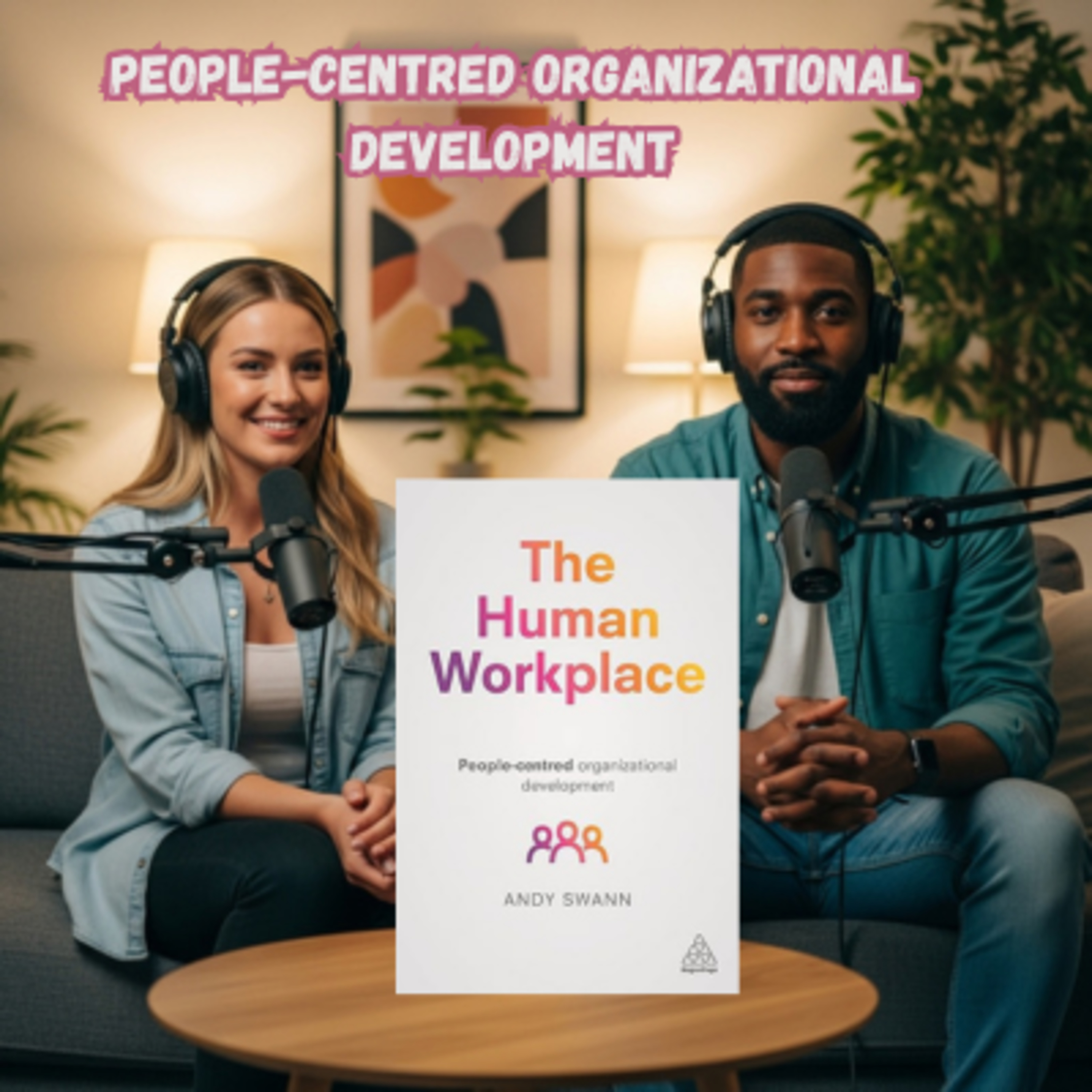
In this episode, we unpack The Human Workplace by Andy Swann, a compelling guide to creating people-centered organizations that thrive. Swann reveals why investing in employees alone isn’t enough—companies must design structures, cultures, and processes that empower people to succeed. Drawing on case studies from Microsoft, Lego, SAP, and more, this book shows how design thinking, effective communication, and smart use of technology can transform workplaces into communities where employees can flourish. Whether you’re an HR professional, leader, or team member, this episode provides practical insights for fostering engagement, productivity, and lasting organizational success.
andy swann, human workplace, people-centered organizations, organizational development, employee engagement, leadership, HR, company culture, workplace design, communication, design thinking, productivity, employee empowerment, team building, management, organizational behavior, workplace strategy, business growth
All right, welcome, everyone. Today we're diving deep into Andy Swan's The Human Workplace. Oh. Interesting choice. We've got a really detailed summary and analysis to work with here and our mission to help you really get what Swan is saying about building a more human focused workplace. Awesome, I'm excited to dig into this. We too, and hopefully by the end you'll have some solid takeaways to apply in your own work life. That's the goal. So right off the bat, Swan challenges this idea of just being nice at work, right?
It's deeper than that. He dives into why those traditional company structures, you know, the ones, often just don't cut it anymore. Yeah, he uses this great analogy of a company so bogged down in bureaucracy that every decision needs mountains of paperwork and approvals. It's like being stuck in quicksand. Sounds awful. Yeah. And he argues that this rigid, old school approach is holding companies back. Have you ever felt that way, Like you were stifled by that kind of structure? Oh, absolutely. I think we've all experienced that at some point.
It's like hitting a wall every time you try to get something done. Exactly. So Swan's big idea is to think of companies less like machines and more like living things. He calls them dynamic. Systems. Dynamic systems. Right. Always adapting and evolving. Like think of a company as an Organism. To survive, it needs to constantly be changing, right? So instead of a rigid machine, it's more like a constantly shifting ecosystem. Exactly. And that means being able to react quickly to new challenges and opportunities.
OK, I'm liking this already, but how do you actually make that happen? It's easy to say be more adaptable, but how do you put it into practice? Well, a big part of it is ditching that old top down pyramid structure that so many companies are still clinging to. That old pyramid. Yeah, the one where ideas get lost in the shuffle and decisions take forever to trickle down. Swan proposes something much more fluid, more collaborative, almost like a community. OK, so instead of a company being like a giant pyramid with the CEO at the top and everyone else below.
Right, it's more like a network or a web where everyone is connected and can contribute their ideas and expertise. I like that, but I have to ask, wouldn't that kind of free flowing environment just descend into chaos? That's a common concern, but Swan addresses that head on with his concept of behavior over principles. Behavior over principles. Tell me more about that. So it's about shifting the focus from rigid rules and policies to the actions and behaviors that actually drive success. Think about it.
Have you ever encountered someone at work who followed all the rules perfectly, but their actual work wasn't that great? Yes, all about checking boxes, not about getting things done. Exactly. And on the flip side, you might have someone who bends the rules a bit, but they're super productive and consistently deliver amazing results. Those are the people you want on your team. Exactly. So Swan saying we should be celebrating and encouraging those results driven individuals, even if they don't always follow the traditional playbook.
It's about focusing on what they achieved, not how they get there. That's interesting. It's about giving people the freedom to find the best way to do their work rather than forcing them into A1 size fits all approach. Exactly, and it requires a certain level of trust from leadership. Trust is key. So how does the physical workspace fit into all of this? Can you really foster this kind of dynamic environment in a dull cubicle filled office? That's a great question. I mean, imagine trying to have a free flowing exchange of ideas in a space that's designed to keep people isolated.
It just wouldn't work. It's like those offices are designed to suck the creativity right out of you. Exactly. Swan actually dedicates a whole chapter to this idea of the power of place, where he argues that the physical environment has a huge impact on how we work, how we interact and how we feel. Makes sense. So what does he suggest? Beanbag chairs and Ping Hong tables. Not necessarily. It's not about gimmicks, it's about being intentional, about designing spaces that foster connection, creativity, and well-being.
Think open, collaborative areas, comfortable seating, natural light, and maybe even some outdoor spaces for breaks and informal meetings. That sounds amazing and much more conducive to that collaborative community vibe we were talking about earlier. Exactly. It's about creating a space that reflects the company's values and culture and that empowers people to do their best work. OK, I'm sold, sign me up for that office makeover. But even with the perfect space, sometimes those great ideas we've been discussing can get stuck.
You know, endless meetings and brainstorming sessions, but no real action. What does Swan say about that? He calls it IDEA Constipation, and his antidote is unleashing work. Idea Constipation. I love that it's so true. It's about empowering people to take ownership of their ideas and run with them to move from discussion to action. It's like that saying ideas are cheap, execution is everything. Exactly. So how do we create a workplace where people feel empowered to take those ideas and turn them into reality?
Well, that's a big question, and I think it's one we're going to explore in more detail as we continue our deep dive. Absolutely. We've only just scratched the surface of Swan's insights, and there's so, so much more to unpack. I'm excited to keep going, but before we get ahead of ourselves, let's take a moment to recap what we've covered so far. OK, great idea. OK. So we've been talking about adaptability and building this more organic community like structure in the workplace and of course shifting from rules first to this idea of behavior over principles.
Right, right. We've even touched on the power of the physical space and how important it is to use technology in a way that enhances connection rather than creating barriers. It's a lot to think about, but I think the big question is how you actually make all of this happen. Change can be tough, right? Even when it's for the better. You're hitting on a really important point, and Swan acknowledges that. He even uses this great metaphor. Imagine you're trying to cross a river by hopping from one stone to another.
I like that. You wouldn't try to leap the whole thing in one go. That would be a recipe for disaster. Definitely. You'd take it one step at a time, testing each stone before putting your full weight on it. Exactly. And that's how Swan suggests we approach change in the workplace, Not with one giant leap, but with a series of smaller, more manageable steps. O It's not just about implementing a new olicy or rolling out a new software system overnight. Right. It's about shifting the entire company culture, and that takes time, patience and a lot of careful planning.
It's about bringing everyone along in the journey, making sure they understand the why behind the changes and giving them the support they need to adapt and thrive in this new environment. I love that it's about making people feel like they're part of the solution, not just subject to the change. Exactly, and communication is key. It's not enough to just announce a change from the top and expect everyone to fall in line. You have to explain the reasons behind it, be transparent about the potential challenges, and be open to feedback throughout the process.
Have you ever been through a change at work that was handled poorly where the communication was just non existent? Oh yeah, definitely. Early in my career, I worked for a company that was constantly restructuring and reorganizing. Always changing things up. And they would just spring these changes on us with no warning and no explanation was so frustrating. It created this atmosphere of anxiety and uncertainty and it really damaged morale. People felt like they had no control over their own work lives.
Exactly, And that's the opposite of what Swan is advocating for. He stresses that change should be gradual, manageable and most importantly, participatory. It's about bringing people along on the journey, not dictating it from above. It's about building trust, right? When employees trust their leaders, they're more likely to be open to change, even if it feels feels uncomfortable or disruptive at first. Absolutely, and that trust is built through open and honest communication. It's about listening to concerns, addressing fears, and making sure everyone feels heard and understood throughout the process.
And celebrating those small wins along the way. Yes, recognizing and celebrating progress helps to build momentum and keep everyone motivated. And that brings us to another key element of Swan's approach, embracing change as an ongoing process. So it's not about reaching some kind of end goal and then calling it a day. Not at all. It's a continuous journey of learning, adapting and evolving. The world of work is constantly changing, so organizations need to be able to change along with it. It's about being flexible, open to feedback, and always looking for ways to improve.
Exactly. It's like, think of a company as a living Organism, right? It's constantly growing and adapting to its environment. And that requires a certain level of humility from leadership. It's about acknowledging that you don't have all the answers and being willing to learn from your mistakes. Yeah, I think that's something a lot of leaders struggle with. It's hard to admit when you're wrong. But it's so important when leaders are willing to be vulnerable to show their human side, it creates a much more open and trusting environment and that.
Makes it much easier for everyone to embrace change and contribute their best work. So as we've been discussing, this human centered approach to work is not just about creating a happier and more fulfilling environment for employees. It's about building a more successful and sustainable organization as well. Swann argues that when you put people first, the profits will follow. It's a win, win. It really is. And to drive that point home, he offers this great example. Imagine two companies. One is obsessed with the latest technology but treats its employees like cogs in a machine.
The other is more focused on building a positive and supportive culture, even if it means adopting technology a little slower. OK, I'm seeing where you're going to this. Which company do you think is going to attract and retain the best talent? Which company is going to be a more innovative and adaptable in the long. Run the one that prioritizes its people for sure. Exactly. And that's because happy, engaged employees are more productive, more creative, and more likely to go the extra mile for their company.
It's like that old saying, happy employees make happy customers. And happy customers lead to a thriving business. So it's not just about being nice, it's about recognizing that investing in your people is the smartest business decision you can make. It really is, but this whole conversation makes me think about my own experiences. Have you ever worked in a place where you felt like you were just a cog in a machine? Oh, definitely. Early in my career, I had a job where it was all about hitting those metrics, meeting those deadlines and follow the rules.
That sounds so crushing. It was, and I felt completely disconnected from the work, from my colleagues and from any sense of larger purpose. Yeah, I think we've all been there at some point. It's amazing how much of an impact a company's culture can have on our motivation, our creativity, and our overall well-being. When you feel valued and respected, when you feel like your contributions matter, it makes all the difference in the world. It's like night and day. You're more likely to be engaged, productive, and innovative when you feel like you're part of something meaningful.
So what can we do to create those kinds of environments? What practical steps can organizations take to shift toward this more human centered way of working? That's the $1,000,000 question, and I think it's one we'll explore in more detail in the next part of our deep dive. Great. I'm looking forward to it. OK, so much to unpack from Andy Swan's The Human Workplace, but if we had to boil it down to just the essentials. It's all about creating a workplace where people feel, you know, truly valued and respected, a place where they feel empowered to do their best work.
That's it right there, and it starts with letting go of those rigid old school company structures. Right. The ones that are more like, well, like machines than actual living, breathing things. Yeah, Swans hold dynamic systems. Concept companies need to be flexible, adaptable, able to respond to change quickly, more like organisms that evolve and grow. Think of a company as this interconnected ecosystem, you know, always shifting and changing to thrive. I love that image. And that means moving away from those traditional hierarchies, the top down pyramid where ideas get lost and decisions take forever.
And building something more collaborative in its place, more like a community where everyone's connected and can contribute their ideas freely. Exactly. Remember that picture we painted earlier? Walking into work and feeling like you're entering A vibrant community hub, not some stuffy corporate office. And a big part of that shift is moving away from this rules are everything mentality. Right, right. It's about embracing Swan's idea of behavior over principles. It's like instead of getting hung up on whether someone followed every single rule, you look at the results they achieved.
What did they actually accomplish? It's about giving people the freedom to find the best way to get things done, even if it means bending the rules sometimes. And trusting them to do the right thing. Which brings us back to that idea of trust. Leaders need to trust their employees to make good decisions, to take initiative, even to, you know, maybe make a mistake or two along the way. It's all about creating that culture of trust, and a big part of that is the physical environment. Remember Swan's power of place concept?
Oh yeah, our surroundings have such a huge impact on how we work and how we feel. Dish those soul crushing cubicles, bring in some natural light, create spaces for both focused work and collaboration. Make the office a place where people actually want to be, a place that inspires creativity and innovation. Absolutely. And let's not forget about technology. It has the potential to both connect us and isolate us. Swan's point is to use it mindfully to enhance those human connections, not replace them, right?
Use technology to facilitate conversations, to brainstorm ideas together, to build relationships even across distances. And when it comes to implementing all these changes, well, it's not about some overnight transformation, it's a process, right? Remember that river crossing analogy? You take it one step at a time, making sure everyone's comfortable before moving to the next stone. It's about managing that change in a way that makes people feel respected and valued, not like they're just cogs in a machine.
And communicating clearly every step of the way. Be transparent about the why behind the changes. Listen to concerns. Address fears. Make sure everyone feels heard and understood. Create that sense of psychological safety where people feel comfortable speaking up, sharing their ideas, even disagreeing. And it all comes back to empowering people, giving them the freedom and the support to do their best work. That's what it's all about, and when you do that, the results speak for themselves. Happy employees, thriving businesses and a more human centered world.
It's a win win for everyone. So as you go about your day, think about how you can bring even a little bit of this human workplace thinking into your own world. What small change can you make to create a more connected, more inspiring, more fulfilling work environment for yourself and for those around you? Those are great questions to ponder. Thanks for joining us for this deep dive into the human workplace. Until next time.
 Apple Podcasts
 Castbox
 Castro
 Goodpods
 Moon FM
 Overcast
 Pocket Casts
 Podbean
 Podcast Addict
 Podcast Republic
 Spotify