Retelling the Stories We Believe About Ourselves | The Soul of Shame by Curt Thompson
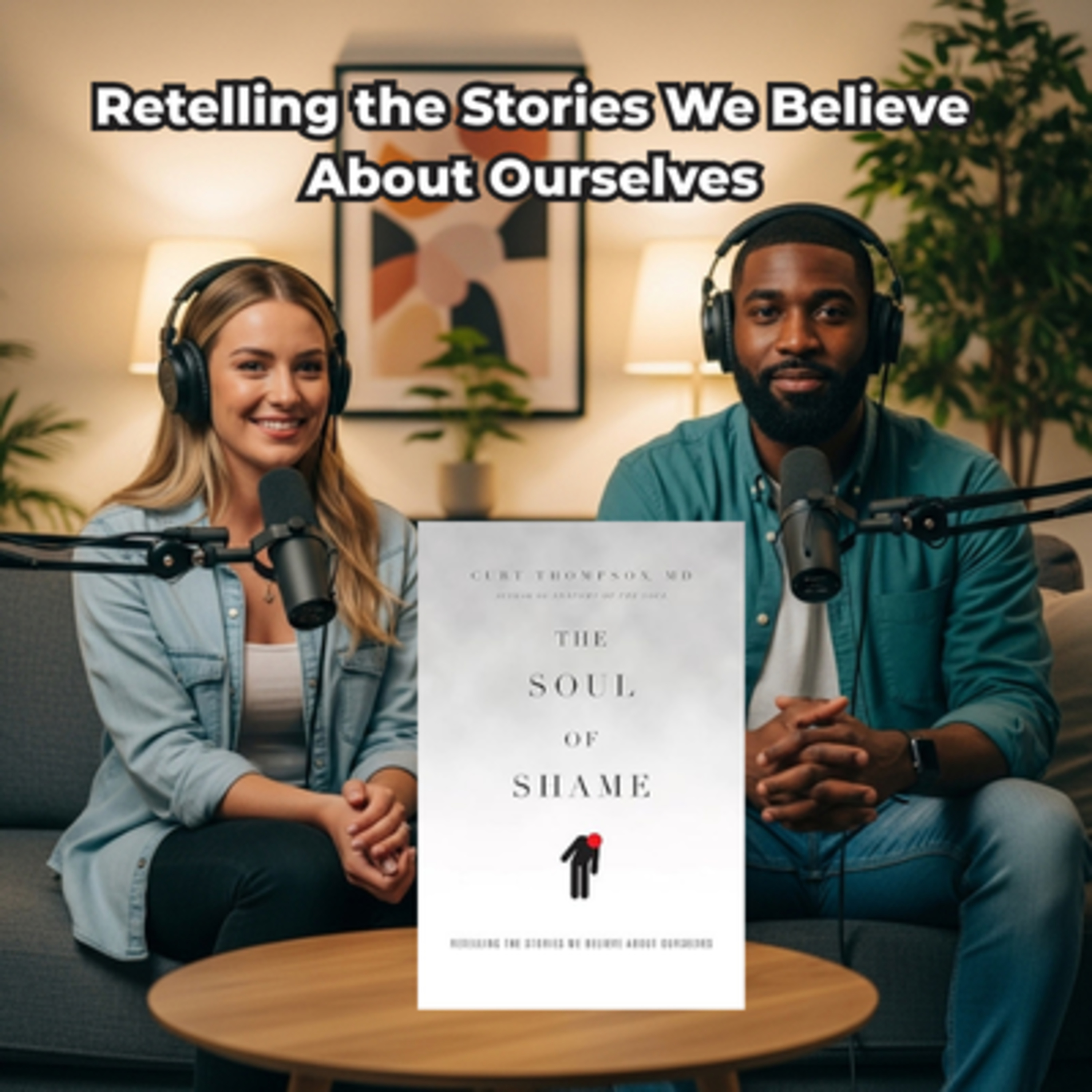
Curt Thompson’s work explores how hidden narratives of shame act as a destructive force that distorts our self-perception and neurological health. The text explains that shame is more than a fleeting emotion; it is a biological and psychological weight that triggers isolation and limits creative potential. By examining both scientific brain patterns and biblical themes of redemption, the author illustrates how these negative stories begin in childhood and persist through secrecy. Healing is presented as a communal process achieved through the remedy of vulnerability and the support of nurturing relationships. Ultimately, the source encourages individuals to rewrite their internal life stories to replace feelings of inadequacy with joy and purpose.
Over 100,000 Copies Sold!
The Gospel Coalition Top Books; Outreach Resource of the Year
Uncovering the Root of All Shame
We're all infected with a spiritual disease. Its name is shame.
Whether we realize it or not, shame affects every aspect of our personal lives and vocational endeavors. It seeks to destroy our identity in Christ, replacing it with a damaged version of ourselves that results in unhealed pain and brokenness. But God is telling a different story for your life.
Psychiatrist Curt Thompson unpacks the soul of shame, revealing its ubiquitous nature and neurobiological roots. He also provides the theological and practical tools necessary to dismantle shame, based on years of researching its damaging effects and counseling people to overcome those wounds.
Thompson's expertise and compassion will help you
- Identify your own pains and struggles.
- Find freedom from lifelong negative messages that bind you.
- Embrace healing and wholeness.
- Discover and defeat shame's hidden agenda in your life.
Don't wait to begin your journey toward healing and renewal. Break free from the grip of shame and rewrite the story of your life as you learn to undo the damage shame has caused. Get your copy of The Soul of Shame today and start transforming your life from the inside out.#productivityhacks #personaldevelopment #successstrategies #businessinsights #leadershipskills #leadership #ambitiousprofessionals #businesstips #self help #scaling business #businesstactics #professionaldevelopment #startupgrowth #entrepreneurship #businessmindset #growthstrategies
Have you ever felt like like you're trapped in a story about yourself that just doesn't feel true? Oh yeah, I think we all have at some point. Right. And today we are looking at why that feeling isn't just in your head. I mean it is actually physically, structurally wired into your brain. It really is, and it's wild when you look at the science behind it. It is so welcome to this deep dive. We are jumping right into some incredible insights from Kurt Thompson's book Rewriting the Soul, which you might also know as The Soul of Shame.
Yeah, both titles get used a lot, but the core message is exactly the same. Exactly. And our mission for this deep dive is super clear. We are going to deconstruct how shame operates not just as this, you know, fleeting bad feeling, but as a deeply ingrained neurological and psychological force that basically dictates your life. It really does. It's a powerful force. And more importantly, we're going to discover how to physically rewire your brain to rewrite that story. I am just incredibly eager to jump into this because it's one of those paradigm shifting topics that completely alters how you understand your own behaviors.
It really is a paradigm shift and setting that foundation requires us to look at this objectively because understanding the grip that shame has on us isn't just an exercise in emotional intelligence or, you know, self reflection. It goes way deeper than that. Exactly. It is about understanding human biology just as much as human emotion. We really have to look at the physical, mechanistic reality of what is actually happening inside of our bodies when that feeling hits. OK, let's unpack this, because that distinction right there just changes everything.
It really does. For anyone listening, we are assuming you already know the basic difference between guilt and embarrassment. We don't need to rehash that right We're. Way past spilling coffee on your shirt. Yeah, exactly. We're talking about that crushing core level attack on your identity, that belief that you are fundamentally flawed. But to hear that this feeling has a biological footprint like that it's physically altering the structure of your brain, is wild. How exactly does a psychological feeling turn into a biological trap?
Well, so it starts with our evolutionary wiring, specifically in an area of the brain called the amygdala, which is basically our threat detection center. The alarm system. Yes, the alarm system for early humans being cast out of the tribe or the community didn't just mean you were lonely, I mean it meant you were going to die. Because you couldn't survive alone out in the wild. Precisely. So our brains evolved to treat social rejection, which is the core threat of shame, right, As a literal life or death scenario.
Wow. Yeah, when you experience a moment of intense shame, your brain doesn't just register it as a social misstep. Your amygdala fires the exact same alarm system it would use if you were to, say, being chased by a predator. So if I make a mistake at work and I suddenly feel that overwhelming sense of I am an imposter, I don't belong here, my body is physically reacting as if my life is in literal danger. Exactly. You experience this massive flood of cortisol and adrenaline. Your heart rates. Spike like full panic mode.
Full panic mode. And crucially, this stress response effectively shuts down your prefrontal cortex, which is the logical, rational part of your brain. Oh. Wow, so you literally can't think straight? You can't you. You lose access to objective reasoning completely, and this creates a really powerful repeating neural feedback loop that just reinforces all that negative thinking. I want to visualize this because the mechanics of it are fascinating to me. Think of your brain like a snowy hill, OK? And a thought is a sled.
I like this analogy. So every time you have a thought driven by shame, the sled goes down the hill and it cars a tiny groove in the snow, right? If you feel shame over and over at that biological alarm system keeps firing, you take that same sled path thousands of times, eventually becomes this deep icy trench, and your thoughts naturally just plummet down that trench because, well, it's the path of least resistance. That is a perfect description of neuroplasticity. In neurology, there is a process called myelination.
Myelination. OK, Yeah, when a neural pathway is used repeatedly, the brain actually coats it in a fatty substance called myelin. It acts like insulation on an electrical wire. Making it faster. Exactly, it makes a signal travel exponentially faster. So those deep trenches of shame on your snowy hill, they are highly myelinated super highways. Man, it's like having a corrupted operating system on a computer. Yeah, that's a great way to put it. Or imagine wearing a pair of permanently warped tinted glasses.
No, the shame doesn't just make you feel bad in the moment. It literally distorts the data you are taking in about yourself and the world because your brain is forcing every new piece of information down that myelinated superhighway. Exactly. It causes profound cognitive distortions. So you can't see reality accurately because those warped glasses tint every neutral interaction into a threat. Like everything confirms your flaws. What's fascinating here is how this biological reality explains the failure of so many well-intentioned self help strategies.
Oh. Totally like just repeating mantras in the mirror. Right. This is exactly why you cannot simply think positively your way out of shame if your prefrontal cortex is offline because your amygdala is screaming that you are in mortal danger and your thoughts are rocketing down a myelinated superhighway of self doubt. A sticky note on your mirror telling you that you are enough isn't going to fix it. Exactly. You cannot simply use logic to override a biological survival loop, OK. But I got to say, this is terrifying it.
Sounds bleak at first, yeah. Yeah. Because if our brains are physically hard wired to loop, shame. And if those deep sled trenches are literally coated in myelin, how in the world do we break the loop? Like if the corrupted operating system is running the show, what is the antivirus? Well, Kurt Thompson argues that the biological counterpart to shame isn't just an absence of shame, it's actually joy. Wait, really? Joy? Yes. And the relationship between joy and shame is incredibly intimate. When we look at brain circuitry, they are actually processed and similarly areas of the right hemisphere of the brain.
I would. Not have guessed that right. But they do completely opposite things biologically, where shame activates the sympathetic nervous system to put you in fight, flight or freeze, which leads to isolation and those cognitive distortions, it activates the parasympathetic nervous system which. Is the rest and digest system. Exactly. It calms the threat response. It actively promotes physical and emotional connection and just overall well-being. I have a really hard time visualizing this in practice though.
I need to push back on this because it sounds a bit too clean. Go for it. Wait, so is joy just the chemical opposite of shame? Like if I am spiraling, if my cortisol is pumping, my prefrontal cortex is completely offline, and I'm rocketing down that deep icy trench of shame, how am I supposed to physically leap from the shame superhighway over to the Joy Dirt Rd. It's. A really valid question. I just. Mean I can't magically turn on joy to fix my brain when I'm actively feeling fundamentally flied and.
You shouldn't try to, because you can't. That is the fundamental misunderstanding of what Joy is in this context. Joy is not a solo endeavor. Yeah, you don't just, let alone in a room, clench your fists and will yourself to feel joyful, to rewire your brain. Thompson's work leans heavily into interpersonal neurobiology. Joy is inherently relational. Wait, so the antivirus requires another person? Yes. Because humans are social mammals, we have a biological mechanism called Co regulation Co. Regulation.
How does that work? Think. About a baby crying the baby cannot calm its own nervous system right and needs a parent to hold it Oh yeah, they. Just scream until someone picks them up. Exactly. The calm regulated nervous system of the parent physically soothes the dysregulated nervous system of the child through touch, tone of voice and eye contact. OK, that makes sense for babies, but adults as? Adults, we still need this we experience an affirm joy through positive, authentic interactions with others it's the physical presence and empathy of another person that acts as the bridge so they.
Pull you out of the trench, right? The regulated nervous system helps bring your prefrontal cortex back online, allowing you to drag your sled out of that shame trench and start carving a new pathway. OK, the physical presence of someone else who isn't judging you essentially tells your amygdala, hey, we aren't being kicked out of the tribe, we are safe. Yes, exactly that. Makes total sense. Relationships are the actual battleground where this tug of war in the brain is playing out. And if relationships are the cure, they are also the origin point, right?
Like we aren't born with these deep trenches of shame, no. Definitely not the. Messages we get from other people build the stories we tell ourselves precisely. These narratives rarely start in adulthood. They usually begin in childhood, a critical parent, a harsh teacher, or early social rejections. These experiences start carving those sled paths early. When the snow is fresh, yes. And because they start when our brands are most malleable, they deeply impact our self worth and keep us stuck in self defeating patterns.
We basically spend our adult lives operating under the assumption that the negative childhood story is objective reality. Here's. Where it gets really interesting because to understand how deeply this instinct runs, Thompson doesn't just stick to modern clinical psychology. He looks at ancient texts. Yeah. He pulls from some very old stories. Specifically the biblical narrative of Adam and Eve. He uses it to show how universal this condition is. And you know, you don't have to look at the Adam and Eve story as a theology lecture to get something massive out of it.
Not at all. It is a profound ancient psychological blueprint of the human condition. Like the instinct to hide when we feel flawed is as ancient as humanity itself. Exactly. Let's look at the mechanics of that story for a second. What is the very first thing they do when they experience shame? They hide. They hide. They literally cover their bodies with fig leaves and they hide among the trees to avoid connection. But. Let's bring that into the modern world. We aren't hiding behind literal foliage.
What are our modern fig leaves? How does that hiding instincts manifest when we feel flawed today? Well, our. Modern fig leaves are our defense mechanisms. When we feel that core sense of unworthiness, we cover it up with perfectionism. We think, if I am flawless, no one can criticize me and I won't feel shame. Oh. Man, I definitely do that. We. All do, Or we use sarcasm and cynicism to keep people at a distance. Sometimes our fig leaf is workaholism, proving our worth through relentless productivity.
Just. Grinding away so no one sees a real you. Exactly. Or conversely, we might hide through sheer invisibility. You know, never speaking up in meetings, never taking risks so we can never be judged. All of these are desperate attempts to manage the narrative and hide our perceived flaws from the world. Wow. And if we connect this to the bigger picture, whether you are looking at an fMRI scan in a modern neuroscience lab or reading an ancient mythological text, the pattern is absolutely identical it.
Really is striking shame. Always, always demands disconnection. It forces us into the shadows. But the psychological blueprint of that story doesn't end with them hiding in the bushes, does it? No. It doesn't the. Response to their hiding is to amplify the shame. The response is grace. It sets a precedent that humans are defined by their potential for growth and connection, not by their shame and. That introduces the most crucial pivot in overcoming this. If the defining characteristic of shame is that it demands disconnection and hiding, then the logical biological and psychological cure must involve the exact opposite, doing the.
Scary thing, yeah. Redemption and healing require coming out of hiding. Which brings us to the paradoxical antidote vulnerability. Comson makes it super clear that vulnerability is the absolute remedy, because shame flourishes in secrecy. It's. Rise in the dark. Right. Like a mold in a dark basement, it only grows when the lights are off. When you keep your internal narrative hidden, it gains strength. But breaking that secrecy diminishes its hold. Yes. Completely by. Being openly and sincerely vulnerable about our struggles, we allow the light in and we allow for that Co regulation we talked about earlier.
It's. The only way to short circuit the isolation that shame relies on. You have to bring the hidden, corrupted narrative out of the dark and into the light through honest conversation. You have to risk exposing the very thing you are most terrified of people seeing. So. What does this all mean for us in practical terms? Because honestly, as beautiful as that sounds in theory, vulnerability feels incredibly dangerous. It does it. Goes against our instincts. Especially if my amygdala is already treating social exposure like a life or death threat, right?
Stepping into the light feels like stepping in front of a firing squad and I supposed to just spill my deepest, darkest childhood insecurities to the barista making my morning coffee Or like, blasted out on social media to cure my brain. Absolutely. Not, and that is a vital point of clarification and a trap a lot of people fall into. There is a massive structural difference between indiscriminate oversharing and intentional vulnerability. OK. Thank goodness, yeah. Indiscriminate oversharing, like dumping your trauma on an acquaintance or broadcasting it online, can actually trigger more shame if the recipient responds poorly or if they ignore it or judge you.
Because then your brain takes that as confirmation that you should be ashamed. Exactly. It just deepens the myelinated trench so. Where do we go? How do we step into the light without getting burned? Healing. Requires what Thompson calls nurturing communities. It is about intentional settings. You need safe spaces marked by empathy, encouragement and a high capacity for emotional intelligence. So. It's not just anyone, right? It's not about telling everyone everything. It's about telling the right people the true things.
When you share your shame with someone who responds with empathy rather than judgement, it creates A profound neurobiological shift. The Co regulation kicks in. Yes, their empathy regulates your nervous system and your brain begins to physically rewire the association between exposure and danger. I love. That phrase telling the right people the true things. So who makes up these safe spaces? Thompson explores this to the concept of a cloud of witnesses, which is a phrase he actually draws from the book of Hebrews.
Oh, that's a. Great image it. Is it's this powerful idea that healing is not and cannot be a solitary journey. We need active participants in our lives who have earned the right to hear our stories. Notice. The word active there, right? A cloud of witnesses isn't just a passive audience watching you struggle to fix yourself, no. They are co-authors in your new narrative. They. Offer encouragement. They share their own stories of struggles so you know you aren't alone, and they actively remind you of your inherent worth when you're corrupted.
Operating system is glitching. Beautifully said and. Having that cloud of witnesses isn't just about feeling better on a Sunday afternoon. When we finally start beating back that shame, we start to see exactly how much it was costing us in the real world. And. The cost is staggering it. Really is this is a massive aha moment for me and I think it will be for everyone listening, Thompson points out. An unexpected, everyday victim of shame. Our vocational creativity it. Is a profound insight. We tend to think of shame as a purely personal emotional issue that we deal with in therapy or in our private relationships, right?
Outside of work hours, but. Shame clocks in with us at work every single day because creativity, by its very nature, requires vulnerability. To create something new, to propose a novel idea, to design something different, you have to put a piece of yourself out there to be judged. Exactly. Let's make this concrete. Imagine you are a software developer, or an architect, or a marketing director. You have this wild, innovative, brilliant idea for a project I've. Been there, right? But as you sit staring at your blank screen, getting ready to build it, that old myelinated super highway of shame kicks in.
A voice from a hyper critical teacher 20 years ago echoes in your head saying who do you think you are? You aren't smart enough to pull this off. They are going to laugh at you and. Right there, the amygdala hijack happens at your desk. Your threat response fires, yes. And what do you do? You retreat. You put on your professional fig leaf. You scrap the brilliant risky idea and you design something safe, boring and utterly mediocre it. Happens all the time and. We look at that and call it professional burnout or imposter syndrome or a creative block.
We treat it like a lack of discipline or a time management issue. But in reality, that creative block is just your childhood shame dressed up in a business suit. This. Raises an important question for everyone listening to reflect on When you look at your own professional life, your career trajectory, or your creative pursuits, how much of your unreached potential isn't a lack of talent? Wow. Yeah. How? Much of it isn't a lack of resources or time. How much of your perceived plateau is actually just a narrative of shame you haven't rewritten yet?
That's heavy it. Is how much brilliant transformative work is the world missing out on because your brain's threat detection system had convinced you it's safer to hide behind mediocre fig leaves? To renew our creativity, we have to recognize that block for what it is. We have to reconnect with the core passions that drew us to our fields, and we have to bring our professional struggles to our cloud of witnesses. Absolutely we need. Mentors and peers who can look at our work, validate our skills, and basically help us pull our sleds out of the trench of imposter syndrome.
Because when the fear of rejection is removed by a nurturing community, the cognitive load that was being wasted on managing shame is suddenly freed up. The. System gets its memory back. Exactly that energy flows directly back into innovation, risk taking, and profound creativity, man. We've covered a massive amount of ground in this deep dive. We started by looking under the hood at the actual physical neurology of shame. You know how social threat hijacks the amygdala and carves deep corrupted pathways in our the brain?
We. Really went deep into the science we did. And we explored how the human instinct to hide behind fig leaves is an ancient psychological blueprint. We discussed why we have to go back and rewrite the stories we've carried since childhood. The sled. Paths the. Sled paths, Exactly. And we looked at the biological cure, how the physical presence of a nurturing community, intentional vulnerability, and a dedicated cloud of witnesses can literally rewire our brains for joy. It's. Amazing stuff. Ultimately allowing us to reclaim our unreached potential and our vocational creativity.
The. Journey from hiding in the shadows to stepping into the light of connection is complex. I mean, it requires courage, but it is deeply grounded in biology, which makes it incredibly helpful it. Really is hopeful your. Brain is plastic. It can change. New pathways of joy and resilience can absolutely be built. And for you listening right now, remember that simply recognizing that feeling, like recognizing when your amygdala is flaring up and trying to force you down an old sled path, is the critical first step.
Awareness is huge. The ultimate goal of this deep dive is to give you the tools to rewrite the narrative you tell yourself. Because your core worth is inherent. It is not up for debate, it is not contingent on your productivity, and it is certainly not defined by the warped glasses of shame. It takes intentional work, and it requires leaning on others, but the corrupted operating system can be uninstalled. The narrative is yours to rewrite now. Throughout this entire conversation, we focused heavily on you.
How you can find your own cloud of witnesses, How you can seek out a nurturing community to heal your own shame and unlock your own creativity. But as we wrap up, I want to leave you with a pivot, a completely different perspective to Mull over as you go about the rest of your day. We've talked about finding a safe space. But what if the most important next step in your journey is actually becoming one? Oh, that's powerful. Look around your office, your friend group, your family. What if your choice to practice intentional vulnerability today, to admit a struggle, to offer empathy instead of judgement, is the exact key someone else desperately needs to regulate their nervous system, unlock their joy, and finally begin rewriting their own story tomorrow?
Thank you so much for joining us on The Deep Dive. Keep questioning the narratives and we'll see you next time.
 Apple Podcasts
 Castbox
 Castro
 Goodpods
 Moon FM
 Overcast
 Pocket Casts
 Podbean
 Podcast Addict
 Podcast Republic
 Spotify