Gentelligence by Megan Gerhardt, Josephine Nachemson-Ekwall & Brandon Fogel | The Revolutionary Approach to Leading an Intergenerational Workforce Hardcover – June 8, 2021
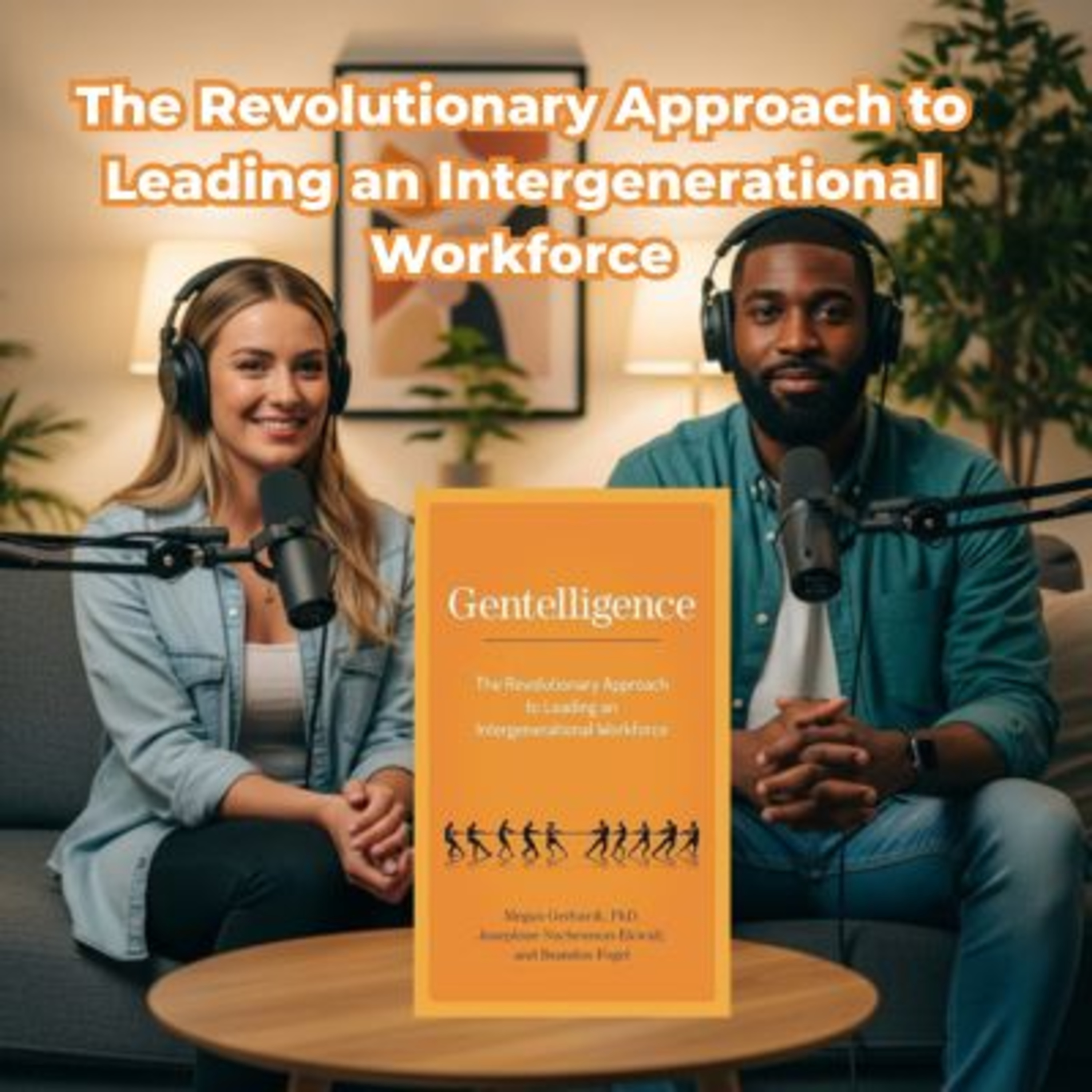
Gentelligence: The Revolutionary Approach to Leading an Intergenerational Workforce presents a transformative way to end the generational wars once and for all. This book first introduces Gentelligence as a powerful business strategy and shows why it is critical for the future of work. It then presents a practical guide and a call to action for leaders of all ages to unlock the potential strengths of each generation. Readers will learn how an intergenerational workforce can be reframed as a profound business opportunity and discover how Gentelligence can help them win the talent war, create strong, diverse teams, and build adaptable cultures that will flourish in an era of rapid change.
Gentelligence shares groundbreaking evidence that will have readers thinking about their generationally diverse workforce in an entirely different way. Readers will discover:
Where generational conflict originates, and how it results in both dangerous ageism and reverse ageism in today’s workplaces.Why the generation gap stems from a misunderstanding of shared core values across all generations. How to find essential common ground with colleagues, both older and younger, and recognize the unique needs that come with different generational identities. How generational shaming leads us to view those from other generations as competitors rather than collaborators, further damaging employee engagement, team dynamics, innovation, and organizational culture. How leveraging the unique strengths of each generation at work can lead to a win-win outcome for all. How traditional views on leadership have been turned upside down as a result of new generational dynamics, with many employees currently being led by managers that are younger than themselves, and older leaders struggling to make sense of changing norms around authority and power. Gentelligence reveals the opportunities within an intergenerational workforce and provides actionable tools to help leaders build Gentelligent organizations. Unlike other books on generational leadership, this book rejects common stereotypes assigned to different generations, replacing them with a deep understanding of why those who grew up in different times may behave in unique and valuable, ways. We challenge leaders to go beyond simply accepting generational differences to leverage them proactively to increase engagement, innovation, and organizational success.This episode provides a comprehensive summary of the book Gentelligence, which advocates for the strategic integration of multigenerational talent to enhance business productivity. The authors examine how media-driven stereotypes and differing communication styles create friction between older and younger employees, often leading to unnecessary workplace conflict. To resolve these divides, the source outlines a systematic framework based on empathy, flexibility, and a shared appreciation for the unique strengths each age group offers. It further details how organisational leaders can refine their management styles to better support diverse career goals and learning preferences. Ultimately, the material serves as a guide for fostering an inclusive corporate culture that views age diversity as a vital asset for navigating the future of work.
#Leadership #WorkplaceCulture #FutureOfWork #Management #TeamLeadership #Gentelligence #IntergenerationalWorkforce #LeadershipDevelopment #EmployeeEngagement #BusinessPodcast #OrganizationalCulture #WorkplaceCommunication #ProfessionalDevelopment #BookSummary #ModernLeadership
You know that that sensation of basically treading water while wearing like a weighted vest? Oh yeah, sounds exhausting. Right. Like you are kicking furiously, your lungs are just burning, and you're expending this massive amount of energy just to keep your head above the surface. But you aren't actually swimming anywhere. Exactly. You're just totally exhausted and, well, you're exactly where you started. Yeah, I mean, it's the illusion of progress really. It's activity masquerading as achievement.
Wow, activity masquerading as achievement. That's a great way to put it. You know, you feel like you're working hard because you're tired, but structurally, yeah, you are just stalled out. And that is the exact feeling I want to talk to you about today. Because if you are listening to this right now and feeling completely drained by your goals, which. So many people are. Right. Whether you're trying to advance your career or lead A-Team or just, I don't know, get your personal life out of Ret, you might actually be wearing that weighted vest without even realizing it.
Vest It usually takes the form of how we relate to our circumstances, like how much agency we actually believe we have in our own lives. Which brings us to today's Deep Dive. We are exploring the core philosophy of Adam Creek's book, The Responsibility Ethics. Such a fascinating read. It really is, and our mission today is to completely dismantle and and rebuild your relationship with one very, very misunderstood word. Accountability. Accountability. Because somewhere along the line, accountability became this, this sterile corporate buzzword, you know, Oh.
Absolutely. It's like we. Associate it with punishment or like getting called into the principal's office. Yeah, it's always used when someone messes up. Who is accountable for this disaster? Exactly. But Creek's work reframes it entirely, he says. It's not a burden at all. It is actually the ultimate psychological tool to, well, strip off that weighted vest, stop treading water, and actually start swimming. The shift in perspective here is, I mean, it's profound. The central argument isn't about carrying the weight the world on your shoulders just to look like a hero.
It's about understanding the actual mechanics of how human beings achieve things. Taking absolute, uncompromising charge of your choices is just the most efficient, low friction way to navigate reality. But to get there, we really have to start with a serious psychological reset. And I'm going to be honest, this first concept, it is a tough pill to swallow. It definitely is. It triggers a lot of people. Oh, for sure, because the foundation of this entire philosophy is that you have to completely, prominently surrender the right to blame your circumstances.
Yes, you have to accept total responsibility for your mentality and your behavior, no matter what happens to you. Right, because the human brain naturally seeks A scapegoat. I mean, it's a defense mechanism, plain and simple. It wants to protect the ego. Exactly. If you fail or if you're stuck, your ego just wants to say the economy is bad or my boss is completely unreasonable or I just don't have the time right now. OK, I have to stop you right there and and push back a little bit on behalf of the listener because this borders on sounding like toxic positivity.
I hear that a lot. Right, because what if the economy actually is bad? What if you are dealing with an objectively terrible situation that you you absolutely did not 'cause? Like a natural disaster or something. Yeah. Let's say a pipe bursts in your apartment building and completely ruins your living room. OK, good example. Telling someone who is listening right now, who is dealing with genuine random misfortune, that they need to, quote UN quote, take responsibility for it. I mean, that almost sounds like gaslighting.
That is a completely valid reaction, and it's exactly why we have to separate 2 concepts that we constantly, constantly conflate, fault and responsibility. They are not the same thing. OK, break that down for me. So fault is backward looking, it asks who caused this. But responsibility is forward-looking. It asks who is going to handle this. Oh wow, that's that's really interesting. So if that pipe bursts, the fault lies with the aging plumbing or or maybe your landlord who didn't do maintenance you are not at.
Fault. Obviously not. I was just sitting on my couch. Exactly. Yeah, but you are still 100% responsible for your response. I see you can spend the next 4 hours sitting in the literal water, furious mentally drafting lawsuits and complaining to everyone about your terrible luck. Which is tempting. Very tempting. Or you can start moving your furniture, calling a plumber, and finding a place to stay for the night. So the blame game is essentially just a delay tactic. Exactly. When you blame external factors, even if you are actually objectively correct, you are placing your locus of control outside of yourself.
You're giving away your power. Yeah, you are literally telling your brain I'm a victim of this situation and therefore I must wait for the situation to change before I can act. And the situation isn't going to change itself. The water is still rising. Right, That puts you in a passive, completely paralyzed state. But taking responsibility, even for a disaster you didn't cause instantly flips your brain into active problem solving mode. Think about how this applies to everyday goals. Goals, too, like getting in shape.
Oh, that's a classic 1. Right, let's say you want to exercise, but your reflex is to blame your hectic work schedule. You say to yourself, I legitimately do not have an hour to spare. The schedule is the bursting pipe in this scenario, yes. That's it perfectly. You're blaming the schedule, which means you're basically waiting for the schedule to magically clear up, which let's be real. It won't. It never does. But if you assume responsibility, you stop blaming time and you actually own your time management.
You admit I am choosing to spend my evening watching a screen instead of moving. Which is hard to admit. It's very hard, but the moment you own that choice, you finally have the power to change it. You can set the alarm 30 minutes earlier. And let's examine the psychological mechanism of why that shift matters so much. Yeah, what's happening in the brain there? Well. When you wait for circumstances to favor you, you live in a constant state of low grade anxiety because you are essentially at the mercy of the universe.
We're just waiting for the next bad thing to happen. Exactly. But when you dictate the response, you build self efficacy. You teach your nervous system that you are actually capable of handling friction. Which scales up to the workplace brilliantly. Like imagine a major project is failing. OK, marketing didn't deliver the assets on time, the client changed the brief at the last minute. It's just a total mess. We all been there, right? And the instinct is to write a defensive e-mail pointing out all the ways other departments failed.
It's not my fault, it's marketing's fault. Cover your own. Yeah, exactly. But if? You take ownership, You bypass that resentment entirely. You pivot of it, you realign the team and you just figured out the. Workaround because resentment requires a massive amount of cognitive load. I mean, complaining drains the exact executive function you need to actually solve the problem. Oh. That is so true, you get so tired just being mad. Right when you take ownership, you reclaim all that wasted cognitive energy.
Plus, it creates this really fascinating ripple effect. What? Do you mean? Well, when a leader refuses to point fingers and instead just focuses on solutions, it radically lowers the defense mechanisms of everyone else in the room. Because they aren't afraid of being blamed anymore. Exactly. You create a culture of execution rather than a culture of self preservation. OK, so we've established that locus of control. We are no longer waiting for the universe to cooperate with us. We are not victims.
Right. But how do you actually operationalize that? Because this leads to a really, really profound point in the text about leadership. Yes, moving from mindset to action. We tend to think of leadership as managing other people, but the argument here is that the absolute prerequisite to leading anyone else is self leadership. You cannot export stability if you are importing chaos. Oh, that's a great way to put it. You can't export stability if you're importing chaos. It's like trying to navigate a crew through the wilderness when your own compass hasn't been calibrated.
It's a disaster waiting to happen. Yeah, if your true north is off, taking a team with you just means everyone gets lost together. And calibrating that compass means taking granular accountability for your own personal goals first. Like Creek says, no one is coming to save you and no one cares about your goals as much as you do. And the examples he gives are wonderfully mundane, but so powerful. Like saving money for a trip, right? You don't just hope the money appears in your account. You ruthlessly audit your spending, you build a budget, and you manually move the funds.
Or preparing for a massive certification exam. Yes. You don't cram the week before out of panic. You build a rigid daily study schedule months in advance, and you stick to it. And notice the mechanism in those examples, right? They break a massive intimidating outcome into these tiny micro actions. Small steps. And there's a real neurological benefit to this. Every time you successfully execute a small boring task, like sticking to your budget for one day or finishing one study module, your brain releases a small amount of dopamine.
Oh interesting, so it's like a chemical reward? Exactly. And that dopamine acts as fuel. It creates momentum. So you aren't relying on these massive, fleeting bursts of motivation. No, because motivation is entirely unreliable. It comes and goes. Action precedes motivation, not the other way around. Wait, say that again, Action precedes motivation. Yeah, by taking radical responsibility for the boring daily inputs, you generate the momentum needed to reach the output. You essentially learn to trust yourself.
And that self trust is the foundation of leadership A. 100%. But here is where we hit an obvious trap in the book. Yeah, if taking total ownership gives you all this momentum and control, the natural temptation is to just hoard all the responsibility. Oh yeah, the if you want it done right, do it yourself mentality. Exactly to do everything yourself. So it's done quote UN quote, right. But the philosophy takes a sharp turn here and argues that true resilience actually requires you to let go. You have to delegate.
Because the math of individual capacity is just finite. I mean, you can only work so many hours. You can only make so many good decisions in a day before decision fatigue sets in. I'm going to challenge this though, because delegating is terrifying. It really is, especially for high achievers. Right. If my name is on a major presentation or if I'm ultimately the one accountable for the project success, trusting a junior employee to handle a crucial piece of it. I mean, it feels like the opposite of taking responsibility.
It feels like losing control of my own fate. It. Feels that way because you are confusing accountability with execution. OK, tell me more about that. You don't have to execute every single task to be accountable for the outcome and find if you insist on executing everything, you become the bottleneck. Explain that bottleneck effect for the listener. Sure. Think of it like architecture. If you are building a massive structure, you cannot put the entire weight of the roof on a single load bearing pillar in the center of the room.
Right, because it would just crush it. No matter how strong that pillar is, eventually it will crack under the pressure. The system is brittle. A resilient structure distributes the weight across multiple pillars. That makes total sense. When you refuse to delegate because you want control, you are making yourself the single point of failure. Ah, so stepping back and sharing the load isn't abandoning your duty at all, it's actually protecting the integrity of the project. Exactly. It's an act of recovery for you and an act of empowerment for them.
There's a fantastic sports analogy for this. Think of a head coach on the sidelines of a football. Game. Oh, I love this analogy. The absolute worst thing a coach can do during a game is try to micromanage every single step of the players on the field. They lose instantly. Right. A great coach does the work in practice, but during the game they delegate decision making authority to the athletes. Yeah, by doing that, the coach preserves their own vantage point to see the whole field and the players actually develop the capacity to think for themselves.
Right, because if you script every move for your team, you train them to become helpless. They will just stand around waiting for your instructions. Which means when something unexpected happens, they freeze. Exactly. When you distribute responsibility, you build a resilient ecosystem where people actually take pride in their localized ownership. OK. So we are taking ownership of our mindset, We are calibrating our own compass with personal goals, and we are distributing the weight through delegation.
It's a solid framework. It is, but this is high level operation and operating at this altitude inevitably breeds pressure. Oh, undoubtedly. And this brings us to a really fascinating take on how we handle that pressure because normally we treat stress like it's just the cost of doing business. Almost like a badge of honor even. Like look how stressed I am. I must be working so hard. Exactly. But Creek argues that this is actually a massive failure of accountability. It really is, he says. You have to take total responsibility for your stress.
Letting stress fester and overwhelm you is not a fine of hard work. It is a choice to mismanage your own resources. This completely flipped a switch in my brain. Managing stress isn't about indulging in like fuzzy self-care, it's about energy budgeting. Yes. Like if you run a massive computer server, you don't just run it at 100% capacity until it physically catches fire. Right. That would be terrible management. You deliberately schedule downtime for maintenance to prevent a catastrophic crash.
And the human nervous system operates the exact same way. High performers understand that stress is unavoidable, sure, but chronic, unmanaged stress destroys your ability to function. The example given in the text is a working parent who is just juggling insane obligations at work and at home. A very relatable scenario. Very they could just suffer through it, let the cortisol spike day after day and eventually snap at their kids or their coworkers. Which happens all the time. But instead they take responsibility for their internal state.
They force a non negotiable boundary every single night. They take 30 minutes for a solitary walk or just reading a book in silence. And we have to be really clear here for the listener that walk is not leisure, it is operational necessity, yes. It's maintenance. Exactly because when you are constantly stressed, your amygdala, you know the fear center of your brain, it literally hijacks your prefrontal cortex. And the prefrontal cortex is where logic and decision making happen, right? Spawn on SO by deliberately engaging in an activity that lowers your heart rate and clears your mind, you are literally resetting your brain chemistry.
You are taking responsibility for the equipment you use to navigate the world. And the downstream effect of that is just massive, because if you don't manage your own stress, you inevitably infect your team with it. Oh, anxiety is incredibly contagious. It really is. You communicate panic, but taking responsibility for your internal state makes you a safe, stable person for others to interact with. Which is the perfect bridge to the final and perhaps most vital layer of this philosophy. Creed calls it readiness.
Readiness. Yeah, which is essentially owning your professionalism in every single interaction you have, you know? When you hear the word professionalism, we usually think of like dress codes or or using corporate jargon and e-mail, right? But the argument here is that true professionalism is the daily behavior proof that you respect the ecosystem you operate in. It's the friction reducing oil in the machinery of any organization, and it starts with basic reliability, like hitting your deadlines.
And meeting a deadline isn't just about avoiding getting in trouble with your boss. No, not at all. It's about recognizing that you exist in a reb of dependencies. If I am late on my part of a project, I am actively stealing time from the next person in line. You're forcing them to rush. I am forcing them into a panicked state. Owning your professionalism means valuing the collective outcome over your own urge to procrastinate. But the ultimate test of this accountability, and this is genuinely my favorite scenario in the entire philosophy, happens in the conference room.
Oh, the meeting scenario, yes. Imagine you're in a meeting and a colleague pitches an idea that you genuinely think is terrible. I mean, it is flawed, it won't work and you know it. The reflex is to shoot it down immediately. You want to say no, that's going to cost too much. Let's just move on. Which feels efficient. Right. You think I'm saving the team time by killing a bad idea quickly It. Feels efficient in the micro, but it is incredibly destructive in the macro. Taking responsibility for your professionalism means you intentionally suppress that reflex.
You hold your tongue. You. Hold your tongue, you listen, you have probing questions, and you offer critique in a way that is constructive rather than dismissive. OK, let me play devil's advocate here. Why, if the idea is legitimately bad, aren't we just indulging nonsense and wasting time? Because you aren't managing the idea, you are managing the psychological safety of the room. If you shoot people down aggressively, you teach the entire room that speaking up is dangerous. So everyone shuts down.
Exactly. The next time someone has a brilliant, unconventional idea, they will keep it to themselves because they don't want to be embarrassed. By treating a bad idea with respect and curiosity, you're investing in the trust capital of the team. You are proving that you can navigate disagreement without destroying collaboration. Precisely. Trust capital. I really love that phrase. And that really brings us to the ultimate payoff of this entire mindset shift. It really does tie it all together. Because when you string all of this together, when you stop blaming your circumstances and move straight to problem solving, When you rigorously execute your personal goals to build momentum.
When you stop hoarding control and distribute it to your team. Right when you treat your stress like a scheduled maintenance issue, and when you fiercely protect the trust capital of your colleagues, what actually happens You. Become a gravitational pull. People trust you implicitly. They want to work with you. Opportunities just flow toward you because you have proven that you do not require micromanagement, you're not panic in a crisis, and you elevate the people around you. Forms you from a passenger who is just reacting to the bumps in the road into the driver who is actually charting the course.
Taking total 100% responsibility isn't a punishment at all. Not even close. It is the most radical form of empowerment available to you. It strips away all the static and the noise of excuses, leaving only action. And to bring this all together, I want to leave you, the listener, with a challenge directly inspired by this mindset. Love a good challenge? I want you to think about the single biggest obstacle you are facing right now, the one that's been keeping you up at night. The one that feels really heavy.
Got it in mind. Now I want you to imagine a scenario where it is impossible for anyone else to fix it. No one is going to apologize to you, no one is going to change their behavior, and the universe is not going to cut you a break. It's all on you. If you were forced to assume absolute 100% responsibility for navigating that obstacle today, what is the very first physical action you would take? That is a phenomenal question to chew on. Whatever that first action is, that is your compass calibrating.
Exactly. Stop treading water, take off the weighted vest, and make the choice to swim. If this deep dive shifted your perspective today, send it to a friend or a colleague who might need help finding their own agency right now. Thanks for joining us, and we'll catch you on the next deep dive.
 Apple Podcasts
 Castbox
 Castro
 Goodpods
 Moon FM
 Overcast
 Pocket Casts
 Podbean
 Podcast Addict
 Podcast Republic
 Spotify