Daring Greatly by Brené Brown | How the Courage to Be Vulnerable Transforms the Way We Live, Love, Parent, and Lead
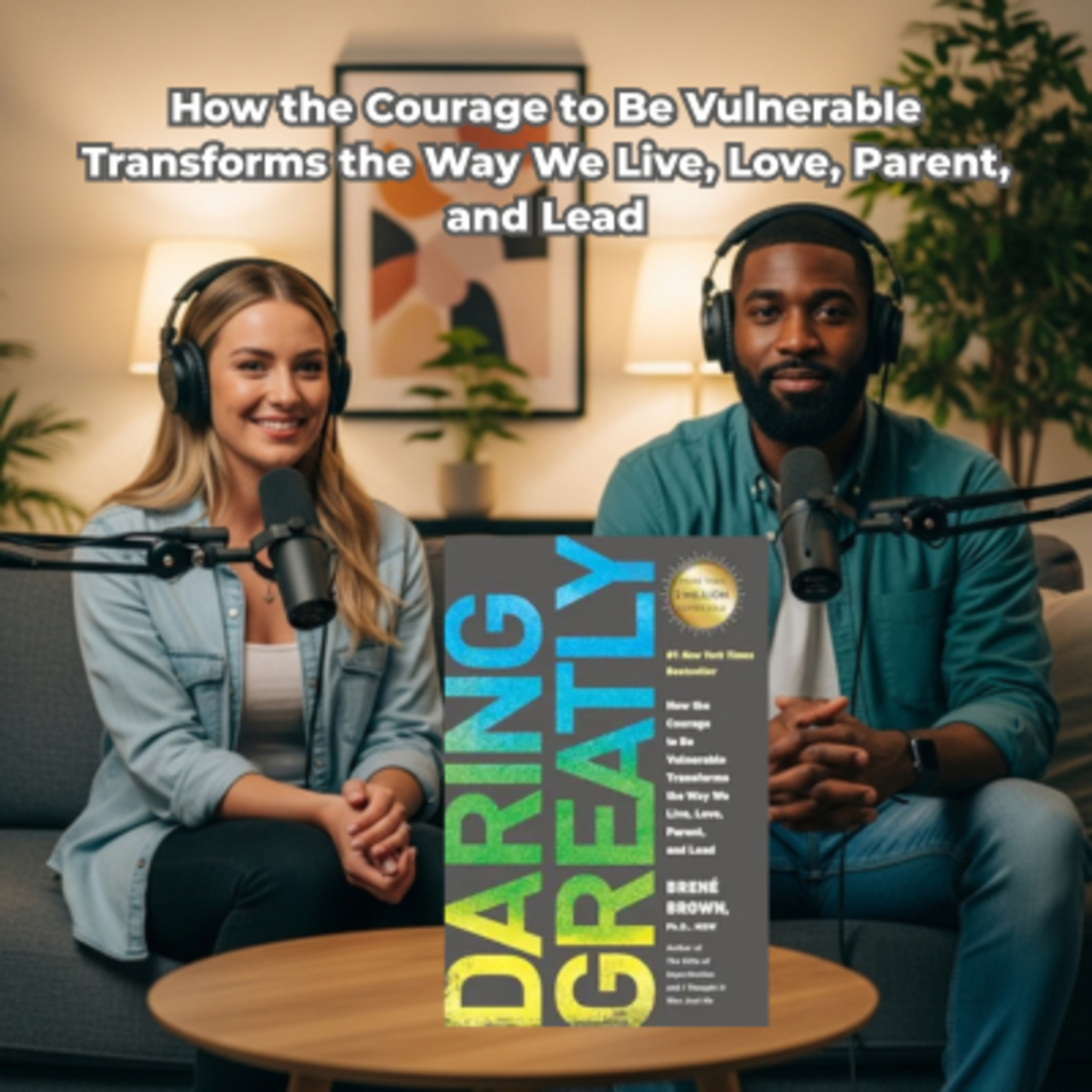
From thought leader Brené Brown, a transformative new vision for the way we lead, love, work, parent, and educate that teaches us the power of vulnerability.
“It is not the critic who counts; not the man who points out how the strong man stumbles, or where the doer of deeds could have done them better. The credit belongs to the man who is actually in the arena, whose face is marred by dust and sweat and blood; who strives valiantly; . . . who at the best knows in the end the triumph of high achievement, and who at worst, if he fails, at least fails while daring greatly.”—Theodore Roosevelt
Every day we experience the uncertainty, risks, and emotional exposure that define what it means to be vulnerable or to dare greatly. Based on twelve years of pioneering research, Brené Brown PhD, MSW, dispels the cultural myth that vulnerability is weakness and argues that it is, in truth, our most accurate measure of courage.
Brown explains how vulnerability is both the core of difficult emotions like fear, grief, and disappointment, and the birthplace of love, belonging, joy, empathy, innovation, and creativity. She writes: “When we shut ourselves off from vulnerability, we distance ourselves from the experiences that bring purpose and meaning to our lives.”
Daring Greatly is not about winning or losing. It’s about courage. In a world where “never enough” dominates and feeling afraid has become second nature, vulnerability is subversive. Uncomfortable. It’s even a little dangerous at times. And, without question, putting ourselves out there means there’s a far greater risk of getting criticized or feeling hurt. But when we step back and examine our lives, we will find that nothing is as uncomfortable, dangerous, and hurtful as standing on the outside of our lives looking in and wondering what it would be like if we had the courage to step into the arena—whether it’s a new relationship, an important meeting, the creative process, or a difficult family conversation. Daring Greatly is a practice and a powerful new vision for letting ourselves be seen.
This summary provides a comprehensive overview of Brené Brown’s philosophy on authentic living and the power of vulnerability. It challenges the misconception that openness is a sign of weakness, arguing instead that true courage stems from the willingness to be seen despite the risk of failure. By exploring the critical distinctions between guilt and shame, the text illustrates how individuals can build emotional resilience and move away from a mindset of constant self-criticism. Practical advice is offered to help readers embrace imperfection, foster deep empathy, and transition toward a sense of personal "enoughness." Ultimately, the material serves as a guide for showing up fully in life to achieve more meaningful and heartfelt connections with others.#productivityhacks #personaldevelopment #successstrategies #businessinsights #leadershipskills #leadership #ambitiousprofessionals #businesstips #self help #scaling business #businesstactics #professionaldevelopment #startupgrowth #entrepreneurship #businessmindset #growthstrategies
Think about the last time you felt really nervous opening up to someone you know, maybe sharing a struggle or admitting a mistake. Oh yeah, that is never comfortable. Right. It felt super risky. Your brain was probably screaming at you to just project total control, but afterward you probably felt lighter. Exactly. It's like this huge weight comes off your shoulders. And that feeling, that exact dynamic, is what we are exploring today. We are doing a deep dive into the core concepts of Brene Brown's book, Daring Greatly.
Such an incredibly important piece of work. It really is, and our source material for today's discussion comes from this really comprehensive summary by the channel Book Tunas. They do a great job of breaking down the heavy concepts. They totally do. So our mission today is to decode why the very thing we try so incredibly hard to avoid, which is vulnerability, is actually the ultimate shortcut to authentic living, deeper connections, and, well, real happiness. It's a paradox, honestly. The thing we run from is exactly what we need.
Wait, I just have to say, looking at your video feed right now, your backdrop has completely changed. You've got this incredibly warm, inviting study going on. There are cozy armchairs. I see a roaring fireplace. Yeah, I felt like I needed to change it up. I love it. It's the absolute perfect, safe, conversational mood for this kind of exploration into human connection. Well, you know, when we're analyzing the raw parts of human nature, you need an environment that signals psychological safety. So I figure bring on the cozy vibes.
OK, let's unpack this. We have to start with the foundational premise of the source, which is redefining what vulnerability actually means. Right, because the default definition is completely backward. Totally. I mean, usually vulnerability is thought of as a weakness, like you're exposed, you're fragile. But the source completely flips this. It says vulnerability is actually a measure of courage. Which is such a profound shift. We associate being open with being defenseless, but it takes immense internal strength to stand in a space of total uncertainty and just choose to be seen anyway.
So, bringing it down to earth, the book Tune as Summary uses this really relatable example. Imagine you're starting a new job, right? Oh, the classic high stress scenario. Exactly. And you're handed this task and you realize you have absolutely no idea how to do it. The instinct is to fake it. You just nod and frantically Google things so no one realizes you don't know what you're doing. Because you're terrified of looking incompetent. Yes but the vulnerable courageous choice is to actually walk over to a Co worker and say hey I don't know how to do this can you help me?
Which feels terrifying in the moment. It does. I mean, I like to think about faking it. Like wearing this heavy, clunky suit of armor. Oh, I like that analogy. Yeah, like it feels safe because nothing can get through, but you're so rigid it takes all your energy just to walk around. You're completely exhausted by noon, trying to maintain the illusion of being perfect. You're burning all your processing power on the armor. Exactly. But when you drop the armor, when you just ask for help, you feel exposed for a second, but suddenly you can move freely, you can actually connect with your Co workers and learn the task.
What's fascinating here is the psychological signaling that happens between you and that Co worker. When we admit we don't know something, we think we're building a wall, but we're actually building a bridge. How so? Like what's happening mechanically there? Well, you're signaling a lack of ego. You're showing that you're willing to learn, and that actually validates the other person. You've invited them to be an expert which disarms their own defensive systems. Yeah, it makes so much sense. It creates mutual support instead of a weird competition.
Precisely. It's the literal connective tissue of a functional team. OK. So if vulnerability is our greatest strength, what's the biggest barrier preventing us from using it? Without a doubt about its perfectionism. OK. But wait, I have to push back on this a little bit, maybe on behalf of the listener, especially in our professional setting, isn't striving to be perfect a good thing? It seems like it would be right, yeah. I mean, doesn't it protect us from judgement? If my presentation is totally flawless, nobody can criticize me.
It's a seductive trap, but the source material makes a really explicit distinction here. Striving for excellence is about internal growth. Perfectionism is a defensive mechanism. So it's about controlling what other people think. Exactly. It's the belief that if you look perfect, you can avoid the pain of blame or judgement. And the text points out that trying to be perfect to avoid judgement actually holds us back from real growth and connection. Because you're just living in constant fear of making a mistake.
Right, and the source gives this great example about giving a presentation. Say you're up there and you make a small mistake. You stumble over a word or skip a slide. The absolute nightmare scenario. If you're trapped in perfectionism, you panic, your fight or flight kicks in and you completely lose the room because they feel your intense distress. But if you drop the armor. If you embrace the imperfection and just laugh it off, the audience actually finds you way more relatable because frankly, everyone makes mistakes.
Think about it, who do you prefer to work with? A flawless, unyielding robot who never admits a fault, or someone who's super confident but can laugh at their own minor slip UPS. The flawless robot is exhausting to be around. Because it makes you feel like you have to be a robot too. But when that perfect facade inevitably cracks, which it will because we're human, it triggers some really negative feeling. All massive negative emotions. Here's where it gets really interesting, because how we process those feelings is basically make or break.
We have to look at Brene Brown's crucial distinction between guilt and shame. It's a vital part of the book. So based on the summary, guilt is feeling bad about something we've done, but shame is feeling bad about who we are. The behavioral impacts of those two things are worlds apart. Right, the source uses the example of accidentally hurting a friend's feelings. Classic situation, yeah. So guilt says I feel bad about what I said, which is helpful, right? It drives you to apologize and repair the relationship.
Exactly. It's highly adaptive. But shame says I'm a terrible friend, which just keeps you stuck. You feel entirely unworthy of connections, so you just withdraw. You isolate yourself. I always think about guilt as like a check engine light on your car dashboard. Oh. That's good. Yeah, it's annoying. It flashes, but it points out a very specific problem that you can actually fix. You go to the mechanic and you move on. And shame. Shame is like the car locking the doors and the radio telling you to just drive into a ditch because you're fundamentally a terrible driver and you don't deserve a car at all.
That is intensely accurate. There's no fixing it when the identity itself is attacked. So how do we fight that? Well, shame thrives in hiding. The source dictates we have to build shame resilience, and the only way to do that is by talking about it with trusted people, exposing it to the light. Like the example in the text about failing a test. Right, the instinct is to hide an embarrassment. But if you share it with a supportive friend, If you say I totally bomb this and I feel stupid, what happens they.
Almost always say me too. I failed one last year and suddenly you realize you aren't alone. It strips the shame of its power and just gives you permission to be human. Wow, OK, so stripping away that shame allows us to finally be present. If we connect this to the bigger picture, developing that shame resilience is what leads to the courage to show up. And showing up fully means being open in tough situations, right? Exactly. Job interviews, facing failure, having difficult conversations. It means not running away.
The text mentions being nervous to share an idea in a meeting, but choosing to speak up anyway, even if it's scary. Staying true to yourself builds real long term confidence. Because you learn you can survive the exposure. But showing up also demands another core tool, which is empathy. Listening and understanding without judgment. Right, the summary brings up the example of a friend who's completely overwhelmed at work. OK, wait. This part of the text really caught my attention because it points out the exact wrong way to handle this.
The instinct is to say, hey, you'll be fine, you always figure it out. Which is what everyone does. Yes, but the text says that's actually super unhelpful and I realized how tempting it is to try and fix their problem just to make ourselves comfortable. Oh absolutely. Their distress makes us anxious, so we try to rush them out of it. Rather than using the empathetic response the text suggests, which is just saying man, I get why you feel that way. Which feels passive, but it's actually profoundly active.
True empathy creates a safe space, It tells them they aren't crazy for feeling overwhelmed, and that builds incredibly strong bonds. It's just sitting in the dark with them for a minute. Exactly. But to truly show up for others like that, we have to stop measuring ourselves against impossible standards. Which brings us to the cultural trap of scarcity. The constant messaging that we are never enough. Right. Not rich enough? Smart enough? Popular enough? It's the hum of anxiety in modern life. The text uses scrolling through social media as the prime example.
You spend 5 minutes looking at perfectly curated lives and suddenly you feel this massive sense of lack. Because everyone else seems to have it figured out. Right. And the fix for this scarcity mindset is actively cultivating enoughness, reminding yourself that you're doing your best and that your baseline is enough. Which basically culminates in the ultimate goal of the text living wholeheartedly. Choosing growth over comfort. Leaving our hearts open. Like picking up a new creative hobby even though you were terrified you might fail at it.
You just paint the terrible painting anyway. You engage without the armor. So what does this all mean when you pull it all together? Wholeheartedness is basically the ultimate rebellion against this whole culture of comparison. This raises an important question. How do we actually do this on a Tuesday morning? Right, like when the alarm goes off and you're tired. Exactly. The Booktunez summary actually gives a really specific daily toolkit, which is great. Let's look at the specific steps first.
One practice vulnerability. Which just means sharing a small thought or worry with a trusted person to build the habit, right? Yep, low stakes practice second, let go of perfectionism, Set one good enough goal a day. Progress over perfection. I love that third step challenge Unworthiness. So when you have a thought of not being enough, you actually write it down and actively challenge its. Logic. Treat it like a hostile witness. OK Step 4. Build empathy. Intentionally listen to someone without judgement.
Don't formulate your reply while they're talking. That one is so hard but so necessary. Step 5 is to face a fear. Take. One small step daily. Speak up in a meeting or just ask for help. Step 6 is about gratitude and self liking. Wake up. Name one thing you are grateful for and one thing you actually like about yourself. It shifts your whole Nuva system. And finally, step 7, be yourself. Don't hold back your real thoughts and just watch how your relationships deepen. It's a complete paradigm shift.
It really is. So to wrap this all up, what we've learned is that vulnerability is not something to be avoided. It is literally the raw material for courage, for connection and for a fulfilling life. It's the core feature, not a bug. Exactly so whether you are navigating work or love or parenting, daring to embrace your imperfections is what opens the door to real growth. The source material really emphasizes being kind to ourselves, acknowledging our weaknesses, and stating what we like about ourselves to shift our mindset.
But you know, I want to leave you with a final thought to ponder. OK, let's hear it. We spend so much time worrying about how vulnerability will change our relationships with our Co workers, our friends, or our family. We worry about the external judgement. But what if the most profound relationship that transforms when you finally drop that heavy armor of perfectionism is the relationship you have with yourself? What would it look like to finally be vulnerable with a person in the mirror? Wow, that is a powerful question.
Well, thank you for joining us on this deep dive. Take a breath, drop the armor, and take that first brave step today.
 Apple Podcasts
 Castbox
 Castro
 Goodpods
 Moon FM
 Overcast
 Pocket Casts
 Podbean
 Podcast Addict
 Podcast Republic
 Spotify