The Transforming Power of Hospitality in Business | Setting the Table by Danny Meyer
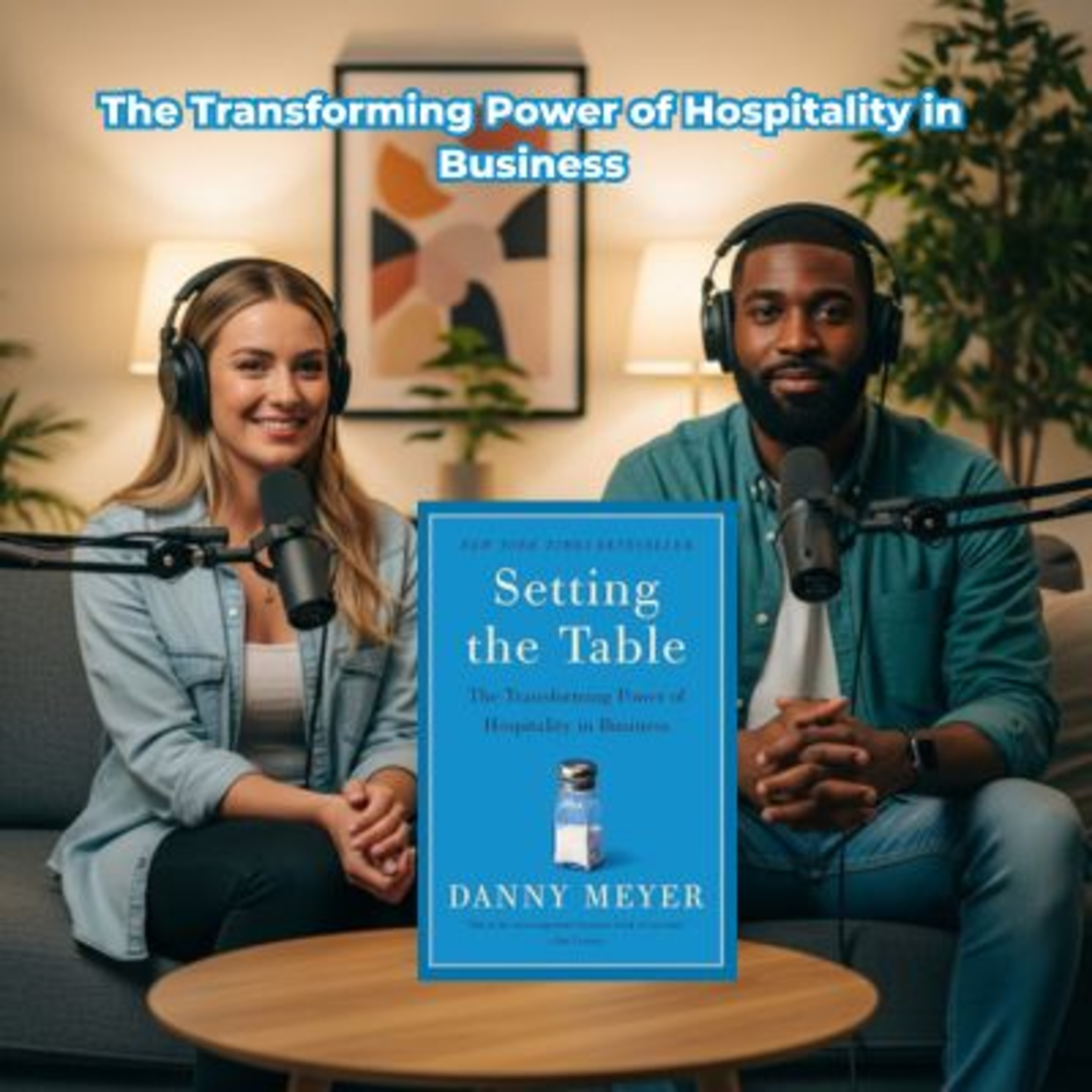
Seventy-five percent of all new restaurant ventures fail, and of those that do stick around, only a few become icons. Danny Meyer started Union Square Cafe when he was 27, with a good idea and hopeful investors. He is now the co-owner of a restaurant empire. How did he do it? How did he beat the odds in one of the toughest trades around? In this landmark book, Danny shares the lessons he learned developing the dynamic philosophy he calls Enlightened Hospitality. The tenets of that philosophy, which emphasize strong in-house relationships as well as customer satisfaction, are applicable to anyone who works in any business. Whether you are a manager, an executive, or a waiter, Danny’s story and philosophy will help you become more effective and productive, while deepening your understanding and appreciation of a job well done.
Setting the Table is landmark a motivational work from one of our era’s most gifted and insightful business leaders.
This text examines Danny Meyer’s "Enlightened Hospitality" philosophy, illustrating how prioritizing human relationships over mere transactions drives business success. The author highlights the "51 Percent Solution," which advocates for hiring staff based on emotional intelligence and innate kindness rather than technical skills alone. By fostering a supportive internal culture, leaders empower their teams to provide superior service, which in turn builds customer loyalty and community trust. The overview also explains that accountability during mistakes and applying consistent, gentle pressure are essential for maintaining high standards and long-term growth. Ultimately, the source argues that a virtuous cycle of care—starting with employees—inevitably leads to sustainable profitability and a stronger reputation.
#Leadership #CustomerExperience #Hospitality #BusinessGrowth #CompanyCulture #EmotionalIntelligence #Entrepreneurship #Management #BusinessStrategy #LeadershipDevelopment #CustomerService #PeopleLeadership #BusinessPodcast #BookSummary #ProfessionalGrowth
What if the secret to building like a highly profitable, truly dominant business isn't a ruthless price war? Or, you know, a massive restructuring, or even some proprietary new software? What if the ultimate competitive advantage is just pouring a cup of coffee for your employee on a random Tuesday morning? I mean, it sounds totally counterintuitive, right? Especially in a corporate culture that is just well obsessed with short term metrics. Oh, absolutely. You know, quarterly earnings, immediate ROI, all of that.
But when you look at the actual mechanics of long term sustainable growth, human connection is it's actually the most powerful engine available. Which is exactly why we are getting into this today. Welcome to another deep dive. Today we are exploring the core lessons from Danny Meyer's book Setting the Table. Yeah, a really fascinating read. It really is. And we're specifically zeroing in on a concept called the 51 percent solution and the broader philosophy of enlightened hospitality. So our mission today is to figure out how these principles which were, you know, forged in the high stakes world to fine dining.
Right, highly stressful environment. Exactly how those principles are actually a revolutionary strategic framework for absolutely any industry, business, or like any client interaction you might find yourself navigating. Yeah, because Myers Framework, it really proposes A radical alternative to standard operating procedures. It argues that emotional intelligence isn't just some, you know, secondary soft skill, it is the actual mechanism that drives revenue. And to understand how that works, we really have to look at the structural hierarchy of a traditional business.
OK, let's unpack this. Because to revolutionize an industry, Myers Tech says you first have to fundamentally flip the business script, right? Like we all know the old adage, right? The customer is always right the. Client is king. Exactly. The client is king. You prioritize the consumer above all else. But enlightened hospitality dictates a, well, a completely different order of operations. You have to start with your staff. The customer actually comes second. Which is shocking to a lot of people.
But this isn't just about being like a benevolent boss. There is a cold, hard operational logic to it. When staff feel deeply valued and protected, they naturally extend that exact same level of care to the clients. It creates this self-sustaining circle of devotion. Yeah, that makes perfect. Sense like if you treat your employees like replaceable cogs, they will treat your customers like a nuisance. 100% Let me throw an analogy at this, actually. It's like the safety briefing on an airplane, right?
You have to put your own oxygen mask on first before you can assist the passengers. Oh, that's a perfect way to look at it. Or think of your business like a city's power grid. You want to light up all the houses in the neighborhood? Those are your customers, but you can't illuminate the city if you're starving the central generator of fuel, right? Your staff is the generator. If they are running on emty, the lights go out everywhere else. That captures the dynamic perfectly, and the text provides a very grounded look at how you, you know, actually fuel that generator.
It's not about expensive corporate retreats or like, stock options. It's literally a manager greeting employees at the door, offering them coffee and genuinely asking about their weekend before the shift begins. OK, I have to push back a little here. Just thinking about the listener who might be operating in a, you know, highly competitive, fast-paced environment. Let's say you're running a logistics firm or a high frequency trading desk, taking time for morning coffee chats and talking about weekends.
Doesn't that sound like a nice but ultimately fluffy distraction when there are literal fires to put out? Well, if we connect this to the bigger picture, we see that those micro interactions are the actual psychological bedrock of employer attention. Really. Yeah, and of genuine customer care. Think about the cognitive load of what we call emotional labor. OK, When an employee has to fake a smile for 8 hours because they absolutely hate their work environment, it drains their executive function.
Oh wow, I never thought about it like that. Right. And when they're drained and they make more mistakes. But when a manager performs a modest act of kindness, it establishes psychological safety. The staff member isn't burning energy, faking their enthusiasm. They are naturally energized. So they cast that authentic energy directly to the consumer. Precisely because customers are incredibly adept at detecting emotional authenticity. We really are. You can always tell. Exactly. They instantly sense whether an employee actually wants to help them or if they're just reading from some mandated corporate script.
So the hospitality the staff receives from leadership is essentially the ceiling for the hospitality they will extend to the guest. That is so interesting. You are literally funding the customer's experience by depositing emotional currency into your staff first. Exactly. But I mean, that only works if you have a team capable of receiving and amplifying that. Energy right you. Need the right raw materials to begin with, Which brings us to the operational heart of this framework, the 51 percent solution.
Yes, this is where the framework fundamentally changes how you evaluate talent. The 51 percent solution dictates that you hire based heavily on intangible qualities, things like empathy, optimism, a natural inclination toward kindness, work ethic and self-awareness. And those intangibles are weighted at 51% of the hiring decision, correct? Well, the teachable skills, like the technical requirements of the job, make up the remaining 49%. The argument Meyer makes is that emotional intelligence, or EQ, is largely fixed by the time someone is an adult.
Right. You really can't teach someone to just be naturally empathetic. Exactly. But you can always teach them how to use a new software program or you know how to carry 3 plates at once. It's a fascinating waiting system because it forces you to acknowledge the limitations of training. Technical skills rely on procedural memory, which is relatively easy to update. But emotional intelligence is deeply embedded in someone's personality and their neurological wiring. So given the intangibles, the 51% edge means that who the person is fundamentally matters more than what they currently know how to do.
So applying this outside of the restaurant world, if I'm running a tech startup, you're saying I should hire the empathetic novice over the notoriously grumpy veteran coder who has like 20 years of experience? That feels incredibly risky. I know it does sound risky, but what's fascinating here is that the text explicitly highlights how EQ protects the long term health of the company, specifically by managing friction and lowering turnover. Let's look at your tech startup scenario. The grumpy veteran coder might fix a back end bug 10 minutes faster, but what happens when your most important client gets frustrated and calls to complain?
The veteran, lacking empathy, might talk down to the client, become defensive, or, you know, escalate the conflict. You lose the account. I see. Well, the empathetic novice might take an hour longer to fix the bug, but they will listen to the client, validate their frustration and deescalate the tension. Which saves the relationship. You can pair that novice with a mentor to improve their coding speed, but you have no mechanism to teach the grumpy veteran how to genuinely care about the client's feelings.
That drastically changes the interview process, doesn't it? Oh, completely. You weren't just looking at past responsibilities on a resume, but how do you even evaluate that 51% in a, you know, a 30 minute interview? You really have to look for behavioral cues rather than just asking direct questions. Like what? Well, you evaluate their default level of optimism when discussing past failures. Do they take accountability or do they blame their former Co workers? Oh, that's a big red flag. Exactly.
You look at their active listening skills. Are they just waiting for their turn to speak, or are they actually absorbing what you're saying? Those are the real indicators of a 51 percenter. OK, let's follow this progression. You've successfully hired these deeply empathetic people. You're 51 percenters and you're treating them well with enlightened hospitality. Right. But they're human beings. Mistakes are inevitably going to happen. A deadline gets missed, a product ships with a glitch, or an order gets lost.
How this system handles failure is where things get really counterintuitive. And this is the inflection point where a lot of traditional businesses stumble. Yeah, the instinct is almost always self preservation, right? Hide the mistake, minimize the damage, or subtly shift the blame to the client. But Meyer's rule is definitive. You never ignore a mistake and you never waste the opportunity it resents. Here's where it gets really interesting, because the framework outlines something known in business psychology as the Service recovery paradox.
Yes, I love this concept. Logic says that if a business messes up my order, I should trust them less, right? But these sources claim that a swiftly corrected mistake actually builds significantly more customer loyalty than if the service had been flawless from the very beginning. Trust is forged through the friction. This raises an important question, though, right? Why does human psychology operate that way? Why would our brains reward a business for an error? Right, it doesn't seem to make sense.
It really comes down to the sudden introduction of vulnerability. When everything goes perfectly, the interaction remains purely transactional. I give you money, you give me a product. There is no real emotional depth to it. It's just expected. There's no narrative arc. Exactly. But when a mistake occurs, the business is suddenly in a vulnerable position. When they take immediate, unprompted responsibility, address it, and go above and beyond to fix it, it creates a massive cognitive shift for the customer.
Because it shows they actually care. Yes, it proves that the business values the relationship more than its own ego or its profit margin on that specific interaction. It proves there is a safety net. Meyer gives 2 highly actionable examples of this in the text. Example 1A Patron gets the wrong dish. The enlightened hospitality response isn't just, you know, quietly swapping the plate. It's a genuine face to face apology plus a complimentary dessert and example. 2A customer's food takes way too long.
The manager doesn't hide in the back or blame a broken stove. Which is what usually. Happens exactly Instead, the manager walks over, apologizes directly, and offers a discount on their next visit. Look at the underlying mechanics of those apologies though, they completely lack defensiveness. As soon as you say, well the kitchen is backed up, you are asking the customer to empathize with your operational problems, which is not their job. By taking total ownership and offering that dessert or discount, you are actively investing in the future of the relationship.
The message is we failed you today, but we are paying for the privilege to show you our best next time. That level of transparency neutralizes the customer's anger immediately. I mean, it's hard to stay furious. It's someone who is enthusiastically agreeing that they messed up and it is desperately trying to make it right. And a customer who has seen how you handle things when they go wrong becomes your most fiercely loyal advocate. So we have the hiring strategy, and we know how to weaponize mistakes to build trust.
But here is the massive operational challenge. If you have built A-Team entirely composed of highly empathetic, sensitive people, they are uniquely susceptible to exhaustion. Empathy takes a massive toll on the nervous system. It really does. So how do you drive a team of 51 percenters to continuously improve and maintain high standards with burning them out? Well, you apply a concept the text calls constant gentle pressure. Constant gentle pressure. Yeah, the philosophy here is that excellence isn't an overnight phenomenon, and it's not the result of intense traumatic overhauls.
It's a gradual process resulting from an environment where everyone is pushed to grow just a tiny bit every single day. The analogy that comes to mind is steering a massive ocean liner. If you are slightly off course, you don't take a sledgehammer to the steering wheel and violently Drake the ship. No, you'd capsize, right? Use the rudder to make tiny, constant course corrections. So if you're managing A-Team right now, listener, it's worth asking yourself, are you leading with a sledgehammer or are you using a rudder?
The brilliance of constant, gentle pressure is how it navigates human psychology over the long haul. The constant part is necessary because it completely prevents complacency. It maintains the high standard, but the gentleness of that pressure is the antidote to burnout. In a lot of high performance cultures, managers wait for quarterly reviews to dump a massive list of critiques on an employee. I've been there. We all have, right? And it triggers their fight or flight response. It feels like an attack rather than coaching.
Right, but Meyer suggests brief daily check insurance. A manager might call a quick team huddle right after a hectic shift. Instead of a heavy postmortem focusing on everything that went wrong, the manager highlights a few specific things the team did brilliantly and then throws out just one or two minor points for improvement. So it's just a gentle prod. Exactly. A gentle prod rather than a judgmental critique. Over time, those tiny behavioral tweaks form permanent neural pathways, elevating the whole team's performance without the emotional trauma.
So what does this all mean? We've looked at these highly specific micro interactions, you know, analyzing a candidate's optimism, apologizing for a delayed project, running a quick post shift meeting. Right now, the techs ask us to zoom out and look at the macro ecosystem this creates, because context matters and none of this happens in a vacuum. No. Everything we've discussed connects into a deliberate sequential ecosystem where success compounds. It completely dismantles the idea that business is a 0 sum game where one group has to lose for another to win.
Let's trace that cycle for the listener. Step 1. You prioritize your team, investing heavily in your staff's well-being and treating them with enlightened hospitality. The result? They feel secure, motivated, and they naturally pass that intense care on to the clients. Step 2. Because the clients are receiving this incredibly empathetic, emotionally intelligent service, they become deeply contented and fiercely loyal. They become organic promoters of the business. Which naturally leads to Step 3.
Because the business is thriving with repeat, loyal customers, the surrounding neighborhood and community begins to gain and develop. The business becomes an anchor in its ecosystem. And finally, Step 4, because the business is a beloved, highly profitable institution with low employee turnover and high customer retention, the financial value for the investors inherently increases. Right. And you see, the traditional corporate mentality often operates in reverse. It really does. It tries to maximize investor returns first, usually by squeezing the staff, cutting benefits, freezing wages, pushing them toward burnout with heavy-handed pressure, right?
This model proves that prioritizing the staff is actually the most effective way to serve the investor. The prosperity of your team is the engine that funds the prosperity of your shareholders. It completely redefines where a leader should direct their initial energy. You don't start your day trying to please Wall Street, you start your day pouring coffee for your team. And this virtuous cycle scales to any environment. And the environment? Oh, absolutely. Whether it's a law firm managing anxious clients, a hospital dealing with patients, or a software company onboarding users, anywhere human beings interact, prioritizing the 51% intangibles and leaning into vulnerability during mistakes changes the dynamic.
Let's pull all these threads together. We started by fundamentally flipping the traditional hierarchy, moving the customer to 2nd place to prioritize the staff's psychological well-being. We explored the 51 percent solution, realizing that you can always teach a skill, but you must hire for the unteachable traits like empathy and optimism. We looked at the service recovery paradox, learning to embrace inevitable mistakes as the ultimate opportunity to forge deep, resilient trust. Which is huge. Right.
And we discussed how to sustain that culture through constant gentle course corrections rather than sledgehammer critiques. And we watched how that micro level hospitality blossoms into a macro level cycle that lifts up the staff, the client, the community and the investors. It really is a blueprint for building a highly resilient organization. When your foundation is built on human connection rather than just, you know, transactional efficiency, you become very difficult to compete against. I want to leave you with a final thought to Mull over today.
Everything we've unpacked from Meyer's philosophy focuses on applying these concepts outward, right. How you hire your team. How you apologize to a client. How you serve your community. But consider what would happen if you applied enlightened hospitality inward. Think about your relationship with yourself. Oh wow, When you make a mistake in your own life or career, what if instead of resorting to harsh sledgehammer self criticism, you give yourself grace? That is so important. What if you treated your own missteps as an opportunity to build internal trust?
What if you managed your own personal ambitions with constant gentle pressure, aiming for tiny daily improvements instead of overwhelming yourself with burnout inducing demands? That might honestly be the most challenging application of the 51 percent solution, giving your own internal intangibles, your own optimism and kindness, the majority vote. Because you can't offer genuine hospitality to the world if you are starving your own internal generator. Thank you for joining us on this deep dive.
Take these principles out into your workplace, your community, and your own life. And maybe start tomorrow by pouring someone a cup of coffee.
 Apple Podcasts
 Castbox
 Castro
 Goodpods
 Moon FM
 Overcast
 Pocket Casts
 Podbean
 Podcast Addict
 Podcast Republic
 Spotify