The Coaching Habit: Say Less, Ask More, and Change the Way You Lead Forever
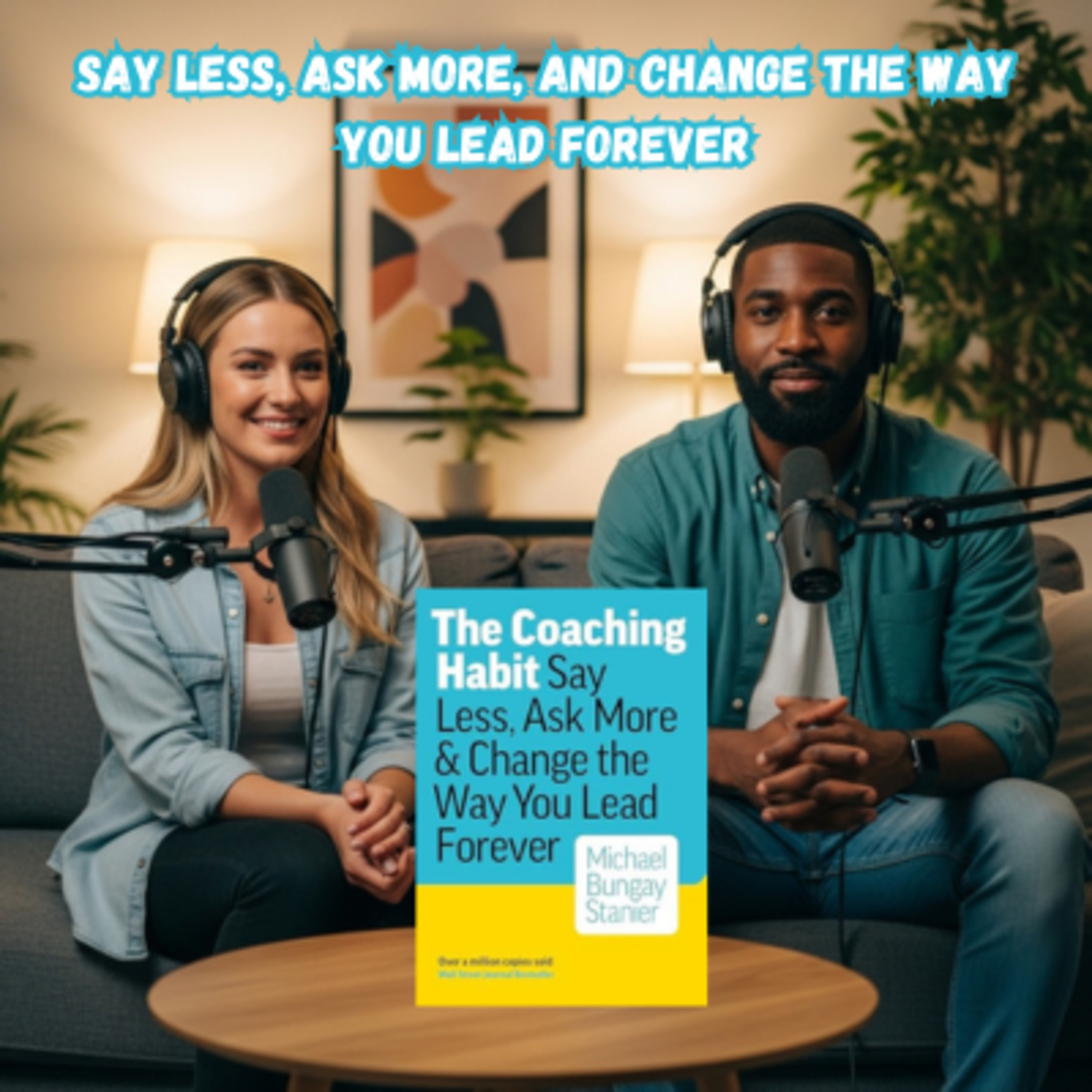
Great leaders don’t solve every problem—they ask the questions that unlock other people’s potential. In The Coaching Habit, Michael Bungay Stanier shows how busy managers can use everyday conversations to coach more effectively, build stronger teams, and drive bigger impact without working harder.
In this episode, we explore the seven essential coaching questions—from the Kickstart Question to the AWE Question—that cut through complexity, deepen insight, and spark meaningful action. You’ll learn how to stop jumping into solutions mode, ask better questions, and create space for people to think, grow, and take ownership.
This isn’t formal coaching. It’s practical, fast, and transformational—built for real workplaces and real conversations. Say less. Ask more. Lead better.
#TheCoachingHabit #MichaelBungayStanier #BookTunez #LeadershipDevelopment #CoachingSkills #AskMoreSayLess #CuriosityLeadership #TeamPerformance #ICFCoaching #ManagerTraining
Hey everyone ready to become a better coach? I think we all can be. Today, we're going deep into the coaching habit. Oh yeah, I love this book. It's. All about those seven questions that unlock some serious communication power. Yeah, and they're not just for like formal coaching. You know, you can use these everyday totally. Just slip them into conversations. And they help people really think. And come up with their own solutions. OK, so first up, what's on your mind? Seems simple, right? Really big but.
There's so much more to it. I think so too. It's like, how often do we just jump into advice giving Oh. All the time. Without really listening, you know, yeah, this question cuts through all that. Gets to the heart of the matter. Shows you actually care. Like that example with Sarah. Oh yeah, she's drowning in deadlines, totally overwhelmed, and instead of just telling her what to do right, her manager just asks what's on your mind? That's it. Such a powerful. Question. It lets Sarah share what's really bothering her, and they figure out solutions together.
So it's not about having all the answers. Nope. More about asking the right questions. That's the key to good coaching. Help people find their own. Answers exactly, because when they find their own answers, they own them. They own them exactly. And that's when things really change. Absolutely. OK, question #2 let's hear it. And what else? I love this one. When I first read this I was like, really? That's it. It seems so basic. It's. Got to be more than that. OK, there's layers. Oh, I know there are.
It's about going deeper. Uncovering what's really going on like. Imagine you're talking to someone struggling with a project. OK. And they say I don't have enough time. Classic, right? But if you ask and what else? Oh, what happens? Maybe it's not just about time. What else could it be? Maybe they don't feel supported by their team. That's a good one. So many possibilities. There's always something lurking beneath the surface. That's what this question helps us find. Like John in the book. Oh yeah, John.
He's always missing deadlines, right? And he blames it on having too much to do. The classic excuse. But then, and what else? Turns out he's stuck in all these pointless meetings. Meetings that could have been emails. Exactly. So we avoid jumping to conclusions. Don't assume we know everything, right? We get people thinking deeper. And that leads to better solutions. Much better solutions. It's amazing how often the real issue is hiding in plain sight. Yeah, so this is all about listening. Really listening.
Which brings us to question 3. Hit me with it. What's the real challenge here for you? Boom, right to the point. This one cuts through the clutter. No messing around. Because we get caught up in the little things. All the symptoms. But this question. Gets to the root of. It finds the core issue. And it's personal, right? For you makes them feel seen. Like you genuinely care about their situation. The example with Emma comes to mind. Oh yeah, yeah, she's having trouble with a project. Lists a bunch of small problems.
Seems like a mess. But then her manager asks, what's the real challenge for you? That changes everything. She realizes it's communication with another department. The real bottleneck. That's the root. Cause and now they can actually solve it. Instead of just putting band aids on everything. I love it. All right, question #4. OK, fire away. What do you want? Sometimes we forget to ask this. Seriously, we just assume we know. We think we have it all. Figured out, but assumptions can lead to disaster.
Miscommunication and frustration. Asking directly is so powerful. Gives people control. Let's them articulate what they really desire. Like Alex in the book. Oh yeah, Alex. He's feeling stuck in his job, unfulfilled instead of guessing what he needs. What do you think he needs? More money, maybe a promotion, possibly, his manager asks. What do you want? Smart move. Alex says he wants leadership opportunities. There you go. Now they can make a plan. Clear path forward. So we shift from problems to solutions.
Focusing on what's possible. Exactly. Not just fixing what's broken. And when people feel heard. When they feel like they have a say. They become so much more engaged. It's amazing to see. Truly inspiring. You ready for the lazy question? The lazy question lay it on me. How? Can I help? I love that name. So simple, but so brilliant. Why is it called lazy though? It seems so easy. Almost too easy. Exactly. But effective coaching isn't about doing the work for someone, right? It's about empowering.
Them helping them find their own way. And this question makes them think about what they actually need. So they can't just say fix this for me. Nope. They have to be specific. And it sets boundaries. Protects our time and energy. Prevents us from getting overwhelmed. We all need that the. Book has this great example with Jessica. Jessica, what's her story? She's struggling to prioritize. Oh, we've all been there. Totally overwhelmed. So what happens? Her manager asks how can I help? Genius. And Jessica realizes she needs a system for prioritizing.
Not just someone to do it for her. Exactly. That's a game changer. It's collaborative. And empowering. OK. Question number six, the strategic question. Right, bring it on. If you're saying yes to this, what are you saying no to? That's a good one. I think we can all relate to this. Especially in today's world. So many demands on our time. It's easy to say yes to everything. And then burnout. This question forces us to slow down. Make conscious choices. Because every yes has a no. Like when you try to squeeze one more thing into your schedule.
You're always saying no to something, right? Maybe it's family time. Maybe it's sleep. Maybe it's your sanity. We've all been there. The book has this example with David. Ah, tell me about David. He's eager to take on a new project. Wants to impress the boss. But his manager asks him that strategic question. If you say yes to this, what are you saying no to? And David realizes he'd have to cut back on other things. Possibly sacrifice quality. It makes you really think about your priorities. Every decision has consequences.
This question helps us make smarter choices. Aligned with our goals and values. I love that. Last but not least, we have the learning question. All right, what is it? What was most useful for you? Perfect way to wrap things up. Make sure the conversation had an impact. Because we can't just assume people absorb everything. You might have missed something. So this question helps them reflect. Identify their key takeaways. Like Lisa in the book. Tell me about Lisa. She has this coaching session about time management, OK.
And at the end her coach asks what was most useful for you? What does she say? She realized how important it is to prioritize tasks. To reduce stress exactly so it reinforces learning. Solidifies the key takeaways. And it gives the coach valuable feedback. Helps them improve their approach. This is making me rethink how I communicate. I know, right? I feel like I can have more meaningful conversations now. That's the power of these questions. So what really resonated with you from these seven questions?
Take a moment to think about how you might use them in your own interactions. We'll be back to explore some bonus material from the book that wasn't included in our initial summary. It'll give us even more insights into the power of these coaching questions. You know, as we were talking about those seven questions, I kept thinking about the advice monster. The advice monster? What's that? It's that urge we have to just jump in and solve everyone's problems. Oh yeah, I know that feeling. Especially when we care about someone you know, we.
Want to help? We want to fix things, offer solutions, share our wisdom. Makes sense, But sometimes that's not what people need. Sometimes it backfires. It can actually hinder their growth. Now so. When we jump in with advice. We rob them of the chance to figure things out themselves. Exactly. So the advice monster is like our inner know it all. That's a great way to put. It who just can't resist giving advice? Even when it's not wanted. Or. Helpful. Exactly. And the book argues that these seven questions, they help us tame that monster.
They do instead of being problem solvers. We become facilitators. Guiding people to their own solutions, that's the key. Instead of here's what you should do right? It's more like, what do you think? What's important to you? And I bet people feel a lot more ownership that way. Oh absolutely, when they discover the answer themselves. Think about it, OK, Which solution are you more committed to?
That's a good question. The one someone handed you. Or the one you figured out yourself. I'd say the one I figured out myself. Me. Too. There's just something more powerful about it. So these questions help people tap into their own wisdom. Their own creativity, their own resourcefulness. And that leads to better solutions in the long run. More sustainable solutions. Makes sense? And they gain confidence along the way. They realize they can solve their own problems. It's a win, win. I love that.
This is making me rethink my whole approach to helping people. Me too. I used to think being helpful meant having all the answers. I know, right? But now I realize it's more about asking the right questions, creating a space for others to shine. You hit the nail on the head. It's a subtle shift, but it's so powerful. Can change everything. In our relationships, at work, everywhere. There's another concept from the book that I wanted to talk. About OK, what is it? Staying curious longer. Oh, I love that one.
What does that mean exactly? It means resisting that urge to jump to conclusions. To rush to judgement. Or to action. OK, it's about being genuinely curious about the other person's perspective. So instead of immediately offering solutions, we just stay curious. We ask questions, you listen, we try to understand without judgement. Exactly, and the book talks about how our brains are wired to jump to conclusions. We're always looking foreclosure. Our brains love a quick fix. But staying curious longer, it interrupts that pattern.
It creates space for deeper thinking. More open minded conversation. On possibilities. It's a practice though. It takes effort. But it's worth it. Because when we stay curious, we. Learn so much more. About ourselves, about others, about the world. We become more flexible, more adaptable. Essential skills for life. And we can apply this to all 7 questions? Oh absolutely. It's not just about asking the questions. It's about the spirit in which we ask them. With genuine curiosity. With the willingness to truly listen.
Now to learn. I'm starting to see these questions as more than just questions. Me too. They're invitations to deeper connection. More meaningful conversations. You got it. And that's what makes this book so special. It's not just about becoming better coaches. It's about becoming better human beings. You are mindful. Yeah, more intentional in all our interactions. There's one more thing from the book that I found intriguing. OK. I'm intrigued. Tell me more. The idea of being the worst coach. Being the worst coach?
Now that's an interesting concept. Sounds counterintuitive, right? Why would anyone want to be the worst coach? But there's a deeper meaning there. There is. It's about challenging those traditional coaching models. Where the coach is supposed to be the expert. The one with all the answers. Exactly. So being the worst coach. Means letting go of that need to be perfect. You have all the solutions. It's about being humble. Being curious. Being open to learning from the other person. So what does that look like in practice?
It means asking more questions than giving answers. OK. It means being comfortable with silence. Giving people space to think. And it means resisting that urge to fix things. Instead, we empower them to find their own solutions. So it's almost like turning the traditional coaching model on its head. In a way, it is. Instead of being the sage on the stage. We become the guide on the side. And that's what makes this approach so effective. It's not about imposing our wisdom on others. It's about helping them discover their own.
Creating in a space where they can flourish. And these seven questions are the tools that make it all possible. They're more than just questions. They're keys that unlock potential. They foster connection. Empower others. Create a more collaborative and fulfilling way of being. This has been a real eye opener for me. Me too. I feel like I have a whole new understanding of coaching. And a set of practical tools that you can use right away. Exactly, I'm excited to start putting these into practice.
I'd encourage you to take some time to think about what resonated most with you. What stood out to you? What can you start using today? We'll be right back to share some bonus material that wasn't included in our initial summary. We'll explore some additional insights from the book. And some practical tips for putting these ideas into action. We're back and ready for more coaching wisdom. We've got some bonus material from the book. Oh, this is good stuff. You know, one thing that really stood out to me what's that is the emphasis on self-awareness.
Makes sense? It's not just about asking the right questions. It's about understanding ourselves, too. Exactly. Our own tendencies as coaches. Our biases, our habits. Because we could be unintentionally hindering someone's growth. It happens all the time. If we're not careful. So the book encourages us to identify our default coaching style. Our default coaching style? What's that? It's basically our go to approach when interacting with others. Like how we naturally respond to things. Are we problem solvers?
Advice givers? Cheerleaders. Oh, I see, we all have our tendencies. So we need to figure out what ours is. Recognizing it is the first step. To becoming more conscious. More intentional as coaches. It's like taking a step back. Observing our own behavior. Seeing how it impacts others exactly so once we know our default style. Then we can challenge ourselves. To try new approaches. Step outside our comfort zones. And that's how we grow. It might feel awkward at first. But that's where the magic happens.
We develop new skills, become more versatile as coaches. I like that. The book also talks about calibrating our coaching style. Calibrating. What does that? Mean it means adjusting our approach. Based on the person and the situation. Because not everyone responds well to the same thing. All right, some people might want direct advice. While others need more space to think things through. So we have to be sensitive to that. We have to meet people where they are. Pay attention to their cues exactly.
Are they engaged in the conversation? Are they resisting certain questions? Are they open to new ideas? All these things can help us tailor our approach. Sounds like we need a good dose of empathy. And emotional intelligence. Absolutely. But the good news is, what's the good? News. Those skills can be developed. Oh, that's good to know the. Book has some great tips for strengthening our empathy muscles. Like what? Active listening. OK. Being mindful of our body. Language makes sense. Checking in with the other person.
To make sure we're on the same page. Exactly. This is making me realize that coaching is more than just asking questions. It's a real art form. It takes practice. It takes observation, empathy, damped ability. It's. About creating a safe space for people. Where they feel comfortable opening up. Exploring their potential. And these seven questions are the tools that can help us do that. They're powerful tools. They can unlock so much potential. Guide people toward their own solutions. But what about those times when someone might not be receptive to coaching?
That's a good question. What if they resist our questions? Or don't want to explore different perspectives, How do we? Handle that. Well, the book acknowledges that not everyone is ready for coaching. Some people might not be open to it. And that's OK. We have to respect their boundaries. We can't force our agenda on them. So it's about creating a space where they feel safe. Supported. If they choose to open up, they can, but if not, we respect that. And sometimes the best thing we can do is just listen.
Be present. Offer our support without judgement. That's powerful. It really is. This deep dive has been incredible. So many insights I feel. Like I have a whole new understanding of coach. And a tool kit full of practical strategies. I'm excited to start using these questions in my own life. I think you'll be amazed at the results. So what's one key take away you want our listeners to remember? I think the most important thing is that we all have the potential to be great coaches. It's not some special gift.
It's a skill we can all learn. And develop with practice. And by using these principles, these questions. We can transform our interactions. From transactional to transformative. It can create more meaningful connections. Empower others. And make a positive impact on the world. That's a beautiful message. That's what this book is all about. Well, this brings us to the end of our deep dive into the coaching habit. I hope you enjoyed it. We sure did. Remember, this is just the beginning. Keep. Exploring.
Keep practicing. And keep those conversations flowing. Thanks for joining. US Until next time. Keep diving deep.
 Apple Podcasts
 Castbox
 Castro
 Goodpods
 Moon FM
 Overcast
 Pocket Casts
 Podbean
 Podcast Addict
 Podcast Republic
 Spotify