Read People Like a Book: How to Analyze, Understand, and Predict People’s Emotions, Thoughts, Intentions, and Behaviors (How to be More Likable and Charismatic
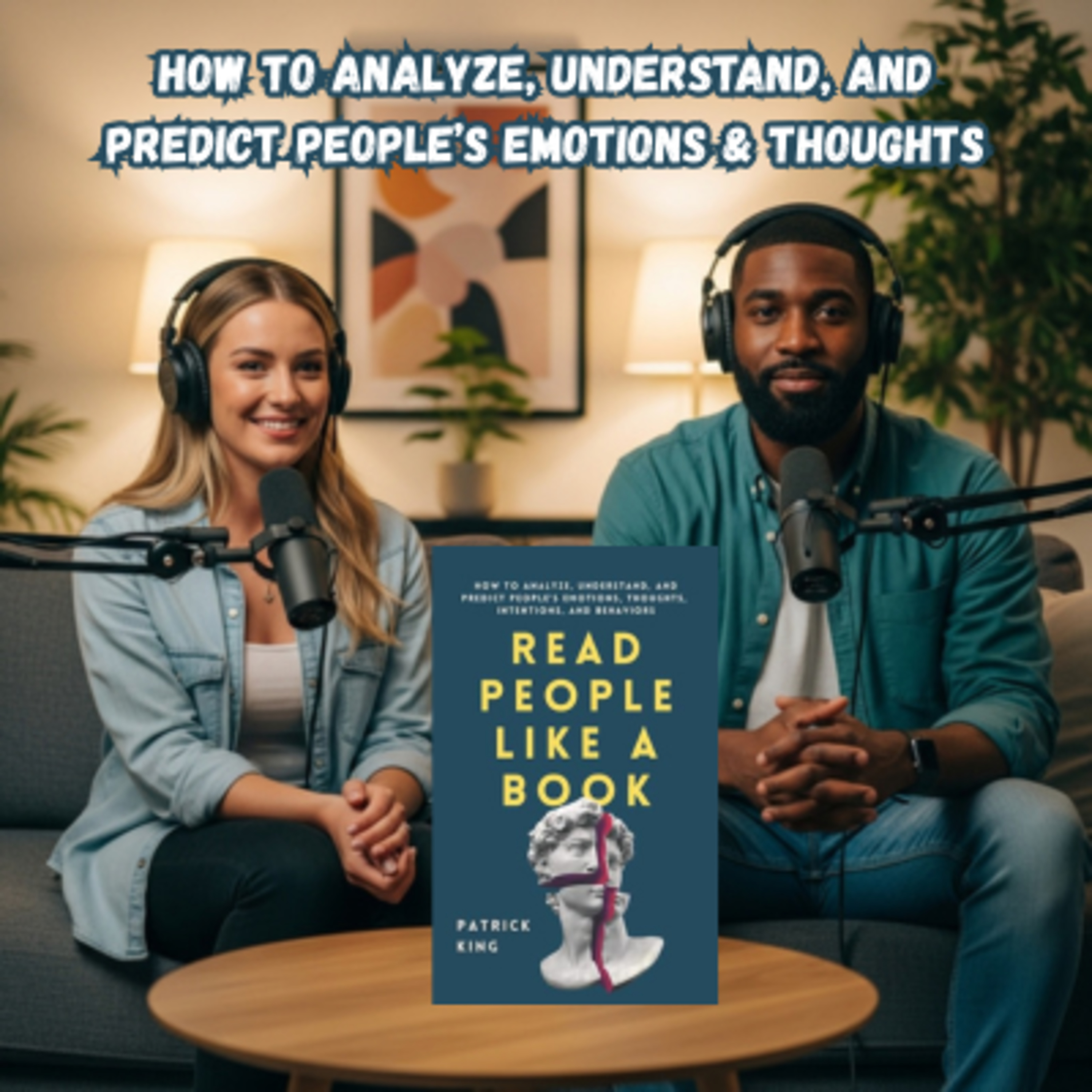
Understanding people is one of the most powerful skills you can ever develop, and Patrick King’s Read People Like a Book breaks it down in a way that feels both practical and eye-opening. This episode explores the psychology behind how people communicate without words, showing you how body language, tone, habits, and even tiny behavioral cues can reveal someone’s emotions, intentions, and hidden motivations. King goes beyond the typical “crossed arms means this” advice and digs into why people behave the way they do, how past experiences shape present decisions, and what it really means to see beneath the surface of someone’s actions.
We look at how to notice subtle signals, how to avoid misreading people by understanding context, why lie detection is more complex than most think, and how personality patterns can help you predict someone’s next move. You’ll also learn how your own body language affects the way others read you, and how small changes can instantly improve how you connect with people. Whether you’re trying to build trust, protect yourself from manipulation, strengthen relationships, or simply understand human nature better, this conversation will give you a deeper, sharper, and more compassionate lens to view the people around you.
Read People Like a Book, Patrick King, body language decoding, human psychology, emotional intelligence, social skills, understanding people, communication skills, lie detection, behavioral analysis, personal development, persuasion skills, charisma building, mindset improvement, BookTunez
#ReadPeopleLikeABook #PatrickKing #BodyLanguage #SocialSkills #PsychologyReads #EmotionalIntelligence #HumanBehavior #Charisma #SelfImprovement #PersonalGrowth #BookPodcast #BookTunez
OK, so ever feel like sometimes you just, you need like a secret decoder ring for like, social situations? You know what I mean? Like, you wish you could just kind of peek inside someone's head and just know what they're really thinking? Yeah. Well, today we're going to try to get a little bit closer to that right by cracking open read People Like a book by Patrick King. Oh, this is a good one. It is a good one, yeah. And I love that. It's not about, you know, like manipulating people, right? It's not about, like, sneaky Jedi mind tricks or anything.
It's about like really becoming a better people whisperer, you know, like really understanding those unspoken cues, the motivations that kind of drive our interactions. It's all about understanding people better. Yeah. And Speaking of motivation, OK, the book really emphasizes that as like the key, yeah, to unlocking someone's behavior. Absolutely. You know, it's like that classic push and pull. It is. We're driven by what we want to experience more of like pleasure, success, connection, right. And then the things that we want to avoid totally like pain, failure, isolation.
Yep. So simple. Yeah. Yet I never really thought about it that. Way it's true. But how do we actually apply that to everyday situations? Well, let's say a colleague, like, blows up at you or for, like, a minor detail, instead of just, like, taking it personally and like, firing back, you know, pause for a second and think about what might be fueling that outburst. Is it a fear of failure? Maybe this project has them feeling extra pressured to prove themselves. Or could it be a need for control? You know if they're a very organized person, right?
The chaos of the current situation might be like pushing their buttons. Wow, yeah, that shift in perspective, right, really changes everything it does. It's suddenly less about me and more about understanding where they're coming. From exactly. And from there you can respond with more empathy instead of escalating the conflict, right? You can offer support or like help them regain a sense of order. The book had a really interesting example about this. Oh, yeah, it talked about a Co worker snapping during a meeting instead of, like, getting defensive, Right.
You later casually check in with them. Yeah. Like, hey, notice you seem stressed in there. Yeah. Anything I can do to, like, help lighten the load? Exactly. You know, just that small gesture can make all the difference. It does. You're not just reacting to the surface behavior, but like you're tuned into their underlying motivations. Exactly. You're speaking their language. Yeah, without even realizing it, It's. True. And Speaking of unspoken language, OK, the book also delves into the power of nonverbal communication.
Oh, absolutely. Our bodies are constantly broadcasting messages. They are, whether we're aware of it or not. That's right. It's fascinating how much we can glean from someone's posture. Yeah, their gestures, even like those micro expressions. It's. Incredible. Right, it's like we're all walking around with these hidden subtitles, right? Revealing our true thoughts and feelings. Well, it's a great way to put it. But how do we become fluent in reading those subtitles? Well, it starts with being more mindful, you know?
OK, like, for example, we often associate crossed arms with defensiveness, right? But it's not always that simple. OK, if someone is leaning away, frowning, and has their arms crossed right, that's a strong indication cater of defensiveness. However, if someone's arms are crossed but they're leaning forward, smiling and engaged, OK, it might just mean they're comfortable and focused. So it's about looking at the whole picture. It is. Not just isolating one gesture. Precisely, it's like solving a puzzle.
Each non verbal cue is a piece OK and you need to see how they fit together to get the full picture. Gotcha. So we're getting better at reading motivation. Yeah, we're noticing those non verbal cues. What's like the next level of people reading mastery? Well, you know how some people just seem to click with each other effortlessly? Yes, part of that magic lies in understanding personality types. The book mentions frameworks like the Enneagram and the Big 5, which can be incredibly helpful in understanding how different people approach the world.
I'm fascinated by these systems, but sometimes they feel a little too woo woo. I know what you mean, you know. Yeah. Can they really offer practical insights into our interactions? Absolutely. Let's take the example of someone who scores high on conscientiousness in the Big 5. OK, They tend to be very detail oriented and they thrive on structure. Knowing this, you can tailor your communication accordingly. So instead of sending them a rambling e-mail, yeah, you would present information in a clear, concise way.
Yes, maybe even with bullet points and deadlines. Exactly. OK. On the other hand, someone who scores high on openness might prefer a more brainstorming style approach, right? They thrive on exploring ideas and thinking outside the box, so you wouldn't want to stifle them with rigid plans or too much structure, right? Give them the freedom to be creative. Exactly. And come up with those aha moments. Yeah, now imagine these two personalities working together on a project. Oh, that could be either a dream team, right?
Or a recipe for disaster. Exactly. But by understanding their personality differences, OK, you can actually leverage those strengths, right? The conscientious one can excel at managing tasks and keeping things on track, while the open minded 1 can bring fresh perspectives and innovative solutions. So it's not about those differences being good or bad. Yeah, they're just different ways of approaching the world. Exactly. And when we understand those differences, yeah, we can work together more harmoniously.
Now, Speaking of uncovering those hidden layers, OK, Are you ready to venture into the intriguing world of lie detection? OK, this is where it gets really juicy. But before we go full Sherlock Holmes, let's be clear. This is not about becoming suspicious of everyone we meet force not. This is about navigating potentially tricky situations with more awareness. Yeah, exactly. The book focuses on practical ethical approaches to lie detection. It's not about using these techniques to manipulate or accuse people, right?
So no polygraphs or truth serums involved. No, thankfully, OK. Instead, we're looking for inconsistencies in someone's story OK, and paying close attention to their nonverbal behavior. Like if someone gets fidgety or avoids eye contact. Yeah when asked a specific question, Right? Or if their story keeps changing every time they retell. It exactly. Those are all potential red flags, OK? But it's crucial to remember that we're not jumping to conclusions, right? These are just cues that warrant further observation and consideration.
The book gave a great example of this. OK, let's say a friend is acting uncharacteristically evasive when you ask about a recent purchase, right? Instead of accusing them of hiding something, yeah, you simply acknowledge their discomfort. Maybe say like, hey, I noticed you seem a bit hesitant to talk about this. No worries if you don't want to share. That's a great approach, right? That shows respect for their boundaries while also acknowledging that something might be up. You're giving them the space to share or not, on their own terms.
OK, so we've covered understanding, motivation, decoding body language, even dipping our toes into the art of lie detection, right? This is already mind blowing. Yeah. What's next on our journey to becoming expert People readers? Let's talk about observation. OK? Not just casually looking, but truly seeing and absorbing the world around us. I'm intrigued. Is this where that thin slicing concept comes in? Yes. OK, thin slicing is about making quick judgments based on limited information, like piercing together a puzzle with only a few pieces.
So if you're at a networking event, okay, you might observe someone standing off to the side looking uncomfortable. They're fidgeting with their name tag, okay? And avoiding eye contact, right? Based on those few cues, yeah, you might assume they're shy or nervous in social situations. Exactly. And while those assumptions might not always be accurate right, they can be surprisingly insightful, OK? Especially as we train ourselves to be more perceptive. It's like becoming a social detective, yeah, gathering clues and forming hypothesis about the people we encounter.
That's a great way to put. It the more we practice, the better we become at reading those subtle cues and making accurate assessments, right? And the skill can be applied to so many different areas of life. Yeah. From job interviews to 1st dates to navigating family dynamics. That's a variable skill. Wow, I'm starting to see the world in a whole new light. I know, right? It's like there's this hidden layer of communication happening all around us. And the more we unlock those hidden layers, the more connected and fulfilling our interactions become.
This is seriously fascinating stuff. I feel like we're just scratching the surface of read people like a book. Can't wait to keep exploring I. Do. It's really interesting, isn't it? It is like, becoming a better people reader isn't just about understanding those big obvious signs, right? It's about tuning into like, yeah, all those subtle, almost invisible cues that we often just miss. We do. It's like we're upgrading our social operating system to process information on a whole new level. I love that.
Yeah. So how do we actually train ourselves to be more perceptive? Well, remember that idea of thin slicing we touched on? It turns out our brains are constantly doing this. Oh, really? Whether we're aware of it or not. Imagine you walk into a meeting. Yeah, within seconds, your brain starts processing a ton of information. Yeah. Facial expressions, posture, the way people are interacting. So it's like our subconscious is trying to like piece together this puzzle, right, using those fleeting impressions.
Yeah, to like form an initial assessment exactly than the situation. And while those initial impressions aren't always accurate right, they can provide valuable insights OK, especially as we learn to refine our observational skills. So how do we make sure we're thin slicing effectively? I mean, it seems like there's a lot of room for misinterpretation. It's true. That's where the art of observation comes in. It's about going beyond those first impressions and consciously looking for patterns, inconsistencies, and like confirming or disproving our initial assumptions.
So it's not just about seeing, right, It's about actively processing, yes, and analyzing what we're seeing. Precisely. Let's say you're observing A-Team working on a project. What you notice one person constantly interrupting others, dismissing their ideas, right? Taking over the conversation. So based on that, you might initially assume they're domineering or arrogant. Right. But then you notice they're also the one who's constantly volunteering for extra tasks, staying light to help others, and celebrating everyone's successes.
So maybe they're not just power hungry, maybe they're actually a passionate leader. Yeah, who's a little rough around the edges in terms of communication style? Exactly. By taking the time to observe more deeply, yeah, you've gained a more nuanced understanding of their behavior. This is making me think about all the times I've probably misjudged someone, right? Based on a limited snapshot yeah of their behavior. It happens to all of us. Our brains are wired to make snap judgments, right? But with practice, we can become more objective and less reliant on those initial biases.
This is making me want to go out and people watch, Yeah, with like a whole new level of intention, right? But observation is only one piece of the puzzle, right? It's true. What other skills can we develop to become better people readers? OK, well, one of the most powerful tools and often overlooked is active listening. Active listening. Yes. I feel like that's a term that gets thrown around a lot, right? What does it actually mean in practice? It's about going beyond simply hearing the words someone is saying, OK?
It's about truly engaging with the speaker, both verbally and non verbally, and demonstrating that you're present, interested and invested in what they have to say. So it's not just about passively absorbing information. Yeah, it's about creating a space for like genuine connection and understanding. Precisely. And there are a few key techniques that can help us become more active listeners. First and foremost, make eye contact, right. It sounds simple, but it's amazing how often we get distracted by our phones.
That's true. Or other things in our environment. It's like we're saying you have my full attention without actually having to say it. Exactly, and while you're listening, offer non verbal cues to show you're following along right. A simple nod, a tilt of the head, even a slight lean forward can communicate volumes. It's like we're mirroring their energy, yeah, and showing them we're on the same wavelength. And Speaking of mirroring, OK, that's another powerful technique we can use to enhance connection and build rapport.
OK, I've heard about mirroring. Yeah, but I'll admit I'm a little hesitant. I understand. It feels like it could easily come across as creepy. Yeah. Or inauthentic if not done. Right, I get it. The key to mirroring is subtlety, OK? And genuine intention. It's not about mimicking someone's every move, right? That's where it gets weird. Yeah. No, it's about subtly matching their energy, body language and tone of voice, OK? To create a sense of harmony and understanding. So like if someone's speaking softly and leaning back in their chair.
Right. I might instinctively lower my voice, yeah, and adopt A similar. Posture. Exactly. It's about finding that subtle balance OK between matching their energy without being too too obvious or over the top. When done well, mirroring can make the other person feel more comfortable and at ease. I could see how that would create a sense of connection and trust, but why does it work? Yeah. So like some kind of psychological explanation? There are a few theories, but one is based on the idea that when we mirror someone's behavior, it signals that we understand and empathize with them.
Oh wow, it's like we're speaking their non verbal language which builds rapport and strengthens the bond between us. That makes sense. It's like those unspoken moments of connection you sometimes have with a close friend, right? You finish each other's sentences, you laugh at the same things. Yeah, you just get each other. And mirroring can actually help cultivate that sense of connection. Really. Even with people we've just met? Wow. It's a subtle way of saying, hey, we're on the same team here.
This is fascinating. Yeah, I'm definitely going to be more mindful of mirroring in my interactions, but with a focus on subtlety, of course. Absolutely. It's a technique that takes practice and finesse, right? But the rewards are definitely worth it so. We've talked about observation, active listening, and mirroring, right? What other tools can we add to our People Reading Toolkit? Let's delve into the realm of emotional intelligence. OK, It's something we all possess to varying degrees, right? But it's a skill that can be cultivated and refined.
Emotional intelligence, that's another one of those buzzwords I hear a lot. It is, but what does it actually mean? Yeah, in the context of reading people. It's about being aware of and managing your own emotions OK, as well as recognizing and understanding the emotions of others. It's not just about being in touch with their own feelings, it's about being attuned to like the emotional landscape of those around us. Exactly. And when it comes to reading people, having high emotional intelligence allows us to pick up on those subtle emotional cues.
That often go unnoticed. Like sensing that someone's feeling stressed or anxious? Yes, even if they're trying to mask it with the smile. Precisely. All right. And being able to recognize these emotions allows us to respond with empathy and understanding instead of just reacting to the surface behavior. Yeah, we can address the underlying emotions. I'm starting to realize that emotional intelligence, yeah, is like this hidden superpower it is that can transform our interaction. But how do we actually develop it?
Is it something we're born with? Okay. Or can we learn to be more emotionally intelligent? Well, some people may be naturally more attuned to emotions. It's definitely a skill that can be cultivated and strengthened over time. OK, so where do we start? OK, give us the emotional intelligence boot camp breakdown. One of the most crucial steps is developing self-awareness. OK, start paying attention to your own emotional responses right throughout the day. Notice how you react in different situations and with a different people.
It's like becoming a detective, Yeah, of our own inner world. Exactly. And as we become more aware of our own emotions, we start to recognize those same emotions in others. It's like we're building this internal library of emotional experiences that we can draw upon. So the next time I see someone react in a way that seems familiar, right, I can think back to a time when I felt that way and try to understand what might be driving their behavior. Precisely. And as we expand our emotional vocabulary and our ability to empathize, we become better equipped to navigate those complex social situations with grace and understanding.
This is incredible. It is. I'm already feeling more empowered just thinking about it. Remember, reading people isn't about judging or labeling that. It's about understanding their motivations, recognizing their emotions, and using that knowledge to build stronger, more meaningful connections. OK, so we've covered a lot of ground already. Yeah, Observation, active listening, mirroring and emotional intelligence. We have. It feels like we're well on our way to becoming Master People readers, right?
What else does Read People Like a Book OK have in store for us? Well, now that we've laid the foundation, it's time to start putting all these skills together. OK in real world scenarios. Perfect. Because let's be honest, sometimes all this knowledge can feel a bit overwhelming. I know what you mean. Like, how do we actually use it? Yeah, in our everyday lives. That's a great point, right? It's one thing to understand the concepts, but it's another to apply them effectively. So let's bridge that gap, OK?
Walk us through some practical applications of these people reading skills. Let's start with a scenario we all encounter regularly. OK? Meeting someone for the first time? OK, those first impressions can be crucial, right? Absolutely. It's like we have a limited amount of time to make a connection and leave a positive impact. Right, and all the skills we've discussed play a role in making those first encounters more successful. Remember the power of observation. Of course, it's all about paying attention to those subtle cues.
Body language, facial expressions, tone of voice. It's like gathering data points to form an initial impression. Exactly. And as you observe, you can also start to mirror their behavior subtly. This can help create that instant sense of rapport and make them feel more comfortable. It's like that unspoken signal that says, hey, we're on the same wavelength here without actually having to say it. Precisely. And as the conversation unfolds, remember the importance of active listening, right? Ask questions, show genuine interest.
Yeah. And really focus on what they're saying, not just waiting for your turn to talk. It's about making them feel heard and understood, which, let's be honest, is something we all crave. It's true. And as you're listening, pay attention to their emotional cues. Yeah. Are they excited, Nervous. Hesitant. Right by tuning into their emotions, we can respond with empathy, right? And tailor our communication accordingly. Exactly. So even in that initial encounter, yeah, you're already using multiple people reading skills, right, To build a connection and create a positive interaction.
It's like we're conducting a social orchestra. I love that using all these different instruments to create a harmonious melody. And as you get to know someone better, these skills become even more valuable. They do. For example, understanding their personality type. Yeah, can help you communicate more effectively. Right, If you know someone is very detail oriented, you can provide them with clear, concise information. Right. Whereas if someone is more big picture focused, you can paint a broader vision right and let them fill in the gaps.
And as you build trust, you can also start to share your own thoughts and feelings more openly. Yeah, deepening the connection. It's like moving from reading the book to coauthoring a new charter together. I love that. Yeah. So we've explored how to use these people reading skills in those initial encounters, right and as relationships develop. Yeah, but let's be real, right? Not every interaction is going to be smooth sailing. Yeah. How can we apply these skills when things get a little rocky? That's a good question.
Well, that's where emotional intelligence becomes even more crucial. OK, when conflicts arise, instead of reacting defensively, try to understand the other person's perspective and their underlying motivation. What unmet need or fear might be driving their behavior? So instead of meeting anger with anger, yeah, we take a step back and try to see the situation from their point of view. Exactly, And by communicating effectively right, seeking common ground, and focusing on understanding rather than blame, we can often navigate those challenges and emerge with a stronger relationship.
This is also empowering. It is. It feels like we're not just reading people, but we're actually building better relationships and creating a more positive social world. It's true, but I have to ask, are there ever times when these people reading skills can backfire? Like could we become too analytical, right and miss out on the spontaneity of human connection? That's a great question, and it's definitely something to be mindful of. OK. It's important to remember that these skills are tools, not weapons, right?
We don't want to become so hyper focused on analyzing every interaction right that we lose sight of the joy and spontaneity of human connection. So it's about finding that balance. It is between observation and intuition, analysis and genuine connection. Exactly. These skills should enhance our interactions, not hinder them. This has been so insightful. I feel like I'm walking away with a whole new perspective. Yeah, on human behavior. That's great. Any final words of wisdom from Read People Like a book?
OK, before we wrap up this deep dive. The most important take away is to keep practicing, OK? The more you observe, listen, and interact with people, the better you'll become at reading them right. It's a lifelong journey of learning and discovery. And remember, everyone has a story to tell. That's true. By using these spills, you can unlock those stories. Yeah. Connect with people on a deeper level and enrich your own life in the process. It's really amazing. Yeah. When you start thinking about it, it is.
These people reading skills are like pieces of a puzzle. It's true. And when you fit them all together, yeah, you get this, like, much clearer picture of what's going on beneath the surface. And the more pieces you have, the more intricate and nuanced that picture becomes, right? And it's not just about observation or analysis, it's about using that understanding to connect with people on a deeper level. Exactly. That's what I'm finding so fascinating. Yeah. It's like we're learning to speak this whole new language, the language of human behavior.
Exactly. And just like learning any new language, right? It takes time, practice, Yeah, and a willingness to embrace those awkward fumbles along the way. Speaking of fumbles, OK, I have to admit, yeah, I'm a little nervous about applying these skills in like, the real life situations, right? What if I misread a cue or come across as too analytical? That's a valid concern, yeah. Remember, these skills are meant to enhance our interactions, right? Not turn us into social robots. Yeah, we don't want to be like Data from Star Trek.
Exactly. It's about finding that balance OK between observation and intuition, analysis and genuine connection. Don't be afraid to trust your gut instinct. So it's not about overthinking every interaction, right? Or trying to psychoanalyze everyone we meet. No, it's about using these skills as a guide to navigate the social world with more awareness and empathy. That makes me feel a lot better. Good. But I'm curious, are there any situations where these people reading skills are like particularly helpful?
Oh absolutely. They can be incredibly valuable. OK In any situation where understanding people's motivations and emotions is key, OK, Think about negotiations, Conflict resolution, even building stronger relationships with your loved ones. OK, let's break those down. OK, How can these skills help us navigate like a tricky negotiation? Well, remember that concept of motivation we talked about? Yes, understanding what the other person truly wants, their underlying needs and desires can be a game changer, right?
It allows you to find common ground, tailor your approach, and even anticipate their objections. Since it's less about winning or losing right and more about finding a mutually beneficial solution. Exactly. And by being attuned to their emotional state, okay, you can adjust to your communication style accordingly. If they're feeling stressed or defensive, right? You can deescalate the situation by using calming language and demonstrating empathy. That makes sense. Now what about conflict resolution?
OK, those situations can be so emotionally charged. They can be, absolutely. But even in the heat of the moment, remembering the principles of active listening can make a huge difference. OK, instead of interrupting or getting defensive, right, Focus on truly hearing the other person's perspective, even if you don't agree with it. It's about validating their feelings. It is, and letting them know they're being hurt, even if they're behavior Behavior is frustrating. Right, and by using mirroring techniques, you can subtly convey that you're on their side, right?
Even if you're disagreeing with their actions. OK, this can help de escalate the situation and create a more collaborative atmosphere. Wow. These techniques are so powerful. Yeah, I'm starting to realize that they can be applied to all sorts of relationships I can, not just professional ones. Absolutely. Imagine using these skills to deepen your connection with your partner, your family, your friends. Yeah, by paying attention to their nonverbal cues, understanding their personality type right, and responding with empathy, you can create more harmonious and fulfilling relationships.
This is really making me rethink, yeah, how I approach my interactions with everyone in my life. That's great. I'm seeing those hidden layers of communication everywhere now. And that's the beauty of it. The more you practice these skills, yeah, the more you realize that people are like open books just waiting to be read. But it's not about judging or labeling them. It's about appreciating their complexity, their uniqueness, and their shared humanity. So as we wrap up this deep dive into Read People Like a Book, what's the one key take away you want our listeners to remember?
The most important thing is to approach this journey with curiosity, compassion, and a healthy dose of humility. We're all constantly learning and evolving, right? And that includes how we understand and interact with each other. It's true. Keep practicing, stay curious, and embrace the amazing complexity of human connection. That's such a great reminder. Yeah, this deep dive has been truly eye opening. I'm glad to hear that. Thank you so much for sharing your expertise, my pleasure, and for helping us unlock the secrets of human behavior.
You got it. Until next time, keep exploring the fascinating world of people and their stories. Absolutely.
 Apple Podcasts
 Castbox
 Castro
 Goodpods
 Moon FM
 Overcast
 Pocket Casts
 Podbean
 Podcast Addict
 Podcast Republic
 Spotify