Mindset: The New Psychology of Success
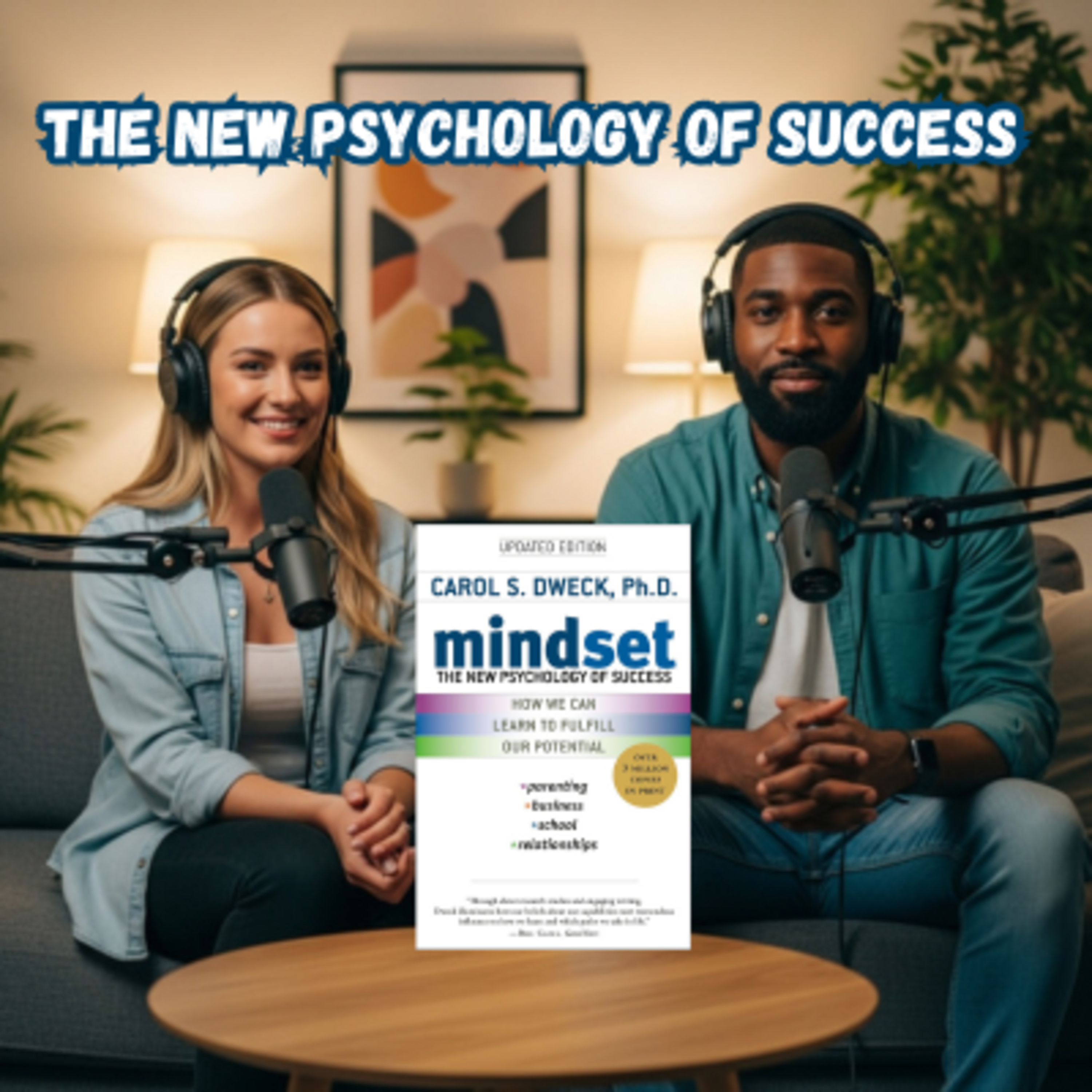
What if the secret to success isn’t talent, luck, or intelligence—but the way you think about them? In Mindset: The New Psychology of Success, world-renowned psychologist Carol Dweck reveals how a simple belief shapes everything we do. Through decades of groundbreaking research, she shows that people with a growth mindset—those who believe abilities can be developed through effort, learning, and resilience—achieve far more than those stuck in a fixed mindset.
In this episode, we explore how your mindset impacts the way you face challenges, handle criticism, and pursue goals. You’ll learn how to shift from “I can’t” to “I can improve,” from fearing failure to using it as fuel. Whether in business, relationships, or personal growth, your mindset determines your ceiling—and how high you rise beyond it.
#Mindset #CarolDweck #BookTunez #GrowthMindset #PersonalDevelopment #SuccessHabits #Motivation #SelfImprovement #Resilience #LifelongLearning #PositivePsychology
If this episode shifted how you see success, follow BookTunez for more powerful lessons from the world’s most transformative books. 🎧
Share this with someone who’s ready to grow beyond their limits—and remember, your potential isn’t fixed. It’s waiting for your effort to unlock it.
Keep learning. Keep growing. Keep building your mindset for success.
Welcome to today's deep dive. We're going to be exploring Carol Dweck's mindset, the new psychology of success. Have you ever felt like you hit a wall when you were trying to learn something new? Like trying and trying and trying and you just can't seem to get it? Well, Dweck suggests it might not be about your inherit ability, but rather your mindset. It's fascinating research. It really digs into how our beliefs about our own abilities can actually shape our reality. She takes these complex psychological concepts and breaks them down into something super practical and relatable.
And she gives us a guide to understand how our mindset actually impacts what we can achieve. It all comes down to two mindsets, fixed and growth. So a fixed mindset, the belief that your abilities are set in stone, you're either good at something or you're not. And then on the flip side, right, a growth mindset embraces the idea that you can develop your abilities through effort and learning. It's like thinking back to school, you know how some kids would be labeled as gifted and then others were told they just needed to work harder.
That kind of language just subtly reinforces a fixed mindset. Yeah. But Dweck's research really challenges that whole notion. Yeah. By showing that talent is just the starting point. It's the effort, it's the dedication and how we approach challenges that really determine how far we go. So let's unpack this idea of the power of belief. Okay? Dweck talks about how a fixed mindset can hold you back. You end up fearing failure because if you don't succeed, it feels like a judgement on like your inherent worth, right?
So you start avoiding challenges altogether. It becomes this like self fulfilling prophecy. The more you avoid challenges, the less you stretch yourself and ultimately you stunt your own growth, right? So with a growth mindset, challenges become these exciting opportunities to learn and improve. It's not about being perfect, it's about the journey of getting better. And she has this great example of a student named Jake in her book that really embodies this shift. Tell me about Jake. What was his story?
So Jake struggled with math, and he felt like he just wasn't a math person. And this belief really affected his performance. He would get frustrated, he'd avoid challenging problems, his grades suffered. But then something changed. He started working with a tutor who not only helped him with the material but also encouraged him to see challenges as opportunities. So how did the tutor help him shift his mindset? Well the tutor would focus on praising Jakes effort and persistence rather than just his intelligence, right?
So the tutor would say things like, wow, you really stuck with that problem and look, you figured it out right? You're showing real growth in your problem solving skills. Yeah, so the tutor was reframing mistakes as valuable steps in the learning process rather than as failures. Exactly. And gradually, Jake's mindset started to shift. So he started to see challenges not as threats, but as opportunities to stretch his abilities. He was less afraid of making mistakes, more willing to ask questions, right?
And he started putting in more effort. What were the results of this mindset shift for Jake? Well, not only did his grades improve significantly, but his entire attitude towards learning changed. He was no longer afraid of math, he actually started to enjoy it. Yeah, he discovered that he was capable of understanding these complex concepts if he was willing to just put in the effort and embrace the learning process. What a great example of how a simple shift in mindset can unlock someone's potential.
It really is. It makes me wonder about all the times I've held myself back because I thought I wasn't good enough at something. That's a common feeling, right? And that brings us to a really crucial point that Dweck makes Effort over talent. She completely debunks this myth that inherent talent is the only key to success. Instead, she argues that consistent effort and learning are absolutely essential for developing abilities and achieving goals. It's not about being born brilliant, it's about putting in the work.
This is so important for anyone listening who might be struggling with that fixed mindset. Oh. Definitely. It means we're not limited by what we think we're naturally good at. Yeah, we can actually change and grow through dedicated effort. Like, think about Mark, the aspiring musician that Dweck talks about. Yeah, he wasn't a musical prodigy or anything. He just focused on dedicated practice, right? And learned from every mistake. And over time, he became incredibly skilled. So Mark's story is a testament to the power of consistent effort and learning.
Absolutely, yeah. It highlights that we don't have to be born with some special gift to achieve our goals, right? It's the dedication and the willingness to learn that make all the. I think a lot of people get caught up in the idea that success is all about talent, right? But her work really challenges that notion. It's more about the journey of constant improvement. Precisely. It's about embracing the process of learning the UPS, the downs, right? Recognizing that growth comes from consistently pushing ourselves beyond our limits.
I love it. What stands out to you so far? Are you starting to see any areas in your own life where you might be operating from a fixed mindset? Oh, for sure. Keep those thoughts in mind as we continue because we're going to explore how all of this plays out in different areas of life. It's not just about individual achievement. It impacts everything, even the way we approach sports business and our relationships. From the basketball court to the boardroom, even our personal connections, this idea of mindset has a huge impact.
Let's start with sports, OK? Dwight talks about how athletes with a growth mindset view competitions not just as opportunities to win, but also his chances for growth. They're less afraid of setbacks and more resilient because they're using every game, every practice, to learn and get better. It's like they're constantly competing against their own previous best, always striving to improve and push their limits. They see every challenge as a chance to level up their game. She uses the example of Emily, an athlete who embodies this growth mindset.
What made her stand out? She wasn't afraid to try new techniques, even if it meant failing at first. But she saw those failures as valuable feedback, helping her refine her approach. She embraced the learning process and she was constantly seeking ways to improve her performance. So it was her willingness to embrace challenges and push her boundaries that helped her achieve success. Exactly. And that's what ultimately LED her to reach a high level of performance. It wasn't just natural talent, it was her growth mindset that propelled her forward.
It's fascinating how this mindset stuff isn't limited to just athletics. Yeah, let's. Look at the business world. Yeah, Dweck highlights how leaders who foster a growth mindset within their organizations are the ones who encourage innovation, right? And they see change as an opportunity rather than a threat. Think of it this way, Leaders with a growth mindset create dynamic work environments where people are encouraged to experiment. Yeah, share ideas and learn from their mistakes. It becomes a breeding ground for creativity and adaptability.
She talks about a business leader named John who really understood this. Yeah. What do you do differently? John built a company culture where mistakes weren't seen as failures, yeah, but as valuable learning experiences. He encouraged his team to be open to new ideas, to experiment, and to embrace the challenges that come with growth. So it sounds like he created a culture where people felt safe to take risks and learn from their experiences. Exactly, and that led to greater innovation and success for the company.
It's incredible how this one concept, this idea of mindset, can have such a profound impact across so many different aspects of life. And it doesn't stop there. Yeah, Dweck also delves into how our mindset effects our personal relationships, which we'll explore further in the next part of our deep dive. This has been an incredible journey so far. We've seen how a growth mindset can transform the way we approach learning, sports and business. But there's so much more to unpack. We'll delve deeper into the practical applications of a growth mindset in our relationships, and we'll explore specific strategies for cultivating this powerful way of thinking in our own lives.
Sounds good. I'm excited. Me. Too. Welcome back to our deep dive into Carol Dweck's mindset. Yeah, we've been exploring the difference between a fixed mindset and a growth mindset, right? And last time, we touched upon how this concept impacts various aspects of life, like sports and business. Right now, let's turn our attention to how mindset effects something deeply personal, our relationships. OK, might seem a little unexpected. Yeah, but think about it. Relationships are full of challenges. Yeah, I think communication issues, right?
Different needs and wants, Yeah, navigating change together, right. How we approach those hurdles like it really matters. OK, so I'm starting to see the connection. So how does having a growth mindset actually help in navigating the complexities of relationships? Well, Dweck argues that a growth mindset is absolutely crucial for building healthy, lasting relationships. OK, It's about approaching challenges as opportunities for growth, right? Both individually and as a couple. And she uses the example of Lisa, who is going through a rough patch in her romantic relationships.
Instead of giving up or pointing fingers, she used a growth mindset to tackle the issues head on. Tell me more about Lisa's experience. What did she do? So, Lisa, instead of blaming her partner, she chose to focus on open and honest communication. She made a conscious effort to understand her partner's perspective and was willing to work on herself as well. She recognized that relationships aren't about finding the perfect person, but rather about growing together. That's such a powerful shift in perspective.
It really. It takes the pressure off finding the one and puts the emphasis on the journey of learning and growing alongside someone that's so inspiring. It is. So we've seen how powerful this growth mindset can be, right? But here's a question that pops into my mind. OK, where does our mindset come from in the 1st place? Are we born with a specific mindset or is it shaped over time? That's a key question, yeah. And it brings us to the role of parents, teachers and coaches, OK? They have a huge influence on our early development and play a vital role in shaping our mindset.
So how can they encourage a growth mindset in children and individuals they mentor? Well, Dweck emphasizes the importance of praising effort over intelligence. So instead of saying you're so smart, focus on crazing the process, the hard work, the strategies they used. You're really stuck with that problem. Or I love how you tried different approaches until you found one that worked. That kind of feedback really encourages a growth mindset. I'm picturing the Smith family that Dweck mentions in the book.
It seemed to really embrace this approach. It did. What did they do differently? So The Smiths didn't just tell their children they were smart, right? They actively showed them how to embrace challenges, how to view mistakes as learning opportunities, and how to persist in the face of difficulty. So they created an environment where learning and growth were valued above all else. Exactly. And their children thrived because of it. They developed a love for learning, a willingness to take risks, and a belief in their ability to grow and improve.
It's about creating an environment where mistakes aren't seen as failures, but as opportunities to learn. Exactly. What if someone listening to this is thinking OK? I definitely lean towards a fixed mindset in some areas of my life. Is it even possible to change that? Oh absolutely, that's what's so empowering about Dwecks work. She provides concrete strategies for shifting from a fixed mindset to a growth mindset, and it starts with self-awareness. Recognize those limiting beliefs you might hold.
Like I'm just not a math person or I'm terrible at public speaking. Yeah, those are classic examples of fixed mindset thinking. I've definitely been guilty of that myself. Yeah, you too. So once we've identified those beliefs, right, how do we actually go about making this shift? Well, one powerful technique Dweck suggests is embracing the not yet. OK, I know that might sound a bit cryptic. Yeah, I'm a little lost. What does that even mean in practical terms? It's about viewing challenges and setbacks not as failures, OK, but as opportunities for growth that you haven't quite reached yet, right?
So instead of saying I can't do this, OK you say I'm not good at this yet, but I'm working on it. So it's like adding yet to the end of those negative self talk phrases. Yeah, that often pop up when we're struggling. And I can see how that small addition can completely change the way we view challenges, right? It becomes less about a definitive statement of inability. And more about acknowledging that we're on a learning journey. Exactly. It shifts our focus to the process of learning and growth rather than just the outcome.
This applies to everything right from mastering a new skill right to tackling a difficult situation in our personal or professional lives. Yeah, it's like reframing I can't do this into I'm learning how to do this exactly. It takes the sting out of failure and transforms it into motivation to keep going. It does. And this makes me think about how we give feedback both to ourselves and to others. Instead of saying you messed up, we can say, OK, what did we learn from this experience? How can we adjust our approach moving forward?
Yes. It's about providing constructive feedback that focuses on effort and progress, right, Not just on the end result. Yeah. And this is particularly crucial for parents, teachers and coaches, the way we talk to children about their achievements and setbacks. Yeah, it has a huge impact on their developing. We're not just focusing on what we're saying right, but the message we're sending. Exactly. We want to foster a love of learning, a willingness to take risks, yes, and a belief in their ability to grow and improve.
Absolutely. And that leads us to another powerful strategy for cultivating a growth mindset. OK, actively seeking out challenges and learning opportunities. Yeah, this sounds a bit counterintuitive. Wouldn't someone with a fixed mindset want to avoid challenges at all costs? You're right, that's the trap of the fixed mindset. Staying within your comfort zone and sticking to what you know you're good at might feel safe, right? But it leads to missed opportunities for growth. With a growth mindset, you actively seek out challenges, eager to learn new things, push your boundaries, and stretch yourself beyond what you think you're capable of.
So it's about being comfortable with being uncomfortable. It's about embracing that feeling of I don't know this yet, but I'm excited to learn. Exactly. And remember, it's about seeking out feedback and guidance along the way. Don't be afraid to ask for help. Learn from experts, OK? Surround yourself with people who champion your growth. So it's easy to talk about embracing challenges in the abstract, but what are some practical ways we can actually apply this in our everyday lives? It can be as simple as picking up a new hobby, learning a new language, or taking on a challenging project at work, right?
It's about stepping outside of your comfort zone, even in small ways, right? And discovering what you're truly capable of. So instead of resigning myself to the belief I'm not creative right, I could try taking a painting class. Exactly. Or, instead of shying away from that presentation at work, I could volunteer to lead it and see it as an opportunity to improve my public speaking skills. Yes, exactly. It's about pushing yourself little by little. Yeah, and celebrating the progress you make along the way.
Right. It's not about striving for perfection. It's about embracing the entire process of learning and growth. This is so inspiring. It is. We're not just talking about achieving external success, right, but also about becoming more resilient, more adaptable, more open to new experiences. It's about developing A mindset that equips us to thrive in a world that's constantly changing. And that's precisely why Dweck's work is so important. Yeah. It gives us this framework for understanding how our beliefs about ourselves and our abilities can shape our reality, right?
And it empowers us to consciously cultivate a mindset that supports our growth and well-being. This has been so eye opening. It is fascinating research. I'm already beginning to see the world through a different, more empowering lens. That's great. I'm eager to explore even more practical applications of this growth mindset. Yeah, and the final parts are deep dive. Delve deeper into specific techniques for challenging our limiting beliefs. Yeah, reframing our experiences and for creating a more supportive environment for growth.
OK, so be sure to join us for the final part of our deep dive into Carol Dweck's mindset. Welcome back to the Deep Dive. We've been unpacking Carol Dweck's mindset, Yeah, and exploring the power of a growth mindset. It's a powerful thing. In the previous parts, we saw how this concept can revolutionize our approach to challenges in sports, business, even our personal personal relationships. It really can. Now let's get practical and explore how we can actually cultivate this way of thinking in our own lives.
You know, it's really amazing how much our beliefs about our abilities and influence, our experiences and outcomes. But the good news is we have the power to choose those beliefs. We're not stuck with the mindsets we were born, whether the messages we got growing up. We can actively choose to cultivate a growth mindset. So where do we even start? What's the first step? Well, one of the most powerful ways to start is by challenging those limiting beliefs that we all have lurking in the back of our minds.
You know those voices that say I'm not good at this or I'm not capable of that? Oh, I know those voices all too well. Yeah, we all do. It's like they just pop up at the worst possible times, trying to sabotage our efforts before we even get started, right? So how do we silence those negative thoughts? How do we replace them with more empowering ones? Well, Dweck suggests a few strategies. One of the simplest, but most effective is to simply become aware of those beliefs. Notice when they come up, pay attention to the language you're using with yourself and ask, is this belief really true?
What evidence do I have to support it? So it's like holding those beliefs up to a spotlight, seeing if they can stand up to scrutiny. Exactly, and often times those limiting beliefs are based on past experiences or messages we received that might not even be relevant anymore. Once you've identified those beliefs, you can start to actively challenge them. So how do we challenge them? How do we reframe those negative thoughts? Well, one powerful approach is to look for evidence that contradicts those beliefs.
OK, Think back to times when you've succeeded even in small ways, right? Maybe you accomplish things you thought were impossible. Yeah. Or overcame challenges you didn't think you could handle. Remind yourself of your own resilience and capability. So we're building a case file against those negative thoughts. Yeah, exactly. And the more evidence we can gather, the weaker their grip becomes. Another powerful strategy is to reframe our experiences. Yeah, instead of viewing setbacks as failures, we can choose to see them as valuable learning opportunities.
Absolutely. Shift our language from I'm terrible at this. To I'm still learning and that's OK. Exactly. It's a subtle but powerful shift. It really is. And this is where the importance of creating a supportive environment comes into play. It's tough to cultivate a growth mindset if we're constantly surrounded by negativity or criticism, whether it's coming from others or even ourselves. It's like trying to grow a plant in harsh conditions. Exactly. We need to nurture ourselves, surround ourselves with people who encourage our growth and provide constructive feedback back.
So we need to be our own best cheerleaders. Yeah, Even when we make mistakes. Especially when we make mistakes. Setbacks are natural. Oh yeah, they're part of the learning process. They are, and it's OK to stumble along the way. What matters is that we get back up and we keep moving forward. That's what matters. And having that compassion for ourselves, recognizing that growth is a process, not a destination. It is a process. We're all works in progress. We are. It's fine. It is. This has been an incredible deep dive.
It has. And transformative. I feel like I'm seeing the world through a different lens, a lens that's more empowering and full possibility. That's great. What's one final thought you'd like to leave our listeners with? I want to remind everyone that cultivating a growth mindset is a lifelong journey, not a one time fix. It's an ongoing process of challenging those limiting beliefs, embracing challenges, and celebrating every step of the way. It can unlock our potential and lead to a more fulfilling and successful life.
However you define success. Beautifully said, and the best part is anyone can do this. It all starts with a decision to embrace the power of growth. Thanks for joining us on this Dee dive. We hoe you've gained some valuable insights and some ractical tools for cultivating a growth mindset that will serve you well in all areas of your life. Until next time, keep learning, Kee growing and Kee believing in your incredible otential. You've got this.
 Apple Podcasts
 Castbox
 Castro
 Goodpods
 Moon FM
 Overcast
 Pocket Casts
 Podbean
 Podcast Addict
 Podcast Republic
 Spotify