Million Dollar Weekend: The Surprisingly Simple Way to Launch a 7-Figure Business in 48 Hours
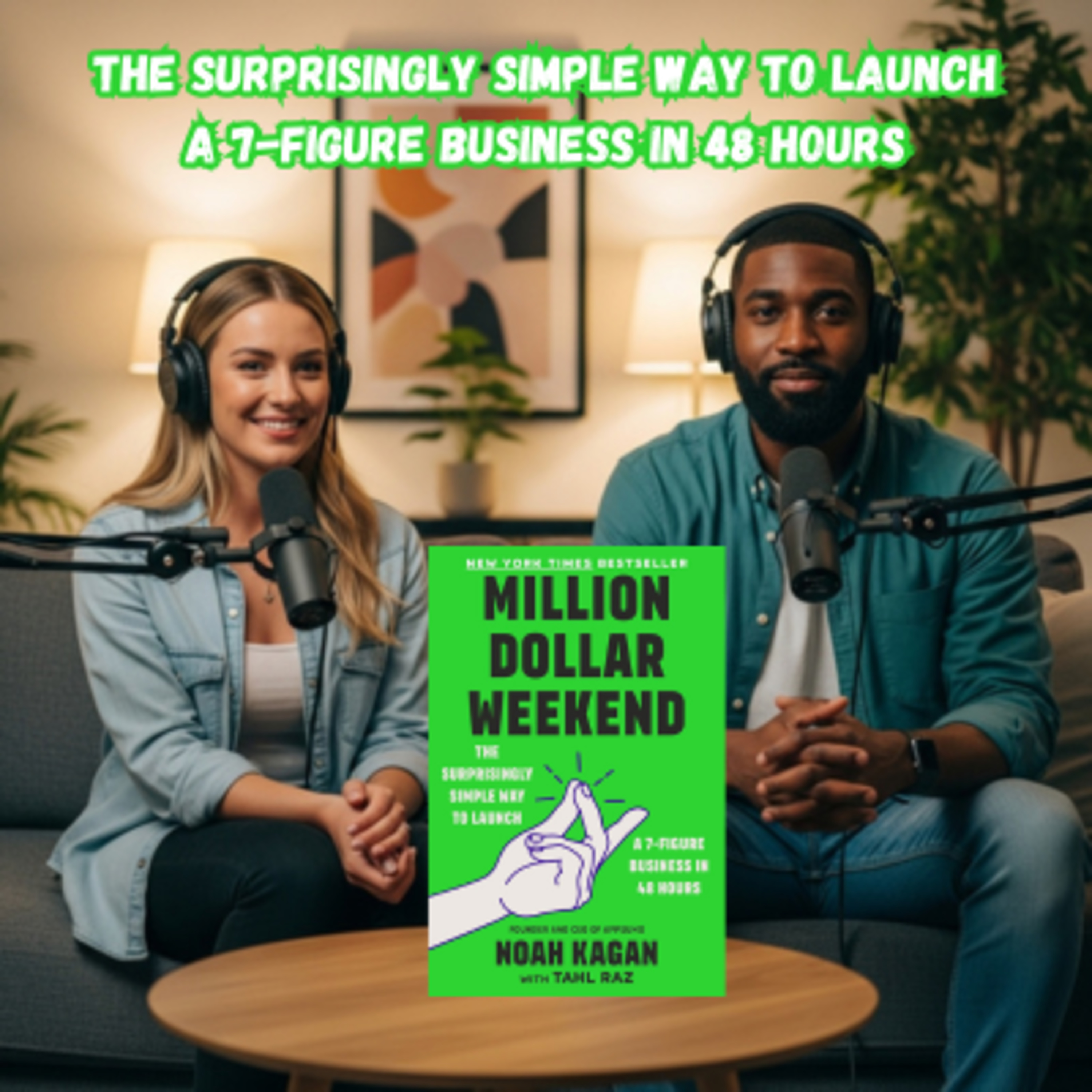
Want to launch a seven-figure business in a single weekend? Noah Kagan, founder of AppSumo, has done it seven times—and now he’s sharing his surprisingly simple system.
In Million Dollar Weekend, Kagan reveals how to overcome fear, get customers excited to pay, and automate your business so it grows while you sleep. This episode explores actionable strategies to turn your idea into a market-tested, scalable business in just 48 hours. Perfect for side-hustlers, aspiring entrepreneurs, and anyone ready to stop waiting and start building their dream life.
Learn how to overcome common excuses, find your creator’s courage, and take massive action that can put you on the path to seven figures by Monday.
#MillionDollarWeekend #NoahKagan #Entrepreneurship #SideHustle #BusinessLaunch #7FigureBusiness #BookTunez #FinancialFreedom #StartYourBusiness #StartupTips
Welcome back everyone. We've got another exciting deep dive lined up for you today, and you know how much we love digging into those resources that promise big things. Right. Those bold claims always peak our curiosity. Well, today's no exception, is it? You've all sent in excerpts from Noah Kagan's $1,000,000 weekend too, so we had to take a look. A guide that says you can launch your dream business in just 48 hours. Ambitious. I think that's an understatement. Definitely intriguing. Oh, absolutely.
So that's what we're here to figure out. Can you really go from zero to launch in a weekend? We'll unpack Kagan's approach, see what we can glean from it, and really just explore if this whole Weekend Warrior method holds water. Yeah, we'll try and connect it to the bigger picture to see if there's more to it than just a few quick tips. Exactly. So whether you're thinking about a new venture, just curious about how it all works, or love that spark of a good idea, well, we're here to break it all down for you.
See what this whole $1,000,000 weekend thing is all about. OK, so Kagan jumps right in. His first lesson is start before you're ready. Oh. Yeah, I remember this one. He uses that example as someone wanting to create a T-shirt line. Right, so easy to get stuck in that loop of wanting everything to be perfect, the designs, the website, all. That Oh yeah, it needs to be perfect. Or why even bother? Kind of. Thinking exactly. But Kagan's like, forget perfect, just start selling some shirts to your friends and family.
Get going. I mean, part of me wants to push back on that a little bit, you know? Doesn't starting small kind of limit your reach right out the gate? That's a fair point, but Kagans whole approach is about getting real world feedback as quickly as possible. Validate the idea before you think a ton of time and resources into something that might not even work. So it's like test the waters before you die in. Exactly. It's like that whole idea of a minimum viable product. Remember that from the Lean startup world?
Yes, I see what you mean. You release a basic version and you learn from how people actually use it, right? Then you iterate based on that feedback. So it's less about making a big splash and more about getting those early learnings to fine tune things. Exactly. And you know what ties in nicely with that? What's that? Kagan's next point? Yeah. Ask. Ask. Ask. Oh yeah, I remember that one. The freelance graphic designer example. Yeah, instead of waiting around for clients, you know, reach out, ask for referrals, even if you get some no's at 1st.
So it's about not letting rejection derail you. Absolutely. There's this concept in sales they call the 100 No's challenge, the what? 100 Nose Challenge. It's about desensitizing yourself to rejection because you know it's going to happen. It's part of the process anytime you're putting yourself out there. Barely in any field. You mean. Oh. Totally building that resilience is key. I'm starting to see how these simple tips are kind of connected to bigger ideas about mindset and approach right now.
The next lesson, solve real problems. Seems obvious, but you know people overlook it all the time. Yeah, I know he brings up the invention of the sticky note, something we all use now, but it came from a real need. Makes you wonder what other simple solutions are hiding in plain sight, doesn't it? What pops into your mind when you think about problems that need solving? So many things, honestly. Like what? Well, First off, I'd love a robot that folds laundry. OK, that's a good one. What else? But seriously, I think Kagan's point is to look at everyday annoyances, the stuff we all complain about.
Like what? I don't know, maybe finding a reliable plumber or getting a decent haircut without breaking the bank. Oh, those are definitely real problems. Maybe there are some business ideas hidden in there somewhere. Exactly. And Kagan says it doesn't have to be this groundbreaking invention. Yeah, sometimes simple solutions to common problems are the ones that really take off. Like what? Think about Airbnb. Oh. Yeah, good one. I mean, at its core, what is it connecting people with empty rooms to?
People who need a place to stay, right? Simple, right? But it resonated with people, a lot of people. It's such a good reminder that sometimes the best ideas come from just observing the world around us. Yeah. You know, seeing those unmet needs and Speaking of keeping things simple, you know what Kagan talks about next. What's that? Having a clear and concise business model. Right, right. He uses the example of someone selling homemade candles, doesn't he? Yeah, what are you making, who are you selling to, and how are you going to reach them?
It's that simple. So far, it seems like Kagan is all about clarity and action over elaborate planning. But is that always enough? What about those businesses that need a lot of upfront planning and investment? You're right, it doesn't mean cutting corners is more about focusing on the core elements and not getting lost in the weeds. OK, I see what you mean. Take Uber for example. OK, their initial model Connect riders with drivers through an app, right? Simple. But the tech behind it, that was complex, right?
But that core value proposition that was clear and easy to understand. I'm starting to see how this idea of simplicity can be applied in different ways. You know, at different scales. But how do you know if your simple idea is actually a good one? You might think you've got the next big thing, but how do you really know? Well. That's where Kagan's next point comes in. Test ideas with real sales. Don't just talk about it, test it. Exactly. See if people will actually put their money where their mouth is, Kagan suggests Pre selling or offering a basic version.
You know to get that early validation. Like a pilot program or something? Yeah. So for example, if you're thinking about online yoga classes, OK, start with one paid class and see what happens. So even if it's small scale, it gives you some real feedback, some data. Absolutely. It's all about having that experimental mindset. OK, so we've got a basic idea. We've tested it out. What's next? Now, Kagan is a big believer in the power of social media. Of course, for building an audience, right? He tells this story of Jim Shark, this fitness apparel brand that basically grew its entire customer base organically.
Wow, just through social media, yeah. Engaging content building community, that was their focus. So it's not just about posting ads, it's about creating a whole community around your brand. Exactly. Social media allows you to connect with your target audience in a totally new way, you know? But isn't it hard to cut through all the noise on social media these days? It's definitely a challenge, yeah. But Kagan has some specific tactics for creating content that stands out. You know, engaging with your followers, growing your reach organically, that kind of stuff.
OK, we'll have to dig into those tactics a little later. So let's say you've built an audience. What's next in this $1,000,000 weekend plan? Well, this is where Kagan makes a really interesting distinction. While social media is great for getting the word out. OK. He thinks e-mail is where the real sales magic happens. Interesting, I wouldn't have necessarily thought that. Yeah, he uses the example of a small online bookstore that sends those targeted e-mail recommendations to their subscribers.
So e-mail is still king when it comes to driving conversions. That's what Kagan thinks. He sees it as a Direct Line of communication with people who already kind of like what you're doing. It does make you think. Maybe we overestimate social media and underestimate the power of a good e-mail, right? And finally, Kagan wraps up with a principle that really applies to anything you do in life. Oh yeah, which one is that? Stay consistent and improve over time. Oh yeah, right. I remember he uses the Garter analogy, right?
Exactly. A little effort every day leads to something amazing over time. It's about playing the long game. Exactly. Small, consistent actions, even if they seem tiny at the time, add up over time. It's that compounding effect. OK, so we've run through the 8 core lessons for $1,000,000 weekend. Start before you're ready. Ask, ask, ask. Solve problems, keep it simple, test your ideas, build your audience on social media, use e-mail, and stay consistent. A lot to process, right? But then he breaks each one down into actionable steps.
You can start using right away. So it's not just theory, it's about putting it into practice. Exactly. OK, I'm definitely ready to get into those actionable steps. But first I got to ask, what's your initial take on all this? Does this $1,000,000 weekend thing really hold up? Is it realistic or is it just a catchy marketing gimmick? That's a good question. I think that's a good question. I think Kagan's on to something with that emphasis on action and speed. You know, in today's world, being able to move quickly and adapt, that's huge.
Right, it's all about agility. But I also think you got to balance that sense of urgency with it, a dose of reality, right? Oh, for sure. Launching a successful business, even a simple one, Yeah, I mean, that takes more than just a weekend. So it's more about adopting the mindset than literally trying to launch everything in 48 hours. Yeah, I think so. Shifting your thinking from it needs to be perfect before I start to. I can start small and figure things out as I go. OK, that makes a lot of sense.
So let's get into those actionable steps Kagan lays out. He starts with a pretty simple one, right? Just take that first step. Pick something you've been putting off even a small task and just do it. Yeah, like break that inertia. Exactly. Kagan's big on momentum. You know that sense of accomplishment, even from a small win? It keeps you going. It's like that saying a journey of 1000 miles begins with a single step. Right, exactly. And once you've taken that first step, you know what he says to tackle next.
What's that? Fear of rejection. Yeah, that's a. His second step is all about asking for what you need. Advice, help, even just feedback on an idea. That's easier said than done for some people, I'm sure. Totally, but remember that Hundred knows challenge. We talked. About. Oh, right, right. Each rejection gets you closer to a yes and it helps you build resilience, right? OK, so we're taking action and getting comfortable with hearing no. What's up next on Kagan's list? This one ties back to our discussion about solving real problems, Kagan says.
You know, really look for them in your everyday life. OK, like what? Stuff that people complain about, things they struggle with. So like my I always lose my keys problem. Exactly. Or, you know, maybe it's something you see at work, a process that's clunky or a need that's not being met, you know? So we're training ourselves to look at the world a little differently, like through this problem solving lens. Exactly. And once you've found a problem, you know what? Kagan says. What's that? Keep the solution simple.
Clarity is key. Got it. So even if you've got this complex idea, it's about boiling it down to its essence, right? Exactly what problem are you solving? Who needs this and how are you going to reach them? OK, so we've got a simple solution for a real problem. Now what? Time to test it out. Kagan's fifth step is all about getting feedback from potential customers. Don't just assume they're going to love it, right? Actually see if they're willing to pay for it. So pre selling, offering a discount, or maybe even just creating a landing page to see if anyone's interested.
Exactly. Even a small test gives you valuable data, then you can use that to inform your next steps. OK, now this is where it gets interesting to me. Social media, once you've got some validation, Kagan's all about leveraging that right? But it's not just about creating a profile and posting randomly. He's got a whole approach for it. Right. He talks about really understanding your audience, providing value, and building community. He actually gives a whole framework for identifying the right platforms for your target market, creating content that actually resonates with them, and then, you know, really using social media to build relationships, not just to make sales.
So we're not just blasting out ads, we're trying to create a space where people want to engage with our brand, right? Exactly. It's about being authentic and providing value and engaging with people. Now, once we've built that audience on social media, Kagan's all about transitioning them to e-mail, right? I'm curious about his approach to e-mail marketing. Well, he sees e-mail as the most direct and effective way to communicate with potential customers. You know, he's all about building that e-mail list early on and using it to share valuable content, build those relationships and ultimately, you know, drive sales.
So it's not just about blasting out promotional emails. No, it's about providing value, establishing yourself as a trusted source of information, that kind of. Thing. So how do you actually do that? Well, Kagan provides strategies for writing catchy subject lines. You know, keeping the content engaging and segmenting your list so you're sending the right message to the right people. That's interesting. So we're using social media to kind of cast a wide net and then we're using e-mail to nurture those connections and move people towards actually making a purchase.
It's like a 2 pronged approach. Exactly. And then, you know. Finally, he emphasizes the importance of consistency and continuous improvement. It's all about setting small goals each week and focusing on making progress over time. So it's not about trying to achieve everything overnight. No, it's about embracing the journey. It's a marathon, not a Sprint. Exactly. Kagan's last step is a reminder that success is a process. You know you show up consistently, learn from your mistakes, and never stop trying to get better.
All right, so we've gone through all 8 steps. Start before you're ready. Overcome the fear of rejection, find problems to solve. Keep it simple. Test those ideas, build your audience, leverage e-mail, and stay consistent. It's a lot. It is, but you know, the beauty of it is Kagan breaks this seemingly huge task of starting a business down into manageable steps. Yeah, makes it feel less overwhelming. Exactly. OK, let's just step back for a second and think about what we've learned. Does this $1,000,000 weekend framework, does it resonate with you?
Is it a realistic approach? I think it's a valuable framework, yeah, But it's important to remember it's just that, a framework. It's a starting point, you know, a set of principles, tables and strategies that can help guide you. It's not a one-size-fits-all solution. Right. Ultimately, your success is going to depend on your specific circumstances. You know your dedication, your willingness to put in the work. So no magic formula. Afraid not. It's about taking action, experimenting, learning and adapting, right?
Kagan provides the map. But you got to drive the car. Love that. OK, so as we wrap up this part of our deep dive, what's the key take away you want our listeners to walk away with? I think the most important take away is that launching a business or really achieving any goal doesn't have to be this big scary thing. You know, by embracing Kagan's principles of action, simplicity, and continuous improvement, you can break those big goals down into smaller steps. And start making progress today, right?
Exactly, and remember it's OK to start small. Even those massive companies, they all started with a simple idea and a lot of hard work. All right. I think our listeners are ready to put some of these ideas into action. But before we send them off on their entrepreneurial adventures, I want to circle back to that question we posed earlier. The one about launching a business based on our everyday problems. Exactly. I'm so curious to hear what our listeners have come up with. Me too. I bet there's some great ideas out there.
You know, as we wrap up our deep dive into $1,000,000 weekend too, one thing that really sticks with me is Noah Kagan's straightforward style. Oh yeah, it's refreshing, isn't it? It's like. He's saying just get started already and he actually gives you a way to do it. I know right? So many people get stuck overthinking everything. Analysis paralysis. Exactly. But Kagan cuts through all that and reminds us that action, that's what matters. And he doesn't just tell you to take action, he gives you those concrete steps.
Right. Oh. Absolutely, yeah. Makes it way less daunting. And another big take away for me is that focus on solving real problems. That's. Huge. It's a good reminder that the best ideas, well, they often come from meeting a real need, right? Not just jumping on the latest trend. Totally. He really pushes us to look around right in our own lives and our communities for those little pain points, those things people are always griping about. And I bet there's a business opportunity it in there somewhere.
Exactly. And it doesn't have to be the Super complicated solution either. Think about some of the most successful businesses. Yeah, they often solve a simple problem in a really clever way. Like connecting riders with drivers through an app or having your grocery show up at your door. Simple, but it works. Right. They've tapped into something that people really want, a real need. And you know what I like about Kagan's approach? It's not just for, you know, aspiring entrepreneurs. I think it's for anyone who has an idea they want to make happen.
A side hustle? A passion project. Yeah, even just a way to, you know, make a difference in the world. It's about having that entrepreneurial spirit, you know, spotting opportunities, taking action, sticking with it even when things get tough. And those are valuable skills no matter what you do. OK. So as we wrap up, I want to go back to that question we asked earlier. Oh, you mean the one about starting a business based on the problems we face every day? Exactly what kind of ideas have our listeners come up with?
I'm dying to know. Me too. Yeah, spill the beans everyone. So if you've been listening along and have an idea, we want to hear it. Share your thoughts in the comments, send us an e-mail, or even just jot it down somewhere. Get it out of your head and onto paper. Who knows, that could be the first step in your own $1,000,000 weekend adventure. Those little sparks of inspiration, sometimes they lead to amazing things. That's our deep dive into $1,000,000 weekend too. We hope you enjoyed it. And that you're feeling inspired to take action.
You know those ideas that have been bouncing around in your head? Don't wait for the perfect moment, just start. Learn as you go and keep working at it. Exactly. Until next time everyone, keep diving deep and keep dreaming big.
 Apple Podcasts
 Castbox
 Castro
 Goodpods
 Moon FM
 Overcast
 Pocket Casts
 Podbean
 Podcast Addict
 Podcast Republic
 Spotify