It's OK That You're Not OK: Meeting Grief and Loss in a Culture That Doesn't Understand
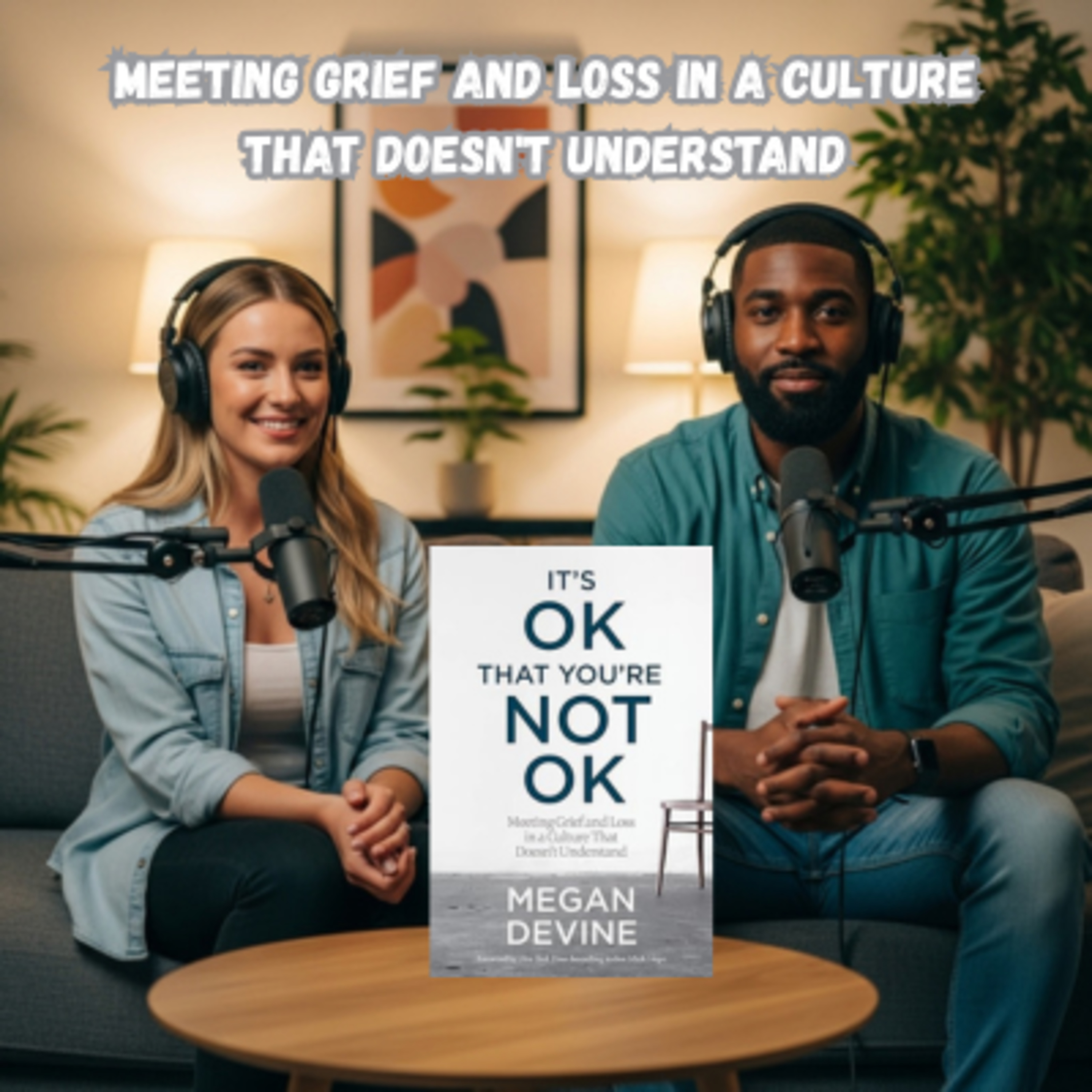
Grief isn’t a problem to fix—it’s a natural expression of love. In It’s OK That You’re Not OK, therapist and author Megan Devine challenges our culture’s quick-fix approach to loss and invites us into a more honest, compassionate understanding of what it means to grieve.
In this episode, we explore why grief is not a sickness, why there is no “moving on,” and how real healing comes from building a life alongside grief rather than trying to push it away. Drawing from Devine’s personal experience with devastating loss and decades of professional insight, this episode offers a grounded, humane framework for navigating pain, supporting others, and making room for love in its most raw form.
This is an episode for anyone grieving, anyone supporting someone in grief, or anyone learning to be kinder—to themselves and others—in the face of life’s hardest moments.
#ItsOKThatYoureNotOK #MeganDevine #BookTunez #GriefSupport #MentalHealth #HealingJourney #LossAndLove #SelfCompassion #EmotionalWellbeing #Mindfulness
OK, so let's jump right into this deep dive. Today, we're spending some time with some really powerful ideas from Megan Devine's book, It's OK That You're Not OK Too. Grief, you know, it touches all our lives, but it feels like most of us are just, well, navigating it in the dark, unsure how to feel or even how to help someone else who's hurting. That's so true. And what's really remarkable about the source, I think, is how it challenges that whole conventional narrative around grief, right? The one that kind of makes us feel like we're doing it wrong if we're not constantly, you know, moving on or getting over.
It you. Have that pressure? Exactly. It offers a radically different and frankly, a much more compassionate perspective. Absolutely. It really does flip that script. So our mission in this deep dive is basically to pull out the core insights, the practical guidance from these excerpts to maybe help transform how you understand grief for yourself or, you know, for others you care about. Because let's be honest, the old ways of thinking, they're not really working that well. They really aren't. The book steps bravely into that that messy, uncomfortable space that grief takes up in our lives and in society too.
OK, let's unpack this then. What's the very first? Maybe the foundational idea this source gives us that really challenges how we typically look at grief. Well, it starts by confronting the probably the most common misconception that grief is some kind of problem, something that needs to be fixed. Right, like something's broken. Exactly, and the source makes it incredibly clear grief isn't broken. It's a natural, often intense reaction to loss. The pressure society puts on us, you know, be strong, move on.
It isn't just unhelpful, it can actually be harmful. Right. It's like we get this invisible deadline. Or maybe a checklist for sadness. The book offers this really strong analogy, though, for what Greece actually feels like. Oh. Yeah, the wave analogy, it's central. Grief is like a wave. You can't stop it. It's going to come. You can't just hold it back. No, trying to push it away just exhausts you. So the key isn't making the wave disappear, but learning how to. Write it riding the wave. Yeah, and that means allowing the feelings to actually be there, letting them flow through you instead of fighting them or trying to escape.
The source has these really poignant examples of people finding moments of like genuine relief or healing only when they finally stopped fighting the pain and just allowed it. That's such a powerful visual, but practically like when you're right in the middle of it, what does it actually mean to stop trying to fix it and start riding that wave? It means letting go of the expectation that you shouldn't feel this way. That's the first thing. It's a shift from how do I make this feeling stop to something more like, OK, this is what I'm feeling right now, and that's OK.
It definitely requires patience and self compassion, recognizing that healing isn't about, you know, erasing the pain. It's more about integrating the reality of the loss into your life in a way that lets you keep living so. Finding a new normal, not getting back to the old. One exactly a new normal that includes your loss. OK, and if trying to fix grief within ourselves is harmful, well, that leads right into the difficulty we have when we try to fix grief for others, usually with our words. Oh, absolutely.
The source really digs into this and it's just incredibly relatable, isn't it? We want to help, so we reach for these these comforting phrases. But lesson 2 really highlights how words can hurt more than heal. Yeah, I think everyone listening has probably been there. That awkward moment, not knowing what to say, or worse, saying something that just lands completely wrong. The book points out the common ones, right? Like they're in a better place or you'll get over it in time. And you know, the intention might be kind, we assume it is, but the impact?
Often it's dismissive. These phrases they're often more about the speaker's own discomfort really, or their desire to make the situation feel better quickly, rather than truly sitting with the grieving person's actual. Pain making themselves feel better. Sort of, yeah. The source emphasizes that what a person deep in grief needs most isn't advice, you know, platitudes. It's simply to feel seen and heard. So instead of trying to explain away their pain or find some silver lining, the book suggests something different.
It gives this really simple, powerful example. Instead of saying you'll feel better soon, try something like I'm here for you. This must be so incredibly hard. Exactly. And what's fascinating here is the just the profound power of simple presence, the core idea. Listen. Listen way more than you talk. Just be there. Just be there. Avoid explaining or rationalizing their feelings. Instead, use phrases that acknowledge the difficulty. That sounds really, really hard or I can't imagine what you're going through.
Maybe followed by just silence or tell me more if you feel like it, but it's OK if you don't. It's about creating a space where their pain is like welcomed, not corrected. That requires us to be OK with them not being OK, doesn't it? Which is hard. It is. Hard. And it challenges that instinct. We have to just swoop in and make things better. It seems like this whole approach is about dismantling our assumptions, including the idea that grief follows some predictable path. Precisely. And that brings us straight to Lesson 3.
There's no right way to grieve. We often hear about stages, don't we? Or we expect grief to look a certain way, maybe lots of crying or withdrawing from people. Yeah, the conventional wisdom kind of paints this picture of grief as this linear process you just move through, but the book really pushes back hard on that. It does, forcefully and importantly so. Grief is as unique as the love that was lost. It just looks different for everyone. So different expressions. Completely. Some people are outwardly emotional, others process very quietly.
Some might find moments of, you know, lightness relatively soon, while others carry intense pain for years. The source shares the story of a man who felt just immense guilt because he stopped crying after only a few weeks. Oh wow. Yeah, he was worried he wasn't grieving correctly compared to other people he knew. And the book says his experience was totally valid. Totally valid, yes. And this raises a really important question, doesn't it? Who gets to define the right way to grieve, right? Who decides?
The source really empowers you, the person experiencing it, to be the authority on your own grief. Your experience is valid, period, whatever it looks like. So the key take away is just release the pressure. Let go of trying to conform. Just let it be what it is. Allow yourself to grieve naturally, don't compare your process to anyone else's, and crucially, give yourself permission for the ups and downs. It's OK to feel absolutely terrible one day and then surprisingly OK the next. It feels like so much of this comes down to just granting yourself permission in a world that often tries to dictate how you should feel.
Which leads right into Lesson 4, I think. Yeah, challenging that idea that feeling difficult emotions makes you weak. Right. Lesson 4. Feeling emotions is healthy, not weak. This pushes directly against that societal pressure to just stay strong. Yeah, which often translates to suppress your feelings, hide the sadness, the anger, even the guilt. I know I've felt that pressure definitely. Like if you're visibly upset, you're somehow not coping well. It feels really counterintuitive to lean into the pain.
And yet, according to the source, resisting those feelings is actually what causes more long term suffering. The book uses that great pressure cooker analogy. Oh wait. If you keep the lid clamped down on all that steam, the sadness, the anger, the confusion, it just builds and builds until eventually it has to escape, often in ways that aren't so healthy. Yeah, it bursts out somehow. Exactly. The source includes examples of people who really began to find some healing only when they finally allowed themselves to express those difficult emotions, whether it was talking to someone they trusted or journaling or just allowing themselves to weep when they needed to.
So the crucial take away is that expressing those emotions you know in safe and healthy ways isn't the sign of failure. It's actually a necessary part of processing at all. Yes, talk, right? Allow the tears. Emotions aren't permanent states, right? They're like, well, like those waves again. They come and they go. They pass through. And if we connect this to the bigger picture, this principle really extends beyond just grief. It applies to our overall emotional well-being. Healthy emotional processing is about acknowledging what is, not pretending it isn't there.
OK, now if we're talking about feeling these really difficult emotions, Lesson 5 introduces an idea that well, it might feel completely contradictory, especially when you're deep in the pain. And it's honestly one of the most liberating insights in the book. I find grief and joy can coexist. Wait, really? So you're telling me it's actually OK to laugh, to feel happy moments when you're grieving? According to the source, not only OK, but it's a natural and essential part of living alongside loss.
There's this pervasive misconception, isn't there, that any moment of joy or lightness means you're somehow over the loss? Oh, you didn't love him enough? Right. Or that you loved the person less than you thought. But, the book argues, no, grief doesn't erase your capacity for happiness. Both feelings can exist within you, right alongside each other. That story in the source, the one about the woman feeling terrible guilt for laughing at a family gathering, it's so powerful because it captures that internal conflict perfectly.
We think grief has to be this all consuming darkness. And the source just offers permission. Permission to let those moments of joy happen without judgement. Feeling happiness doesn't diminish your grief or the love you shared. It simply means you are still alive. And life, even amidst grief, includes moments of brightness. So the key take away here is actively allow yourself to experience happy moments without the guilt. Find ways to experience joy while you continue to honor the person you lost.
This challenge is a really deeply ingrained misconception, and it makes space for a much more realistic and sustainable way of living with loss. That genuinely sounds like a breath of fresh air amidst all the weight of grief. But even with all this permission to feel, it can still feel incredibly isolating, can't it? Absolutely, which highlights the just the absolute necessity of lesson 6. You need a support system. Grief, just by its very nature, can make you feel profoundly alone, even when you're surrounded by people.
The source really stresses the critical importance of having people in your life who don't try to fix you right. Back to lesson 1. Back to lesson 1. But people who simply show up and truly listen it? Can be so hard though, to articulate what you need when you're in that much pain. Yeah, or even just to ask for help at all. It is. It's incredibly hard. And the source acknowledges that difficulty. It shares this simple but really profound example of a man who is struggling to explain his needs. And he finally found the words that made a difference.
He just said I just need you to sit with me. Wow, just sit. Just sit. And this shows that sometimes the most valuable support isn't advice or action, it's just presence. OK. So the take away here is really practical and empowering to learn to articulate your needs, even if it's just something small like can you check in once a week or can you help me with groceries? Seek out support groups maybe where others genuinely understand what you're going through. Spend time with people who allow your griefs to be messy without judgment.
And also, it's OK to create distance from those who constantly pressure you to get over it. Setting boundaries. Setting necessary boundaries and the books guidance on how to communicate your needs is a really crucial layer here. It moves it from just this abstract idea of needing support to concrete ways you can actually ask for it. OK, And finally, after navigating all these intense waves of grief, the source offers this really beautiful, enduring perspective that kind of grounds everything else we've discussed.
Yes, Lesson 7, Love never dies. This is such a core, comforting truth that's woven throughout the book. The love you shared with the person you lost, it doesn't Manish. It transforms and it continues to live within you. It becomes part of who you are now. So it's more than just a memory, it's like a living connection that endures. Exactly. The source uses this touching example of someone who honored their loved one by planting a garden. I remember that. Yeah, and as the flowers bloomed each year, they became this vibrant, living reminder not just of the person, but of the love they share, and how that love continued to bring beauty into the world even after the loss.
That's beautiful. So the practical take away from this is about finding meaningful ways to keep that connection alive. Could be creating a scrapbook, maybe writing letters to the person. Or establishing a simple ritual like lighting a candle or tending a plant, reflecting on happy memories, sharing stories with others and letting their love and their values inspire how you live your life now. It's really about carrying their legacy forward. Carrying their legacy, yeah. If we connect this to the bigger picture, this lesson moves us firmly into the territory of integration.
It's not about getting over someone, but about integrating the love and their presence into the ongoing story of your life. It's about learning how to live fully with the loss rather than trying to get back to a time before it happened. Wow. OK, so we've explored these core, really life changing lessons from Megan Devine's book Releasing the Pressure to Fix Grief, Understanding the impact of our words. Accepting there's no single right way. Recognizing feeling emotions as healthy, embracing joy alongside sorrow, the vital need for support, and holding on to the enduring power of love.
That's a lot. It is a lot. But the book doesn't just leave us with these concepts, does it? It provides practical, daily steps for actually living these lessons. Oh. Right the application. That's key. And these aren't presented as steps to cure grief, let's be clear. They're more like practices to help you navigate that difficult terrain with more kindness, both to yourself and to others. OK, so first, building on that idea that feeling emotions is healthy, the book suggests setting aside some quiet time daily, even just a few minutes, to simply sit with whatever inertions are present.
Just be with them maybe? Journal, maybe just breathe and offer yourself that simple phrase. It's OK to feel this way. Yeah, a deliberate act of non resistance. Then applying the lesson about words. Consciously choose your words when you're comforting others. Prioritize listening over talking. Listen more, practice using supportive phrases like I'm here or this sounds incredibly difficult and actively avoid those well meaning but often dismissive cliches we talked about earlier. And for yourself, lean into Lesson 3.
Accept your own grieving style. Really release that pressure to compare your process to anyone else's. Allow your emotions to flow naturally without judgement. And importantly, the book encourages celebrating the small wins, like just getting out of bed some days or making yourself a meal on a really hard day. Those count. They absolutely count, and reflecting lesson 5 actively creates space for both grief and joy. It feels counterintuitive, I know, but make room for laughter when it comes up. Don't feel guilty.
Don't. Intentionally reflect on happy memories. Even plan small, simple activities that bring you moments of lightness knowing they don't cancel out your sadness. And to build that support system we discussed, be specific. Tell trusted people what you need. It's OK to say, could you just sit with me or could you maybe bring over dinner next week? Yeah, explore joining support groups if that feels right. And remember, it's healthy to set boundaries with people whose interactions feel more like judgment or pressure to move on.
Protecting your space. Exactly. And underpinning all of this self-care. As simple as it sounds, it's vital. Stick to a basic routine as much as you can. Focus on the fundamental needs. Eating, sleeping, maybe some gentle movement. Go basics, take conscious breaks and notice and allow yourself to enjoy those small moments of simple pleasure, like a good cup of tea or reading just a page of a book. Finally, carrying that love forward, make conscious choices to honor the love you shared. Engage in rituals that feel meaningful to you.
Talk about the person. Share stories. Find ways to weave their values or passions into your own life and actions. These practices help integrate their memory and their impact into your present reality, right? Absolutely. These steps aren't a path out of grief, remember. They're more like tools for living with grief in a way that's more honest, more compassionate, and ultimately more healing in the truest sense of the word. So to bring this deep dive to a close, the core message from these excerpts of It's OK That You're Not OK Too feels revolutionary, really, in its simplicity and its compassion.
Grief is difficult, it's painful, it's messy, and it is truly, fundamentally OK to not feel OK. It's not a problem to be solved, but a profound, painful, but also deeply human experience to be navigated and ultimately honored. It really offers a kind of permission slip, doesn't it, to grieve authentically, challenging so many of those unhelpful societal expectations that often just add layers of suffering onto the already immense pain of loss. And shifting perspective from viewing grief is something broken that needs fixing to something natural that needs honoring.
That changes everything. It changes how we treat ourselves when we're grieving, and it definitely changes how we show up for the people. It really does. So here's something maybe to ponder based on everything we've explored today. If healing from grief isn't about getting back to how things were, and it's not about forgetting, what does it mean to truly heal? Or maybe to live a healed life when the love endures and the loss remains a part of your story. It suggests that healing isn't really a destination, is it?
Not a place where the pain disappears, but maybe it's more of a continuous process of learning to carry both the love and the loss together. Something to sit with as you move through your week. We really hope this deep dive into these powerful ideas has resonated with you in some way. Thanks so much for joining us.
 Apple Podcasts
 Castbox
 Castro
 Goodpods
 Moon FM
 Overcast
 Pocket Casts
 Podbean
 Podcast Addict
 Podcast Republic
 Spotify