From Zero to Millionaire: A simple, effective and stress-free way to invest in the stock market
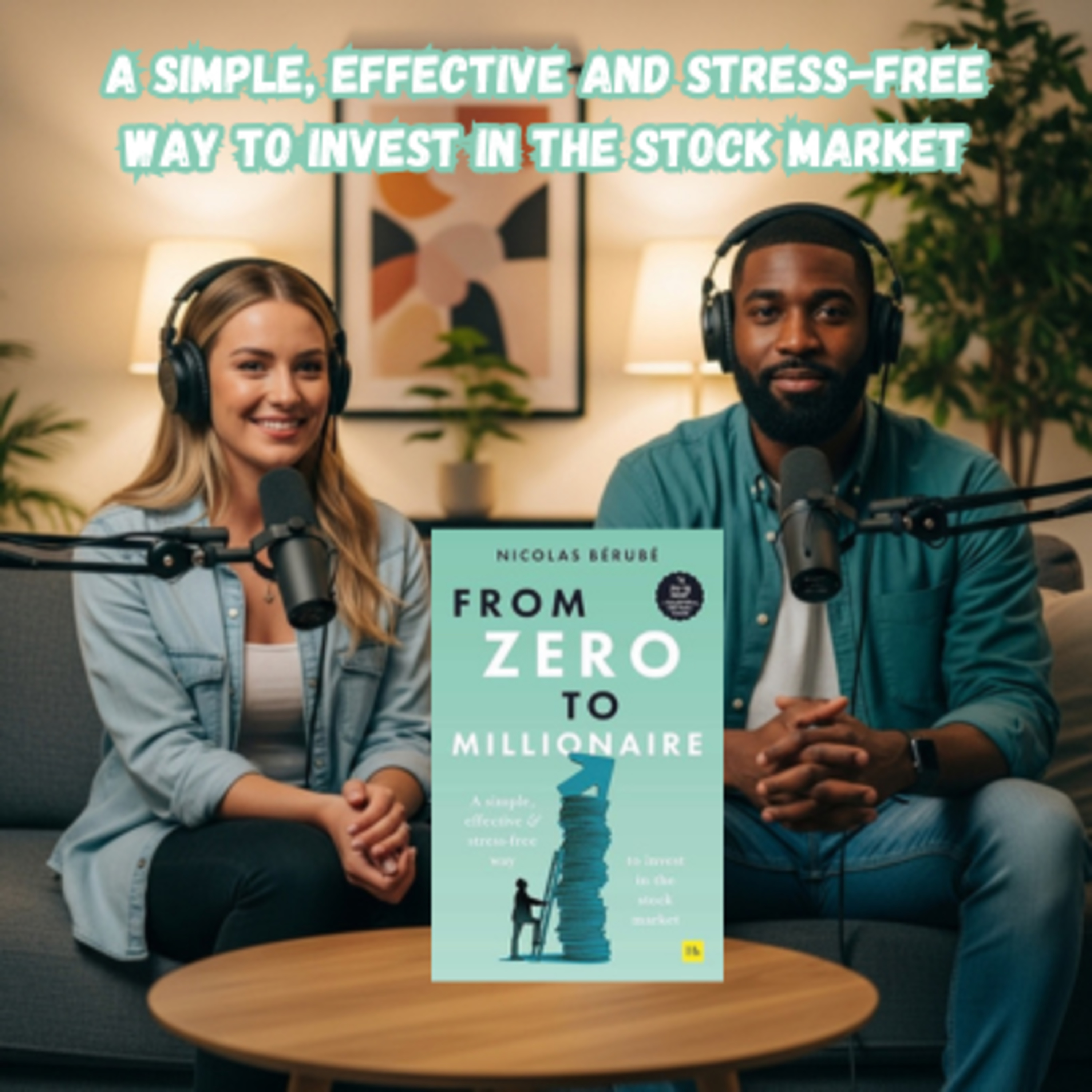
In this episode, we unpack From Zero to Millionaire, Nicolas Bérubé’s refreshingly simple guide to building wealth without stress, confusion, or spending hours studying the markets. Through a mix of surprising historical stories, real investor mistakes, and insights gathered from interviewing top investors around the world, Bérubé shows that becoming a successful investor isn’t about being a genius — it’s about understanding human behavior and sticking to proven strategies.
We explore how everyday people can outperform professionals, why most investors fail, what truly matters when growing wealth, and how investing less than one hour a year can still get you ahead. If you’ve ever felt overwhelmed by stock market jargon or doubted your ability to invest, this episode will give you the clarity and confidence to invest smarter, calmer, and with a long-term plan that works.
from zero to millionaire, nicolas berube, stock market investing, beginner investing, long term investing, wealth building, financial literacy, index funds, investing psychology, simple investing, passive investing, money mindset, financial freedom, personal finance, stress free investing, investing mistakes, financial independence, wealth strategy, stock market basics, investing podcast
OK, so let's be honest for a second. Investing can be a little scary, right? Like all that financial jargon, the market going up and down like crazy, and then there's this feeling like you might make a wrong move and lose everything. Right. And I think a lot of that fear comes from how complex it all seems. It's almost like the industry likes to make it sound complicated. Yeah. To keep people out. Totally. Like I need to go back to school just to understand my own statements. Yeah. But listen, we're diving deep today into Nicholas Baruba's From Zero to Millionaire, OK?
This book is all about making investing easier and less stressful so you can build wealth without all the anxiety. Well, his first point is actually all about simplicity. Oh, I like the sound of that. Like, he really argues that the financial world kind of thrives on keeping people confused. But you don't have to be a Wall Street wizard to be successful. OK, that's a relief. Yeah. So less complexity, more simplicity, but how do we simplify things, especially with all those different investments out there?
Well, Baruba is a huge fan of index funds, OK, Especially if you're just starting out, you can think of an index fund like a like a premade portfolio. So instead of picking stocks yourself, you're basically investing in a bunch of stocks that track a market index like the S&P 500. So it's like. So instead of yeah, instead of picking individual stocks, you're buying a piece of like the whole market. Yeah, that's a great way to put it. OK. And the best part is index funds are passively managed. Oh, what does that mean?
It means they aren't constantly buying and selling stocks based on like what some manager thinks right? So they usually have lower fees too. Oh, OK. So lower fees ANDA diversified portfolio, that's starting to sound pretty good. It is. But even with index funds, there are tons of options, right? Yeah, that's true. There are like. Where do you even begin? Well, you have to think about your own goals and how much risk you're OK with. Like if you're younger and you got more time to invest, right? You might pick an index fund focus on like emerging markets.
It could grow faster, but it could be a little riskier too. Makes sense. Then someone closer to retirement might choose a more conservative bond index fund. OK, so even with something like an index fund, which sounds pretty simple, you still got to do your homework. Exactly, being informed is key, even when you're keeping things simple. Got it? And there are resources out there to help you compare funds so you can find the right one for you. That makes sense. OK, so that's index funds, but Berube also talks about looking for something he calls rare pearls, right?
What's that all about? So this is where things can get a little more interesting. OK, seeking rare pearls is like being a picky investor. You're not chasing every hot stock tip, right? You're looking for high quality assets with the potential to outperform the market in the long run. OK, so like hidden gems in the investing world? Yeah, exactly like that. OK, but how do you find these rare pearls? What makes them stand out? You have to go beyond just looking at the stock price. You really want to understand the company's financials, right?
Like their competitive advantage, their management team, their growth potential. So it's like being a financial detective, yeah, kind of searching for clues. But that sounds like a lot of work, like hours of digging through financial statements and reports. It can be, but it doesn't have to be overwhelming. OK? There are tons of resources and tools to help you evaluate companies. You can check out analyst reports, read industry publications. There are even websites that give you like summaries of key metrics.
OK, the key is to develop your own criteria and then you can use them to consistently evaluate potential investments. So you're suggesting a more hands on approach than just index funds? Yeah, it's all about finding the right balance for you. So would you recommend a mix of both? Like index funds for a solid base and then maybe some rare pearls sprinkled. In absolutely. It's all about finding the right balance. OK, That makes a lot of sense. So we've got our simplified approach with index funds, right?
Our treasure hunt for rare pearls. Yeah. What else does Baru Bay have to say about navigating the ups and downs of the market? Well, his next point is a little counterintuitive. Oh, I like counterintuitive. So he actually tells us not to fear market corrections. Wait a second. Yeah, You're saying when the market goes down, yeah, we shouldn't panic? Yeah. In fact, that's like the opposite of what you normally hear. Right. He wants you to see those dips as opportunities. OK. Hold on, hold on. You want me to be happy when My Portfolio is shrinking?
I know it sounds weird. It does, yeah. But think of it this way, OK, when prices drop, you can buy those high quality assets, those rare pearls we talked about right at a discount. OK, so it's like waiting for a sale at your favorite store. Yeah, exactly like that. OK, I see the logic, but isn't that trying to time the market? You're right, you can't really predict exactly when the market will go up or down. Right? But it's more about a mindset shift, OK? Instead of freaking out when things drop, yeah, see it as a chance to buy more of what you believe in.
At a lower price. At a better price. Yeah, OK. OK. So buy low, sell high. Yeah, but what if the market keeps dropping? Yeah. And those deals keep getting better. Yeah, that's scary. Right. That's why you need a long term perspective and a sound strategy. OK, If you're investing in companies you believe in, yeah, with strong fundamentals, right, a little dip in the market shouldn't scare you away. So you're saying it's about trusting your choices and not letting short term ups and downs throw you off?
Exactly. And remember, OK, history shows us that the market tends to recover. It might take time, but it usually reaches new heights eventually. So ride the waves, yeah? Ride the waves and stick to your plan. But that takes a lot of discipline, especially when everyone else is panicking. Yeah, and that brings us to be Ruby's next point. OK, tuning out the noise. Oh, I like that because we are constantly bombarded with financial, yeah, opinions, predictions. It's overwhelming. It's so overwhelming, yeah.
He basically says take a step back, turn off the TV, silence the notifications, Yeah, and create some distance from the markets. Daily ups and downs. So it's like a financial detox. Kind of, yeah. OK. Instead of reacting to every headline right, focus on your long term goals and your investment strategy. So it's about being intentional mindful about your money. Exactly. Remember, investing is a marathon. Not a Sprint. Not a Sprint, you got it. It's about making steady progress, right? Not trying to get rich quick.
Yeah. And that applies to not constantly changing your portfolio, OK, or chasing every new trend that pops up? So find that balance between staying informed but not getting overwhelmed. I'm liking this. I'm feeling more in control already. It's like taking charge of your finances instead of letting the market control you. That's the idea. OK, so we've covered simplifying our approach, seeking rare pearls, not fearing the dips and tuning out the noise. What's Berube's final piece of advice for stress free investing?
He says it all comes down to setting clear goals. OK. Let's talk goals, right? I think we all want financial success. Yeah, But how do we turn that desire into a real plan? Berube says you have to be specific, OK? It's not enough to just say I want to retire early, right? Or I want to be a millionaire. Yeah. You have to define what those goals really mean to you, OK? How much money will you need? What kind of lifestyle do you want? Right. And when do you want to achieve it? So it's like creating a road map.
Yeah, exactly. Of just wishing for a big pile of money. And breaking down those big goals into smaller milestones makes them seem less overwhelming. It's like climbing a mountain, right? One step at a time. You focus on each step, knowing it's getting you closer to the top. Yeah, I like that analogy. So it's about celebrating those smaller wins along the way? Absolutely. But how do we make sure those smaller goals are actually part of the bigger plan? That's where a good financial plan comes in.
OK, you need a road map, right? That outlines your income, expenses, savings goals, and investment strategy. And that plan has to be flexible, right? It does. It should change as your life changes and as you hit different milestones. So it's not just about setting goals, it's about having a system to actually achieve. Them. Yeah. And a key part of that system, yeah, is regular review and adjustment. OK. Life throws curveballs. It does. Markets change, your priorities might shift, right? So you need to make sure your plan is still working for you.
OK, I'm seeing how all these pieces fit together. It's like a more holistic approach to investing. It's. Not just picking stocks, but creating a system exactly that aligns with your values and goals. It's about taking control, yeah, and shaping your financial future. I'm loving this deep dive, right? It's already changing how I think about investing. That's great. It's less about fear now and more about strategy like empowerment. So far, we've talked about simplifying our approach, finding those rare pearls, embracing the market dips, tuning out the noise, and setting clear goals.
What are your biggest takeaways so far? For me, it's about being intentional. Investing doesn't have to be this reactive, stressful experience, right? You can make it calmer, yeah, and ultimately more successful. I agree. It's about making choices that align with your goals, not just following the crowd exactly. But let's be real. Yeah, even with the best plans, our emotions can get in the way. Oh, absolutely. Fear, greed, FOMO. Yep. They can totally sabotage our best intentions. It's true. Investor psychology is a huge factor.
Yeah, when the work it's doing well, it's easy to get caught up in the excitement, right, And make impulsive decisions. Yeah, Yeah. And then when things go down right, fear can either paralyze you or make you sell at the worst possible time. Oh, it's like our brains turn into a financial Jekyll and Hyde. Yeah, kind of. So how do we kept those emotions in check? You have to remind yourself of your long term goals and your strategy. OK, before you make any move, yeah, take a step back and ask yourself, is this part of my plan right?
Or am I letting fear or greed take over? It's like having a financial mantra. Stick to the plan stick. To the plan, yeah. But what about when the market takes a nosedive? Like how do you avoid that feeling of doom? You have to understand market cycles and historical trends. OK, market downturns are normal. They happen and they'll happen again. Remember, the stock market is a long game. Right. Short term fluctuations are going to happen, but over time, yeah, the market is always trended upwards. So instead of freaking out, see it as a chance to buy more at a lower price.
Exactly. Like we were saying before. Yeah, it's about perspective, OK, Thinking long term instead of panicking in the short term. And it's OK to ask for help. Right. Oh, absolutely. Like a financial advisor or a friend who knows about investing. Yeah, having a support system can make a huge difference. It's like a financial buddy system. I like that. Yeah, so I'm going to talk you off the ledge when things get rough. Exactly. Sometimes it's not even about losing money, it's about making the wrong decision.
Especially when you're new to investing, yeah, it can feel really overwhelming, so. How do you build that confidence? You have to. Learn. The more you know the less scary it becomes. OK, luckily there are tons of resources out there. Books, podcasts, online courses, they're even apps now. Wow. And don't be afraid to ask questions, OK? If you're working with an advisor, yeah, don't hesitate to ask for clarification, right? Or a second opinion. So be proactive. Take charge of your financial education.
Yes, it's your money. Yeah, it's your future. That's a good point. The more you know, the better decisions you can make. This deep dive is amazing. It's helping me rethink how I approach investing. That's what we want. Moving away from fear and towards a more strategic mindset. I like it. We've laid a great foundation for stress free investing. Yeah, we have. And I'm excited to dive into some specific strategies to put all this into action. That's what we'll do in Part 3. All right. Sounds like we're about to open up the financial toolbox.
We are. I can't. Wait, me neither. Yeah, it really is all about taking control and making those choices work for your goals instead of just, you know, blindly following everyone else. Totally. But even with the best plan, you know, sometimes those emotions creep in. Oh yeah. For sure, the fear, the greed, even just FOMO, they can really mess things up. It's true, our psychology plays a huge part in how we invest. For sure. When the markets going up, everyone's happy, right? You feel invincible. You start making impulsive decisions.
Yeah. Then when things inevitably take a dip, the fear kicks in and you either freeze up or worse, you sell everything at the worst possible time. It's like our brains go haywire when money's involved. It's true. It's a powerful force. So how do we stay level headed? How do we make rational choices when things get crazy? It sounds simple, but you got to keep reminding yourself of those long term goals, the strategy you set up when you were thinking clearly, right? Every time you're about to make a move, ask yourself, OK, does this fit into my plan?
Am I letting fear or greed make this decision for me? Like a little gut check before you click that buy or sell button. But let's say you've done your research, you have your plan, and then boom, the market crashes. Yeah. How do you deal with that feeling of dread like everything's falling apart? That's where understanding market cycles can really help. OK, knowing that downturns are a normal part of things, they've happened before, they'll happen again, right? Remember, this is a long game, OK?
Short term fluctuations are going to happen, but over the long haul the market tends to go up. So don't panic, just ride the wave. Exactly. Yeah. And don't forget, you don't have to do this alone. Oh, that's a good point. You can talk to a financial advisor, a friend who knows about investing right, even find a community online. Yeah, like a financial support group. Yeah, I like that. People to share the ups and downs with exactly because sometimes it's not even about the money itself, you know, It's the fear of making the wrong choices.
Especially when you're starting out right, you're not sure what to do. So how do you get that confidence? Knowledge is power. The more you learn about investing right, the less scary it becomes. OK, And thankfully, there's so much information out there. There are books, podcasts, online courses, you name it. And if you're working with an advisor, ask questions, OK? Don't be afraid to ask for clarification or even a second opinion. So it's about being an active participant. Yeah, take charge of your financial education.
Because at the end of the day, it's your money, exactly your future. You got it. I'm already feeling more empowered just from this conversation. That's. Great to hear. This whole idea of shifting from fear to a more strategic approach, I like that. It's really powerful. It is. We've talked about staying calm, setting goals, ignoring the noise, and now I'm excited to get into some of those practical strategies. Yeah, that's what Part 3 is all about. OK, we're gonna open up the financial toolbox and get to work.
Exactly. I'm ready. OK. So we're back and ready to dive into some of those practical tools and strategies you mentioned. Let's get into it. So you're talking about asset allocation, yeah. Remember, that's basically how you spread your investments across different asset classes. Right. Like stocks and bonds. And you mentioned real estate too, right? Exactly. And you can even think about things like commodities or precious metals. OK. So it's like building a diverse financial portfolio, not putting all your eggs in one basket.
Exactly. It's about spreading the risk. But how do you decide how much to put in each category? That depends on a few things. Your age, your risk tolerance, and your time horizon. Right, because we talked about how stocks can grow faster, but they're also riskier and bonds are more stable, but maybe not as much growth potential. Exactly. So your asset allocation is about finding that sweet spot between risk and reward. So a younger investor might learn more towards stocks, and someone closer to retirement might favor bonds.
That's a good general guideline, but of course it's not always that simple. Right, everyone's situation is different. And your asset allocation should change over time too. OK. So it's not a one time decision. Nope, it's about adjusting as you go through different life stages and your goals evolve. Makes sense. So we talked about stocks and bonds, but what about those other things you mentioned? Like real estate and commodities? Yeah, well, real estate can be a good way to diversify. You can generate passive income through rental properties, but it also comes with its own complexities.
Right, like being a landlord. Exactly. And then commodities, things like gold and oil. Those can act as a hedge against inflation. OK. But their prices could be pretty volatile. So a little bit riskier. It's important to do your research before jumping into any asset class. Totally. It's not just about chasing the latest trend. Nope. OK, so we've talked about asset allocation. Let's get into some specific investment vehicles. All right. Well, we already talked about index funds. Right. Those are good for a simple and low cost way to invest.
Exactly. And then you have ETF. SETF What's that stand for again? Exchange traded funds. Oh, right. OK. They're similar to index funds in that they track a specific index, but they're traded on stock exchanges. So you can buy and sell them more easily. Yep, throughout the trading day. So more flexibility than a traditional index fund? Exactly. And then there are mutual funds, OK, those are basically pools of money from multiple investors that are used to buy a bunch of different assets. So it's.
Like a pre made diversified portfolio. Yeah, and they're managed by professionals. So you don't have to pick the stocks yourself. Nope, they do it for you. But that probably means higher fees, right? Yeah, typically mutual funds have higher expense ratios. Makes sense. So we've got index funds, ETFs, mutual funds. Are there other options? Sure. If you're comfortable with more risk and you're looking for higher potential returns, OK, you can always invest in individual stocks. OK, now that's where I start to get a little nervous.
I understand it's a. Lot more hands on it is. But it can also be really rewarding. But how do you even know where to start? My advice is to start with companies you understand, like companies whose products you use or services you rely on. Makes sense? It'll make the research more interesting. Right, because you already know something about them. Exactly. So I could start by researching companies like Apple or Amazon. That's a great example. OK, so start with what you know and then gradually expand your knowledge.
Exactly. But always remember, yeah, individual stocks are riskier. Don't invest more than you can afford to lose. Got it. So we've talked about different types of investments. What about strategies? Well, diversification is key, right? Don't put all your eggs in one basket. Exactly. Spread your investments across different asset classes, industries, geographic regions. So you're not overly exposed if one area takes a hit. Exactly. And remember, you mentioned reinvesting earnings. Yeah, When you get dividends from stocks, right, or interest payments from bonds, don't just spend that money, OK, Reinvest it back into your portfolio.
The power of compounding. Exactly. Let your money work for you. So the earlier you start investing, the better. The more time you have for that compounding to work its magic. Time is your friend. It really is. And don't forget about fees. Oh right, those can really eat into your returns. They can, so pay attention to expense ratios when you're choosing investments. OK, so shop around, compare fees. Just like you would with anything else. That makes sense. And most importantly, remember, yeah, investing is a marathon, not a Sprint.
Don't get discouraged by short term fluctuations. Nope, stay focused on your long term goals. This has been such an eye opening deep dive. I'm glad you found it helpful. We've covered so much ground. We have. From understanding the basics to developing a stress free mindset and exploring specific strategies. It's all about empowering yourself. Yeah, taking control of your financial future and. Making it work for you. Thank you so much for sharing your expertise with us. My pleasure, thanks for having me.
And thank you to all our listeners for joining us on the Deep Dive. We hope this is giving you the knowledge and the confidence to start investing with less stress. If you enjoyed this episode, be sure to check out our other deep dives on all sorts of fascinating topics. And if you have any questions or want to share your thoughts, you can find us on social media. Happy investing everyone.
 Apple Podcasts
 Castbox
 Castro
 Goodpods
 Moon FM
 Overcast
 Pocket Casts
 Podbean
 Podcast Addict
 Podcast Republic
 Spotify